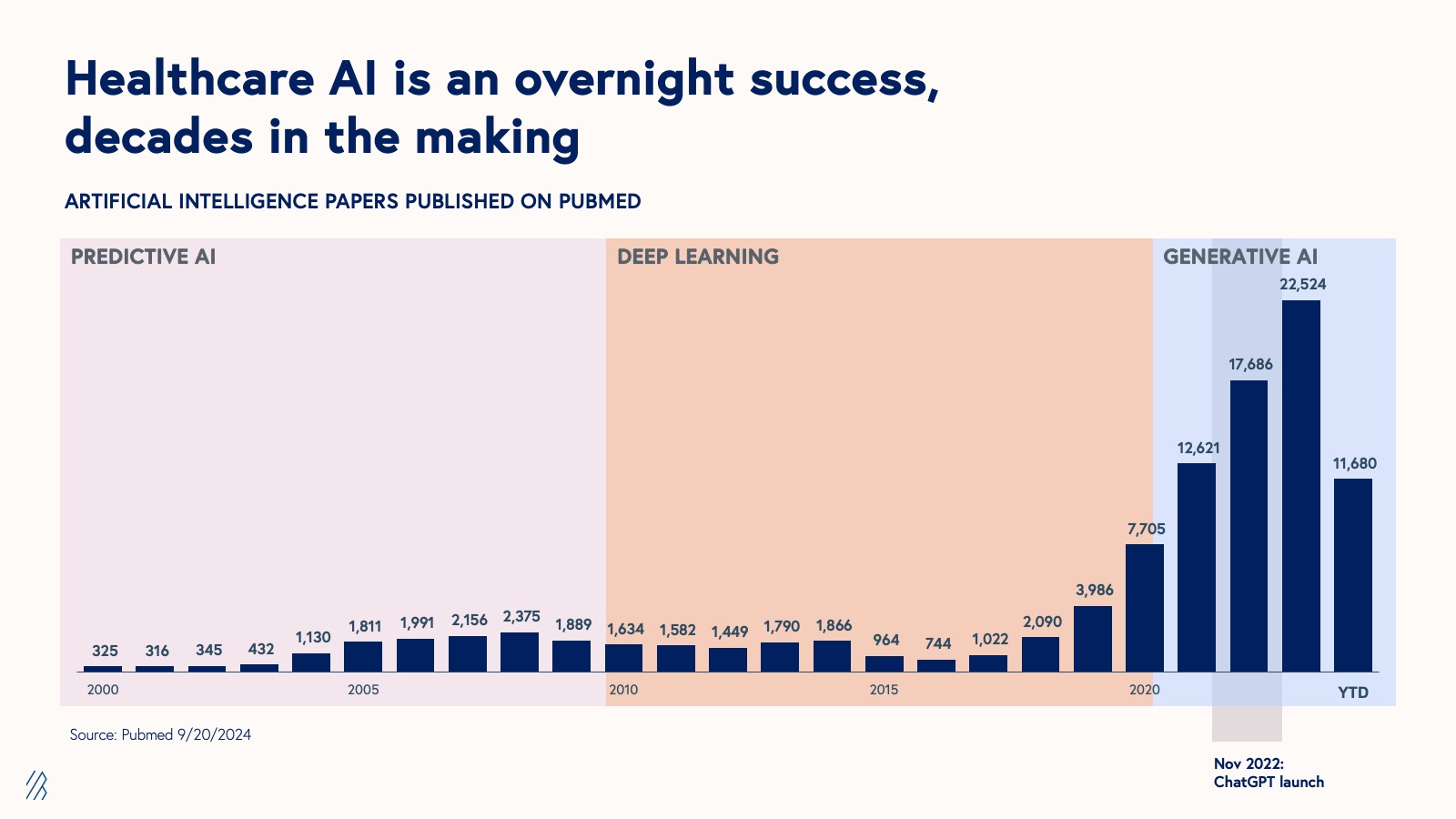
The healthcare industry stands on the precipice of a transformative era, driven by the integration of artificial intelligence (AI) into its core operations. This evolution is not a sudden phenomenon but the culmination of over eighty years of technological advancements and strategic innovations.
A recent article from Bessemer Venture Partners delves into this pivotal moment, highlighting how AI is reshaping markets and modern medicine. The demand for healthcare AI solutions is unprecedented, with a significant surge in interest from startups and established tech giants alike. This is not just hype; it’s a reflection of the tangible benefits AI brings to the table.
In a survey, 70% of healthcare providers and payers reported implementing generative AI, with expectations for continued investment growth. This trend underscores the sector’s readiness to embrace AI-driven efficiencies.
The groundwork for this AI revolution was laid through decades of investment in electronic health records (EHRs), which have digitized vast amounts of clinical and administrative data. This digital foundation is now fertile ground for AI applications, with nearly 40% of healthcare startups in 2024 focusing on AI technologies.
Healthcare AI’s potential extends from the micro-level, such as protein functions, to macro-level population health dynamics. As new data types emerge and AI research accelerates, the sector is poised for rapid evolution, aiming to solve real-world healthcare challenges.
However, this promising landscape is not without its challenges. Navigating complex regulations and market dynamics requires innovative solutions and strategic partnerships. Understanding these factors is crucial for startups aiming to thrive in this competitive environment.
The insights from the Bain Research and other sources suggest that both startups and incumbents stand to gain significantly as the market matures. This evolution promises not only economic growth but also enhanced patient care and systemic improvements in healthcare delivery.
Challenges and Opportunities
Despite the promising developments, AI startups in healthcare face numerous obstacles. The US healthcare system, bound by intricate regulations and misaligned incentives, presents a challenging landscape. Founders must be prepared for resistance to change, as innovation and pushback evolve in tandem.
Regulation, while a barrier to entry, also serves as an enduring moat for incumbents. The dense regulatory landscape creates obstacles for newcomers, but it also protects established players. Engaging in advocacy and lobbying work can help startups navigate this environment.
Moreover, the healthcare market is fragmented, with numerous smaller markets rather than a monolithic industry. Identifying and targeting the right sub-verticals is crucial for unlocking sufficient total addressable market (TAM).
The ongoing digital transformation and the advent of multimodal AI offer significant opportunities for healthcare. These technologies can diagnose diseases earlier, identify barriers to patient recovery, and enhance healthcare system efficiency.
Investment and Future Prospects
Bessemer Venture Partners has dedicated $1 billion to investments in AI companies, actively seeking promising new partners in this rapidly evolving field. The potential for AI to redefine healthcare is immense, with opportunities for startups to make a real difference for patients and healthcare professionals.
As the concept of a “learning healthcare system” becomes a reality, driven by AI, the industry is poised for a new era of continuous improvement and innovation. The journey from digital transformation to AI-driven healthcare is just beginning, and the best is yet to come.
More Articles
Getting licensed or staying ahead in your career can be a journey—but it doesn’t have to be overwhelming. Grab your favorite coffee or tea, take a moment to relax, and browse through our articles. Whether you’re just starting out or renewing your expertise, we’ve got tips, insights, and advice to keep you moving forward. Here’s to your success—one sip and one step at a time!
"Mortgage applications decrease" amid rise in fixed-rate mortgages, detailed in a report by the Mortgage Bankers Association. The report also explores ARM's role, refinance and purchase applications, and increases in Federal Housing Administration loans for a comprehensive industry view.
"Exploring the potential of AI and Web3 technologies in real estate at Cameron Academy, we provide courses equipped to simplify complex transactions and streamline real estate operations. By leveraging AI, agents can handle increasing complexities, optimizing productivity for the future of real estate."
One of the major driving forces is the job market recovery in these states. As the pandemic impact gradually subsides, these states have not merely recovered the jobs lost during the crisis but have seen a substantial 5% increase in employment opportunities.
"Achieving financial freedom often requires unconventional actions, including making seemingly suboptimal portfolio decisions. At Cameron Academy, we provide courses that guide you through such bold decisions, focusing on creating reliable income and not just wealth accumulation."
Discover the "Fannie Mae’s new prefund QC requirements" and understand the importance of quality control strategies in loan lending. Navigate loan repurchase requests from Fannie Mae effectively with our varied courses at Cameron Academy. Explore the potential of third-party QC firms for prefund requirements.
One of the key characteristics that sets early education property investment apart is the prevalence of long-term leases. These leases provide security for both the tenant and the landlord, substantially reducing the risk of vacancy.