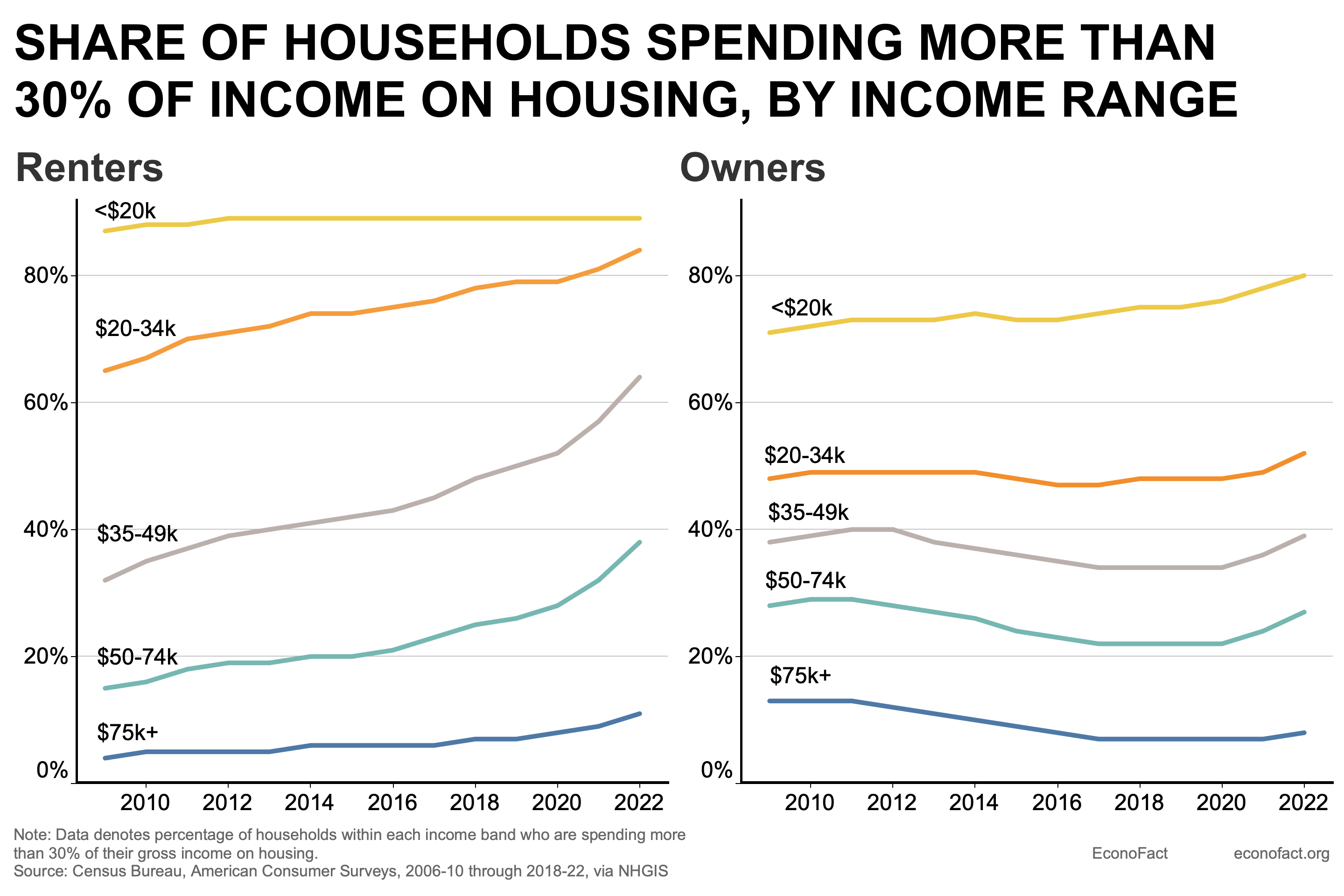
The American housing market is grappling with a crisis of affordability that is reshaping the landscape of homeownership and renting. A recent analysis by Econofact highlights the growing burden of housing costs on American households. With median house prices now six times the median income—up from four to five times two decades ago—the dream of homeownership is slipping away for many. Even renters, who have historically found refuge in more affordable options, are feeling the pinch as the ratio of median rents to median income has crept from 25% to 30%.
The Facts Behind the Crisis
Worsening Affordability: The affordability crisis is not confined to coastal cities like San Francisco and New York. It is a nationwide issue, affecting both urban and rural areas.
Cost-Burdened Households: A significant increase in cost-burdened renters—those spending more than 30% of their income on housing—has been observed, particularly among those earning between $35,000 and $49,000 annually.
Geographic Variations: Traditionally affordable regions are seeing rapid price appreciation, shrinking the affordability gap with historically expensive areas.
The issue of housing affordability is compounded by a mix of demographic shifts and regulatory hurdles. The aging population, with more seniors opting to age in place, has contributed to a supply crunch. Meanwhile, zoning laws and other regulatory restrictions limit housing density, exacerbating the shortage. These factors, coupled with the rise in mortgage rates from 3.5% to nearly 8% since early 2022, have made the path to homeownership even steeper.
Hope on the Horizon?
Despite the grim outlook, there are glimmers of hope. The anticipated reversal of the Federal Reserve’s tightening cycle could lower mortgage rates, easing the financial strain on households. Additionally, there are signs of change in urban zoning laws to allow more affordable housing construction. A surge in multifamily housing starts and a large pipeline of apartments under construction may help relieve pressure on rents.
The complexity of the housing affordability crisis suggests there is no quick fix. However, with concerted efforts to increase supply and reform regulatory practices, there is potential for a more balanced and accessible housing market.
“`
More Articles
Getting licensed or staying ahead in your career can be a journey—but it doesn’t have to be overwhelming. Grab your favorite coffee or tea, take a moment to relax, and browse through our articles. Whether you’re just starting out or renewing your expertise, we’ve got tips, insights, and advice to keep you moving forward. Here’s to your success—one sip and one step at a time!
The realm of Artificial Intelligence (AI) within intellectual property is undergoing a transformative phase. On January 14, 2025, the U.S. Patent and Trademark Office (USPTO) unveiled its comprehensive AI Strategy, an initiative designed to navigate the intricate landscape of AI's integration into intellectual property (IP) policy, agency operations, and the broader innovation ecosystem.
The comprehensive analysis presented by Deloitte in their 2025 Commercial Real Estate Outlook sheds light on the multifaceted challenges and opportunities that lie ahead.
In the evolving landscape of the restaurant industry, remote work is redefining the way businesses operate. As more employees embrace hybrid and remote work environments, a shift in dining habits is emerging, prompting fast-casual chains to adapt their strategies.
In the rapidly evolving landscape of real estate, technology is the driving force behind transformative changes, with proptech—short for property technology—leading the charge. As the real estate sector, valued at approximately $614 trillion globally, finally embraces digitalization, 2024 marks a pivotal year for the industry to bridge any technological gaps.
The Federal Reserve's recent decision to lower the federal funds rate by a total of 0.75 percentage points over its last two meetings has sparked discussions on its impact on the commercial real estate market in Northwest Arkansas. A potential additional cut of 0.25 percentage points by the end of the year has been signaled, promising further implications for the region's economic landscape.