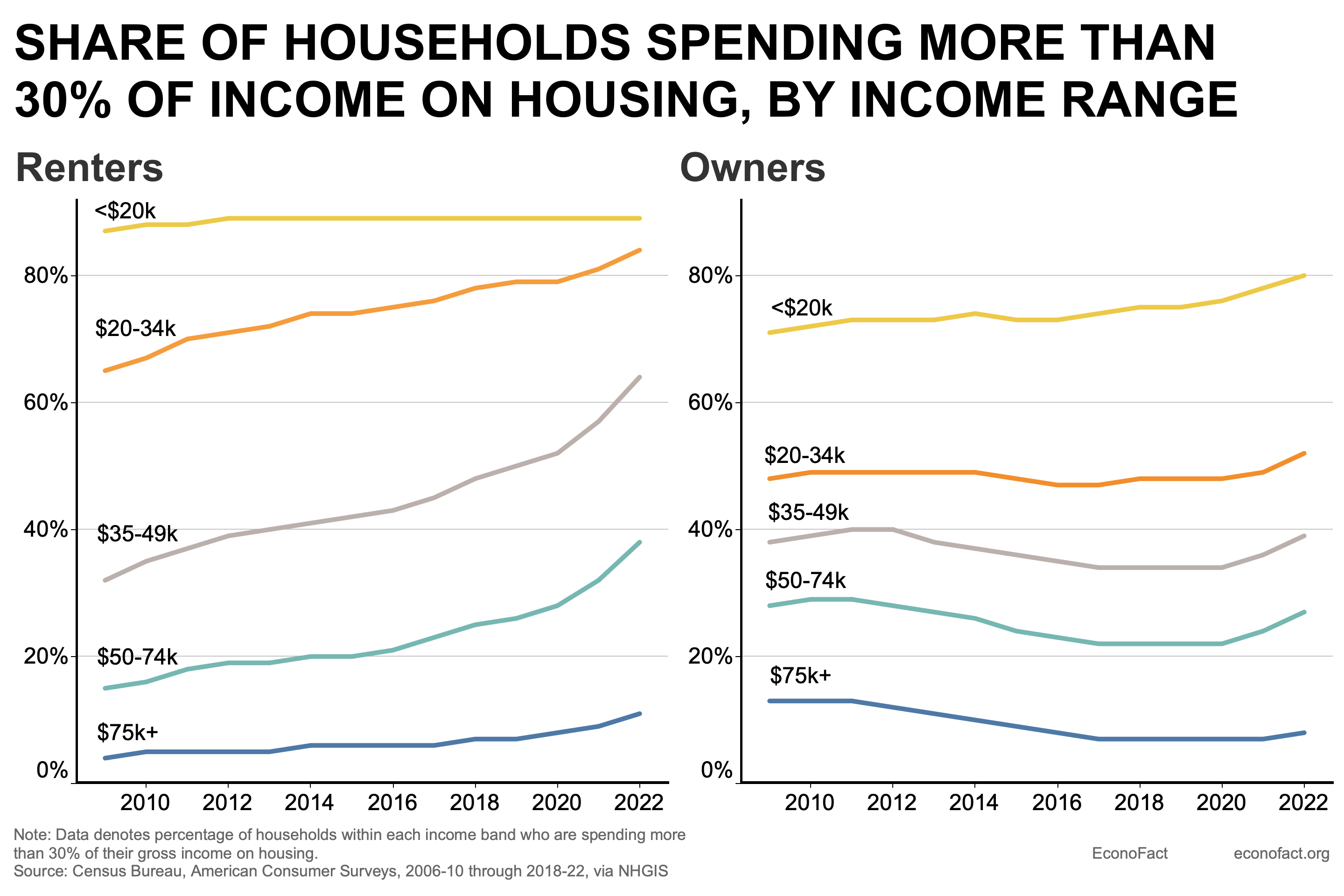
The American housing market is grappling with a crisis of affordability that is reshaping the landscape of homeownership and renting. A recent analysis by Econofact highlights the growing burden of housing costs on American households. With median house prices now six times the median income—up from four to five times two decades ago—the dream of homeownership is slipping away for many. Even renters, who have historically found refuge in more affordable options, are feeling the pinch as the ratio of median rents to median income has crept from 25% to 30%.
The Facts Behind the Crisis
Worsening Affordability: The affordability crisis is not confined to coastal cities like San Francisco and New York. It is a nationwide issue, affecting both urban and rural areas.
Cost-Burdened Households: A significant increase in cost-burdened renters—those spending more than 30% of their income on housing—has been observed, particularly among those earning between $35,000 and $49,000 annually.
Geographic Variations: Traditionally affordable regions are seeing rapid price appreciation, shrinking the affordability gap with historically expensive areas.
The issue of housing affordability is compounded by a mix of demographic shifts and regulatory hurdles. The aging population, with more seniors opting to age in place, has contributed to a supply crunch. Meanwhile, zoning laws and other regulatory restrictions limit housing density, exacerbating the shortage. These factors, coupled with the rise in mortgage rates from 3.5% to nearly 8% since early 2022, have made the path to homeownership even steeper.
Hope on the Horizon?
Despite the grim outlook, there are glimmers of hope. The anticipated reversal of the Federal Reserve’s tightening cycle could lower mortgage rates, easing the financial strain on households. Additionally, there are signs of change in urban zoning laws to allow more affordable housing construction. A surge in multifamily housing starts and a large pipeline of apartments under construction may help relieve pressure on rents.
The complexity of the housing affordability crisis suggests there is no quick fix. However, with concerted efforts to increase supply and reform regulatory practices, there is potential for a more balanced and accessible housing market.
“`
Getting licensed or staying ahead in your career can be a journey—but it doesn’t have to be overwhelming. Grab your favorite coffee or tea, take a moment to relax, and browse through our articles. Whether you’re just starting out or renewing your expertise, we’ve got tips, insights, and advice to keep you moving forward. Here’s to your success—one sip and one step at a time!
Florida homeowners are getting long‑awaited relief this spring as insurance premiums drop across the state, with some counties seeing reductions of up to 14 percent. After years of skyrocketing rates and insurer withdrawals, a series of legislative reforms has attracted new companies, reduced lawsuits, and restored competition—leading to lower costs for more than 330,000 Citizens policyholders and multiple private‑market rate cuts. This shift is boosting not only homeowners, but also Florida’s broader economy and real estate market, offering valuable insights for professionals in real estate, insurance, mortgage, and finance.
Artificial intelligence has transformed real estate marketing by making it easy to generate polished, digitally enhanced listing photos. But as AI tools increasingly replace reality with idealized versions of homes, a new issue has emerged: housefishing. Buyers and renters are showing up to properties that look nothing like the online images, leading regulators to step in and require transparency. With laws like California’s newly enacted Assembly Bill 723, the industry is being pushed toward clearer labeling and ethical use of AI. As trust becomes a growing concern, real estate professionals must balance innovation with accuracy to stay compliant and credible.
Massachusetts has unanimously advanced bill S.2947, a major push to curb housing discrimination by expanding fair housing education requirements for real estate agents. The proposal increases training hours for both current and future licensees and doubles penalties for violations, marking a significant shift toward stronger consumer protections and higher professional standards across the state’s housing market.
Energy costs have moved from a background expense to a major force influencing affordability, property values, and development across the Hudson Valley. Aging housing stock, grid constraints, and rising utility bills are reshaping both residential and commercial real estate decisions—rewarding energy‑efficient properties and pressuring households already struggling to balance essential expenses.
AI is transforming the daily workflow of real estate pros by speeding up marketing, simplifying client communication, and sharpening pricing strategies. As highlighted in an NBC 6 feature, agents are using AI to draft listing descriptions, generate social media content, organize inquiries, and analyze market data in minutes. Whether you're new to the industry or an experienced agent, AI is quickly becoming an essential tool for working smarter and staying competitive.