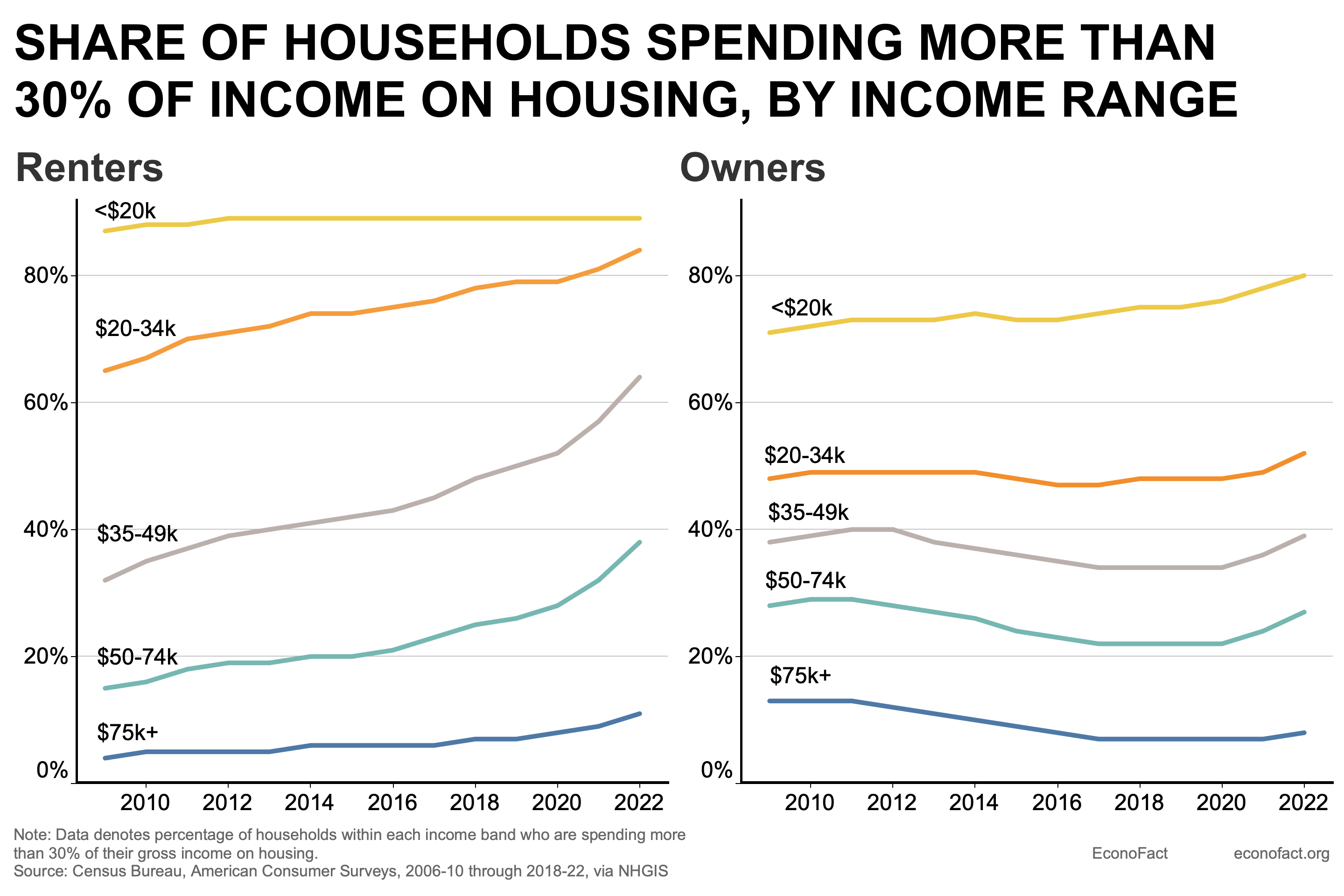
The American housing market is grappling with a crisis of affordability that is reshaping the landscape of homeownership and renting. A recent analysis by Econofact highlights the growing burden of housing costs on American households. With median house prices now six times the median income—up from four to five times two decades ago—the dream of homeownership is slipping away for many. Even renters, who have historically found refuge in more affordable options, are feeling the pinch as the ratio of median rents to median income has crept from 25% to 30%.
The Facts Behind the Crisis
Worsening Affordability: The affordability crisis is not confined to coastal cities like San Francisco and New York. It is a nationwide issue, affecting both urban and rural areas.
Cost-Burdened Households: A significant increase in cost-burdened renters—those spending more than 30% of their income on housing—has been observed, particularly among those earning between $35,000 and $49,000 annually.
Geographic Variations: Traditionally affordable regions are seeing rapid price appreciation, shrinking the affordability gap with historically expensive areas.
The issue of housing affordability is compounded by a mix of demographic shifts and regulatory hurdles. The aging population, with more seniors opting to age in place, has contributed to a supply crunch. Meanwhile, zoning laws and other regulatory restrictions limit housing density, exacerbating the shortage. These factors, coupled with the rise in mortgage rates from 3.5% to nearly 8% since early 2022, have made the path to homeownership even steeper.
Hope on the Horizon?
Despite the grim outlook, there are glimmers of hope. The anticipated reversal of the Federal Reserve’s tightening cycle could lower mortgage rates, easing the financial strain on households. Additionally, there are signs of change in urban zoning laws to allow more affordable housing construction. A surge in multifamily housing starts and a large pipeline of apartments under construction may help relieve pressure on rents.
The complexity of the housing affordability crisis suggests there is no quick fix. However, with concerted efforts to increase supply and reform regulatory practices, there is potential for a more balanced and accessible housing market.
“`
More Articles
Getting licensed or staying ahead in your career can be a journey—but it doesn’t have to be overwhelming. Grab your favorite coffee or tea, take a moment to relax, and browse through our articles. Whether you’re just starting out or renewing your expertise, we’ve got tips, insights, and advice to keep you moving forward. Here’s to your success—one sip and one step at a time!
PropTech investment surged nearly 68% in 2025, hitting a massive $16.7 billion and surpassing pre-pandemic highs. Investors are shifting toward practical, AI-powered tools that streamline operations, improve efficiency, and deliver immediate results. With 2026 shaping up to be a year of selective but strong growth, real estate professionals who stay ahead of tech trends will gain a major competitive edge.
Florida homeowners are finally seeing real relief as Citizens Property Insurance Corp. unveils an average 8.7% rate decrease for 2026—its largest cut in over a decade. Sparked by recent legislative reforms, a calm hurricane season, and renewed competition from insurers reentering the state, the drop is poised to significantly impact homeowners, real estate professionals, and industry trainees across Florida.
Tampa’s commercial real estate market is still growing, but investors are shifting from rapid dealmaking to highly selective, detail‑driven decisions. Population growth, steady office demand, stabilizing industrial activity, and a rebound in retail are keeping the market strong, while health‑care properties are emerging as a major sector for 2026. The region’s next chapter is defined by precision, disciplined underwriting, and long‑term strategy rather than speed.
Homesage.ai has released a new AI-powered comps engine that cuts property valuation time from hours to seconds by analyzing hundreds of data points across listings, public records, and proprietary datasets. Designed for agents, investors, and lenders, the tool delivers highly accurate comparable properties and real-time market insights, giving professionals a competitive edge in today’s rapidly shifting housing landscape.
A panel of federal judges is closely examining whether the National Association of Realtors’ billion‑dollar antitrust settlements—and similar deals struck by major brokerages—are genuinely fair to the millions of buyers and sellers affected. With plaintiffs arguing that homebuyers’ rights were improperly dismissed and compensation falls far short of true losses, the court’s upcoming decision could reshape commission practices and spark one of the most significant structural shifts in modern real estate.
The SEC is proposing a dramatic shift in how it defines a “small” registered investment adviser — raising the threshold from under 25 million in assets to under 1 billion. The change would instantly reclassify about 96 percent of RIAs and could create ripple effects across mergers and acquisitions, integration planning, and breakaway adviser activity. While the move aims to reduce administrative burden, it may also introduce new complexities for firms scaling past the billion‑dollar mark.