Holiday Spending, Consumer Jitters, and What It All Means for U.S. Commercial Real Estate

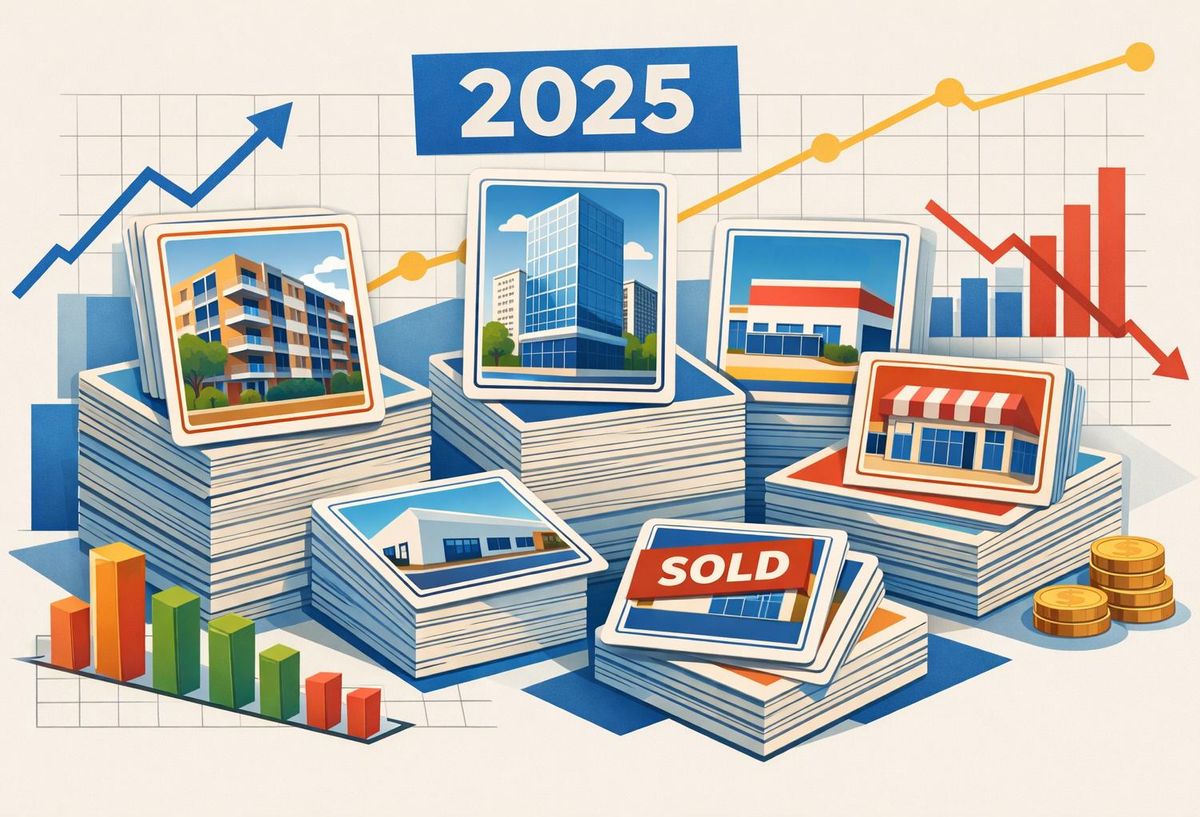
The 2025 holiday season is shaping up to break records—or at least appear to. With the National Retail Federation projecting up to $1 trillion in November–December sales, retailers are bracing for a season full of expectations. Yet inflation, consumer uncertainty, and uneven economic experiences across income levels may turn this milestone into more of an illusion than a true breakthrough.
Urban Land Magazine recently explored how this blend of confidence, caution, and shifting consumer behavior could ripple through the U.S. commercial real estate landscape. Below is a polished breakdown of their insights—and what rising and established professionals in real estate, finance, and business should keep on their radar heading into 2026.
Read the Original Urban Land Article
The Consumer Story: Strong, Selective, and Very Value‑Driven
Despite mixed economic sentiment, consumers are still spending—just more carefully. Analyst Nicole Larson of Colliers notes that while holiday sales may climb by 3.1 percent, inflation-adjusted growth tells a softer story. Shoppers are prioritizing meaningful purchases, value, and comparison shopping.
Online retail remains the season’s juggernaut. Forecasts point to 6.4 percent growth online versus only 2.2 percent in-store. AI‑driven comparison tools are accelerating the shift, redefining how buyers seek deals.
For commercial real estate, this cements a clear trend: top‑tier malls and well‑designed retail destinations continue to outperform weaker locations.
The Wealth Divide That’s Quietly Steering the Market
Economists highlight that spending strength is fueled largely by the nation’s wealthiest households—benefiting from strong markets, home equity, and AI‑linked investments. Meanwhile, middle‑ and lower‑income shoppers are stretching budgets thin due to rising living costs, medical bills, and credit burdens.
This widening “K-shaped economy” is creating uncertainty among CRE tenants and investors. Moody’s Analytics’ Thomas LaSalvia notes that many are delaying major commitments until the economic picture stabilizes—slowing deal flow across multiple sectors.
Retailers Are Reporting Higher Sales… but Not More Items Sold
A key concern this season: Retailers report sales in dollars, not units. With prices elevated by inflation and tariffs, higher revenue doesn’t guarantee increased volume.
Economist Randall Sakamoto suggests many categories—electronics, apparel, toys—may see fewer units sold than last year. Layer in aggressive discounts from retailers who rarely markdown holiday inventory, and the stress signals become hard to ignore.
This could spark:
• Early 2026 retail closures
• Reduced warehouse and logistics activity
• Hospitality slowdowns tied to shrinking consumer budgets
Commercial Real Estate Outlook: A Mix of Momentum and Uncertainty
Despite consumer headwinds, several CRE fundamentals remain solid. Vacancy rates in retail are low, top-tier properties are thriving, and experience‑driven categories—dining, entertainment, fitness—continue to perform strongly.
Manulife’s Victor Calanog notes that lending is stabilizing, with loan originations expected to increase by 35 percent this year. Transaction volumes are already up 17 percent. Unless the job market weakens dramatically, CRE may continue progressing despite turbulence.
The market, however, is highly selective—rewarding quality, traffic, and strategic formats over expansion for expansion’s sake.
What This Means for Real Estate Professionals
For agents, investors, analysts, and commercial specialists, these holiday‑season insights act as a preview of the 2026 market cycle.
• Consumer resilience supports CRE stability
• Wealthy households drive premium retail performance
• Struggling consumers raise vacancy and default risks
• Hospitality, logistics, and restaurant sectors remain vulnerable
• Location quality is more crucial than ever
For professionals renewing or pursuing licenses—especially in rapidly changing states like Florida—understanding these market forces is essential. Cameron Academy continues to equip real estate and business professionals with the knowledge, credentials, and confidence needed to excel in a shifting economy.
The Bottom Line
Holiday sales may hit a symbolic $1 trillion, but beneath the headline lies a season defined by caution, uneven consumer realities, and major shifts in buying behavior. For commercial real estate, the message is clear: Strong locations and sharp operators will carry momentum into 2026, while weaker players may struggle.
Education and insight will be the difference‑makers.
Explore the full article from Urban Land Magazine below for deeper analysis.
Visit Urban Land Magazine