How AI and a Tight Fundraising Market Are Resetting the Future of Canadian Proptech
The Canadian real estate industry is massive — the country’s largest contributor to GDP, even before adding construction into the mix. So it’s no surprise that Canada has evolved into a vibrant hub for proptech innovation, where both software and hardware are reshaping how people buy, sell, build, rent, and manage property.
This year delivered a wave of activity in the space, with new funding and product announcements from AI-powered real estate assistant Mave, rental software firm Rentsync, and tenant verification platform RentZoro. But behind the momentum lies a very different landscape — one defined by AI acceleration, cautious investors, and a proptech ecosystem entering a more mature phase.
These insights stem from Proptech Collective and the group’s detailed 2025 Proptech in Canada report, which signals the market’s shift toward sustainability, efficiency, and more disciplined growth.
A Tight Fundraising Market Forces Proptech to Mature
The report tracks 590 active Canadian proptech startups — but only a quarter were founded in the last five years, revealing a maturing ecosystem. At the same time, funding has tightened dramatically. Canadian proptech startups secured $450 million across 30 disclosed rounds in 2025, far below the peaks of 2021.
“Investors are more selective and want to see more traction earlier.”
— Stephanie Wood, Proptech Collective
Wood, who also serves as VP at Toronto VC firm Alate Partners, notes that AI has become “the biggest tailwind” for investment, accelerating both product development and industry adoption. Lower valuations and more cautious investors have pushed startups to focus on true product‑market fit and sustainable growth rather than hyper-scaling at all costs.
AI Becomes the Industry’s North Star
A significant portion of 2025’s proptech funding gravitated toward AI-driven startups. Toronto-based Mave, for instance, secured a $5 million seed round to expand its AI platform for realtors and brokers. CEO Raz Zohar says AI is forcing brokerages to rethink customer support, automating repetitive backend tasks and allowing agents to focus on closing deals.
VCs are focusing less on “broad narratives” and more on product engagement and traction.
Mave is onboarding 8,500 realtors and dozens of Ontario brokerages — and claims that 70% use the platform weekly. It’s exactly the kind of traction investors now demand.
Startups Delay Fundraising as Profitability Becomes a Priority
Early-stage funding remained flat year-over-year, but growth rounds became scarce. Only 10 deals surpassed $10 million, including Montréal-based Dcbel’s $55 million raise and Toronto’s Augmenta, which secured $14.4 million to expand its AI-driven building design software.
With investor expectations rising, many Canadian startups that would typically raise seed funding are instead postponing fundraising to prioritize profitability. Others are launching earlier with paid pilots, thanks to AI making product development faster and more affordable.
Of course, tech’s growing role in real estate isn’t universally good. If misused, AI can inflate rents, introduce lending bias, or expose consumer data — concerns already highlighted by watchdogs such as the U.S. Government Accountability Office.
Startup Formation Slows, but Proptech Remains Resilient
Only 34 new proptech startups were founded last year — a drop from both 2024 levels and the boom years of 2019 and 2020. Still, the sector remains resilient, with fewer but more serious startups entering the space.
On the other end of the lifecycle, exit activity remained muted. Instead, the market is undergoing steady consolidation driven by strategic M&A. Rentsync, for example, acquired Vancouver-based Spacelist and Toronto’s Urbanation — its seventh acquisition to date — strengthening its data capabilities and product reach.
Government Housing Initiatives May Provide Tailwinds
With Canada facing major housing affordability and supply challenges, proptech focused on construction could see strong momentum. The federal government’s $13‑billion Build Canada Homes agency may create new opportunities for companies working in zoning automation, modular housing, field management software, and other modern construction technologies.
Wood points to companies such as Montréal-based Landerz, Toronto’s Promise Robotics, and Kitchener-Waterloo’s Bridgit as prime examples of innovators positioned to benefit.
What This Means for Real Estate Professionals
For agents and brokers — in Canada, the U.S., or here in Florida — the message is unmistakable: AI and tech-driven tools are no longer optional. They are rapidly becoming the backbone of modern real estate operations.
At Cameron Academy, we see firsthand how the next generation of real estate professionals expects AI‑powered tools, smart analytics, and streamlined digital platforms to be part of their career toolkit. As the industry evolves, so must the professionals within it — and ongoing education remains the most reliable path to staying competitive.
A special thanks to BetaKit for their original reporting and continued coverage of proptech innovation.
More Articles
Getting licensed or staying ahead in your career can be a journey—but it doesn’t have to be overwhelming. Grab your favorite coffee or tea, take a moment to relax, and browse through our articles. Whether you’re just starting out or renewing your expertise, we’ve got tips, insights, and advice to keep you moving forward. Here’s to your success—one sip and one step at a time!
The financial landscape in South Korea is poised for a seismic shift as KBank, a major digital bank, grapples with a legislative curveball. The bank, which is heavily reliant on deposits from Upbit, Korea’s dominant cryptocurrency exchange, is facing a potential profit squeeze. The new Virtual Asset User Protection Act, set to take effect on July 19, 2024, mandates that banks must pay interest on crypto exchange deposits, a move that could severely impact KBank's bottom line.
AI's ability to analyze vast amounts of data is paving the way for a profound change in medical diagnostics. Khosla predicted that AI could take over up to 80% of standard medical tasks, reducing errors and biases in human diagnosis. This is particularly evident in fields like radiology and pathology, where AI's proficiency in analyzing medical imaging allows for the early detection of diseases such as cancer, significantly improving treatment outcomes.
The COVID-19 pandemic has dramatically reshaped the housing market landscape, resulting in an unprecedented surge in home prices throughout the United States.
In a world where technology is rapidly evolving, artificial intelligence (AI) is proving to be a game-changer in the healthcare sector. AI-powered tools are improving patient outcomes, enhancing operational efficiency, and reducing costs, reshaping the very fabric of healthcare delivery.
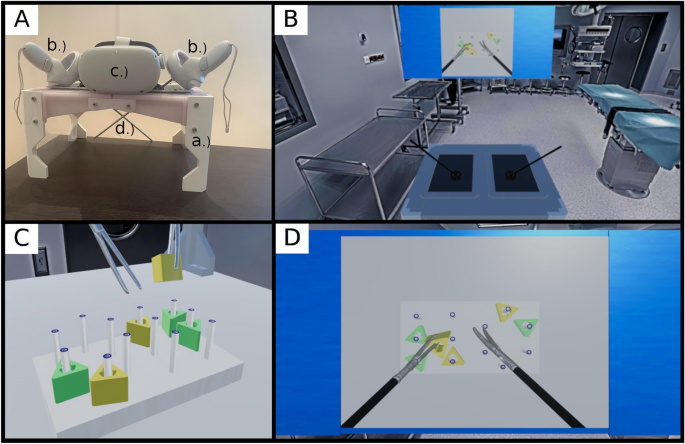
In a groundbreaking study published by Nature, researchers have unveiled a novel approach to surgical training using a low-fidelity virtual reality (VR) simulator enhanced with artificial intelligence (AI) for objective assessment. This pioneering method is poised to transform how medical students acquire laparoscopic skills, offering a cost-effective and efficient alternative to traditional training models.
AI in healthcare is projected to grow into a $188 billion industry worldwide by 2030, promising to revolutionize the field. From drug development to improved diagnostics, AI is already making significant strides, transforming medical practices and enhancing patient care efficiency.