How Florida Realtors Quietly Built One of Real Estate’s Most Powerful Tech Ecosystems
Every industry has its hidden giants—the innovators who quietly shape how business gets done while the spotlight is aimed elsewhere. In real estate, one of those giants isn’t a Silicon Valley startup or a venture-backed disruptor. It’s Florida Realtors®, the largest state real estate association in the nation, which has spent the last 25 years building a tech ecosystem used by hundreds of thousands of professionals across North America.
How a Support Desk Became a Tech Powerhouse
It all began with a simple truth: real estate professionals needed better tech support. The early 2000s brought the rise of digital tools, but agents were often left on their own to navigate them. Florida Realtors stepped in and created Tech Helpline, a friendly, Orlando-based support service staffed by analysts with hundreds of years of collective tech experience. Today, agents across the U.S. and Canada rely on it for everything from printer issues to smart-device setup.
This wasn’t meant to be a tech empire. But over the next decade, support evolved into strategy—and strategy into product development.
Form Simplicity: Built for Agents, Not Investors
In 2011, Florida Realtors introduced Form Simplicity, one of the industry’s most respected digital transaction management solutions. Unlike tech platforms developed under pressure from investors or venture capital, Form Simplicity grew from the inside out—built by real estate professionals, shaped by direct member feedback and supported entirely in-house.
It’s a model that has stood the test of time. Stability, transparency and deep product knowledge have kept the system resilient in a fast-shifting tech landscape.
Built-In Beats Bolted-On: The Rise of Sabal Sign
This year, Florida Realtors unveiled Sabal Sign, an e-signature platform engineered to be secure, compliant and fully embedded within Form Simplicity’s Ultimate Edition. Its mobile-friendly interface and real estate-specific workflows make it a standout alternative to more expensive third-party options.
But the most defining feature? It’s built-in, not bolted on. Florida Realtors owns it, supports it and integrates it seamlessly—avoiding the reliability issues that often come with external add-ons.
A Tech Ecosystem Without Outside Stakeholders
While many proptech companies shift direction due to market turbulence or investor demands, Florida Realtors answers only to its members. No outside shareholders. No exit strategy. No pressure to prioritize profit over service. This independence has become a powerful strategic advantage—one that helps keep its tools stable, relevant and accessible.
Partnerships With Purpose
Recently, Florida Realtors launched an innovation fund to back emerging technology partners. These aren’t typical vendor relationships—they’re long-term collaborations focused on safety, brokerage valuation, transaction optimization and member-first innovation.
A Quiet Giant Steps Into Focus
Despite powering daily operations for countless agents and brokerages, Florida Realtors has never relied on hype or marketing spectacle. Its tech ecosystem matured organically over two decades, becoming one of the industry’s most dependable, widely used platforms—often without its users even realizing who built it.
In a real estate landscape dominated by buzzwords and billion-dollar branding, Florida Realtors has proven something refreshing: lasting leadership is built on vision, not volume.
Why This Matters for Real Estate Professionals
For new and seasoned agents alike—including those launching their careers through programs at Cameron Academy—understanding the tools shaping Florida real estate is essential. From contract creation to e-signatures to troubleshooting, these platforms form the digital backbone of today’s transaction workflow.
Students entering the industry today are stepping into a tech environment built for reliability, long-term support and Florida-specific practice—giving them a far smoother start than agents had decades ago.
Getting licensed or staying ahead in your career can be a journey—but it doesn’t have to be overwhelming. Grab your favorite coffee or tea, take a moment to relax, and browse through our articles. Whether you’re just starting out or renewing your expertise, we’ve got tips, insights, and advice to keep you moving forward. Here’s to your success—one sip and one step at a time!
A growing share of American homeowners now carry mortgage rates above 5%—a dramatic shift that’s reshaping refinancing, inventory, and buyer behavior nationwide. With more than 30% of borrowers locked into rates over 5% and 20% above 6%, the market is split between owners holding on to low pandemic‑era loans and new buyers taking on higher‑rate mortgages. Federal efforts to push rates down could unlock millions of refinancing opportunities, while buyers see only modest monthly savings. For real estate professionals, understanding these rate dynamics is crucial as they increasingly drive inventory levels, affordability, and market activity.
New Moody’s data shows commercial real estate deal volume slipped 20% in December, marking a second monthly decline. Yet the full year tells a different story: 2025 ended with a 17% gain, signaling a quiet but resilient recovery. The biggest surprise came from the office sector, which posted a 21% jump in activity as return‑to‑office trends and AI‑driven job growth boosted demand. Multifamily, retail, and alternative assets like data centers also saw strong momentum, giving real estate professionals a market full of fresh opportunities heading into 2026.
Florida drivers and industry professionals are heading into 2026 with good news: auto insurance rates are dropping across the state as the market shows strong signs of stabilization. USAA leads the latest wave with a 7% average rate decrease expected in May 2026, saving members more than $125 million annually. They join several major insurers — including State Farm, Progressive, AAA, Allstate, and Florida Farm Bureau — all approving significant reductions. Officials credit recent legislative reforms, especially tort reform, for the improved loss ratios and renewed insurer confidence. With both auto and home insurance markets strengthening, Florida’s real estate, mortgage, and insurance professionals can expect more consumer confidence, smoother transactions, and expanding career opportunities.
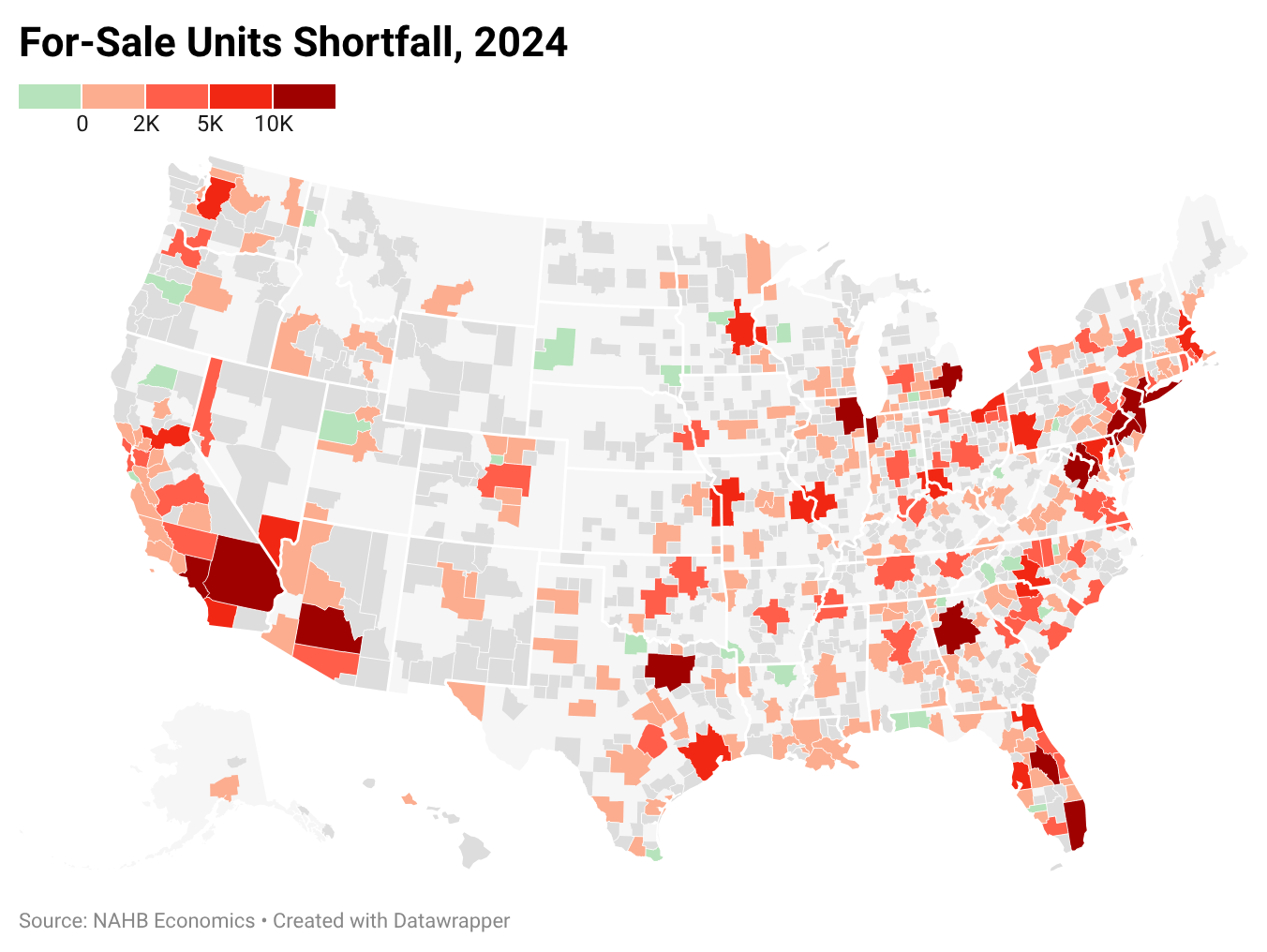
New data from Eye On Housing and the NAHB shows the U.S. remains short more than 1.2 million housing units, keeping pressure on both rents and home prices. Record‑low vacancy rates, slow single‑family construction, and restrictive zoning continue to fuel intense competition in 2024. Major metros like Chicago, New York, and Atlanta face some of the deepest deficits, and the true nationwide shortfall may be even higher when accounting for overcrowding and aging homes. For real estate professionals, the ongoing shortage means sustained demand, tighter inventory, and major opportunities for those who understand the evolving market.
Top real estate coach Jason Pantana says the divide between agents today isn’t about who has “tried” AI — it’s about who is immersed in it. In a new HousingWire interview, he explains why AI isn’t a gimmick but a full business system that amplifies output, improves authenticity, and reshapes how clients search for agents. From prompt mastery to AI‑driven visibility on Google, Pantana reveals how agents who commit even 15 minutes a day to learning AI are already outperforming those who hesitate.
Dallas–Fort Worth’s commercial real estate market closed 2025 with a split personality. Industrial dominated with massive new deliveries and soaring leasing demand, retail held steady with some of the market’s strongest fundamentals in years, and office continued to falter under remote‑work pressures. High vacancies, weak absorption, and rising demand for top‑tier space show the sector’s ongoing reset. Meanwhile, industrial and retail strength position the Metroplex for another powerhouse year heading into 2026.