How ERAS Changes Could Reshape the Future of Medical Residency Applications
The world of medical education is shifting once again—and for the thousands of future physicians preparing to enter the Match in the coming years, the changes could have a real impact on how they present themselves as residency candidates. According to a recent report from the AMA News Wire, the Electronic Residency Application Service (ERAS) platform will introduce a major update beginning in the 2027 application cycle: the long‑standing “publications” field will be replaced with a broader, research‑centered category called scholarly works.
Tap to View Source
Content sourced from AMA News Wire. Explore the full article at:
Traditionally, ERAS allowed applicants to highlight publications among eight core experience types. These entries ranged from peer‑reviewed journal articles to advocacy letters, op‑eds, and student‑driven policy proposals. But residency directors have expressed a persistent concern: publication lists can be lengthy, inconsistent, and often fail to reflect an applicant’s true depth of knowledge or contribution.
The new “scholarly works” category intends to solve this issue by tightening the definition. Only work submitted to peer-reviewed entities—journal manuscripts, abstracts, book chapters, oral presentations, posters—will qualify. Applicants may highlight up to three meaningful projects and designate first‑authorship where applicable.
Growing Emphasis on Research Output
Recent data underscores how central research has become in competitive residency applications. In 2024, matched U.S. MD seniors reported an average of 10 total scholarly outputs. DO applicants reported roughly half of that number. In high-stakes specialties like neurological surgery, the average soared to more than 37.
This structural shift could push programs to place even greater emphasis on peer-reviewed contributions as indicators of academic potential and commitment.
Concerns Over Lost Visibility
Not all students are excited about the narrowed definition. Many worry that critical contributions—advocacy work, policy involvement, and community health initiatives—may lose visibility. AMA member and student leader Sneha Kapil stressed that these works remain vital for shaping the future of medicine and physician leadership.
While these experiences can still appear elsewhere in the application, moving them out of the scholarly section raises concerns that residency directors may overlook them.
A Call for a Holistic Approach
Medical education leaders emphasize that research excellence does not necessarily predict outstanding clinical performance. Attributes such as empathy, teamwork, leadership, and communication rarely appear in publications, yet they define what makes a great physician. Dr. John Andrews of the AMA warns that over‑prioritizing research could drive students toward activities pursued solely because they “count.”
Residency programs are encouraged to maintain a balanced approach, especially as major exams such as USMLE Step 1 and COMLEX Level 1 have transitioned to pass/fail scoring.
Where This Leaves Future Applicants
Whether you’re a medical student or a professional in another field, the shift toward research-focused evaluation mirrors broader trends across licensing and education: quality now outweighs quantity. Thoughtful, meaningful documentation is becoming the new standard.
At Cameron Academy, we see similar patterns in other professional licensing fields—real estate, insurance, finance, and beyond. While requirements vary, one truth is universal: meaningful learning produces confident, capable professionals.
As the 2027 residency cycle approaches, applicants should focus not just on producing research, but on understanding it, owning it, and presenting it with clarity and purpose.
More Articles
Getting licensed or staying ahead in your career can be a journey—but it doesn’t have to be overwhelming. Grab your favorite coffee or tea, take a moment to relax, and browse through our articles. Whether you’re just starting out or renewing your expertise, we’ve got tips, insights, and advice to keep you moving forward. Here’s to your success—one sip and one step at a time!
Artificial intelligence is rapidly reshaping the mortgage industry, boosting productivity, reducing manual work, and accelerating loan closings. From automated document data extraction to AI‑generated underwriting narratives and predictive analytics, lenders are using new tools that improve accuracy and drastically speed up processing times. With chatbots, next‑gen point‑of‑sale systems, and end‑to‑end automation, preapprovals that once took days now take minutes. For mortgage and real estate professionals, mastering AI is becoming a major competitive advantage—one that defines who will thrive in the future of lending.
Florida’s property insurance rates are finally starting to drop, but many homeowners are still seeing higher monthly bills. The reason isn’t insurer price hikes—it’s soaring replacement costs driven by construction inflation, labor shortages, and rising home values. Nearly 75 percent of recent premium increases came from higher property values alone. Understanding this gap between “rates” and “premiums” helps homeowners—and real estate and insurance professionals—navigate the shifting Florida market and make smarter coverage decisions.
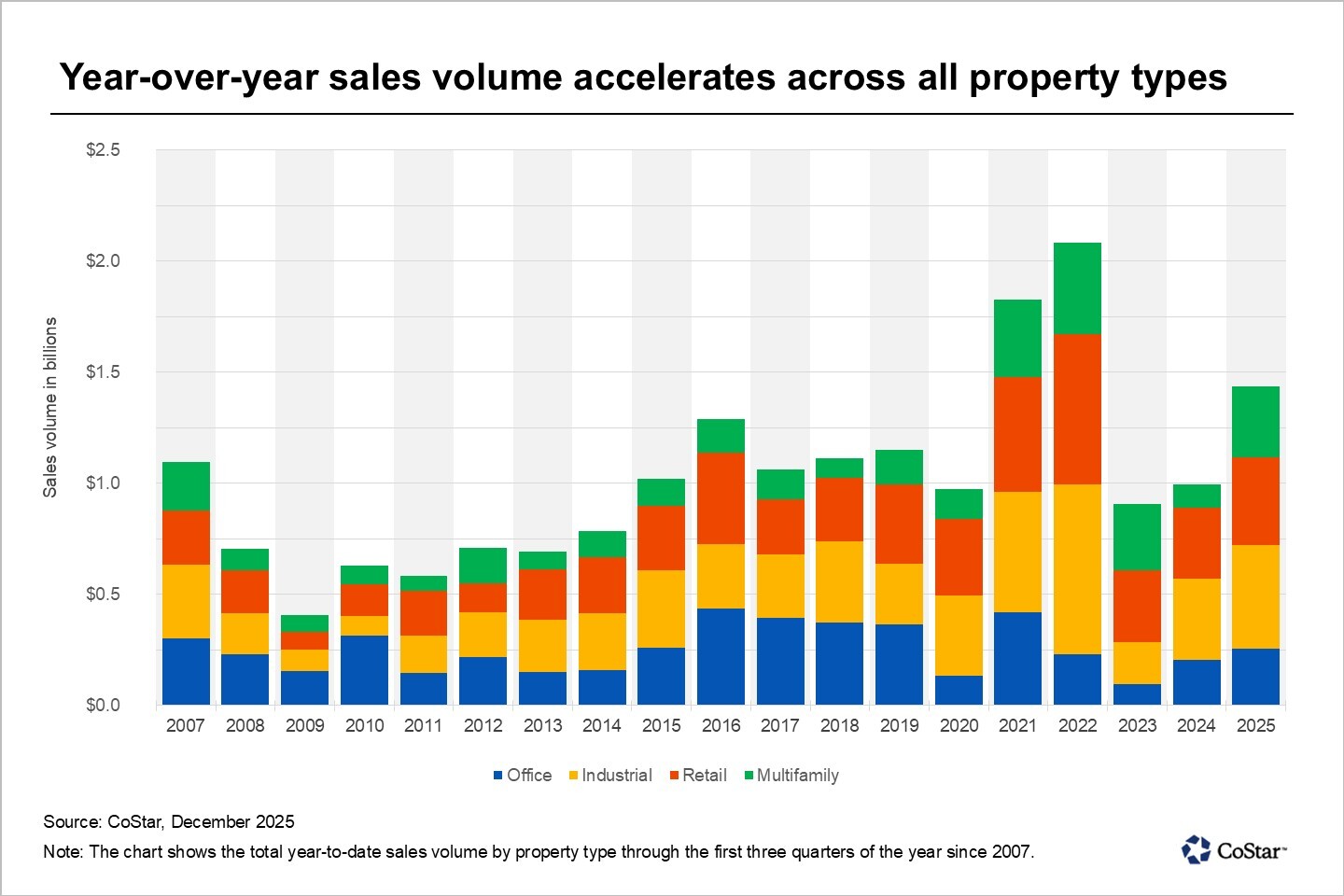
Milwaukee’s commercial real estate market is finally showing real signs of recovery, with 2025 sales volume hitting a three‑year high and investor confidence steadily returning. Driven by selective, fundamentals‑focused buying—favoring strong cash flow, quality assets, and strategic pricing—the city is moving from a period of correction into a healthier, opportunity‑rich phase. For real estate professionals nationwide, Milwaukee’s momentum reflects broader CRE market stabilization and the growing importance of disciplined underwriting and market expertise.
Industry leaders project a major surge in reverse mortgage activity heading into 2026, fueled by rising proprietary products, lender innovation, and strong investor interest. As high interest rates push originators to adopt new strategies, flexible private‑label options, senior‑focused HELOCs, and a wave of big‑capital investment are reshaping the market. With education and policy shifts poised to unlock even more demand, reverse mortgages are entering their most transformative era yet.
Experts forecast that 2026 may bring long‑awaited relief to homebuyers, with both existing and new home inventory expected to rise. NAR predicts a boost in home sales, a slight drop in mortgage rates, and a modest 4% increase in prices—conditions that could motivate more homeowners to list while builders add over a million new homes to the market. For first‑time buyers, higher loan limits and easing qualification standards may make entering the market more achievable than in recent years.
South Florida enters 2026 with renewed optimism as falling mortgage rates, improving buyer confidence, and a strong job market help stabilize a housing landscape that struggled in 2025—especially in the condo sector. While single-family homes remained resilient last year, condos faced price drops, rising fees, and hesitation tied to new safety regulations. With rates projected to fall to around 5.8% by year’s end, buying power is increasing, inventory may loosen, and activity is expected to pick up. Still, affordability challenges persist, Miami’s rental market remains intensely competitive, and the condo sector’s recovery will take time.


 The Mortgage Industry’s AI Transformation: Automation Reshapes Lending From Application to Approval Gallery