How the Biggest Players Shaped the 2025 Commercial Real Estate Market
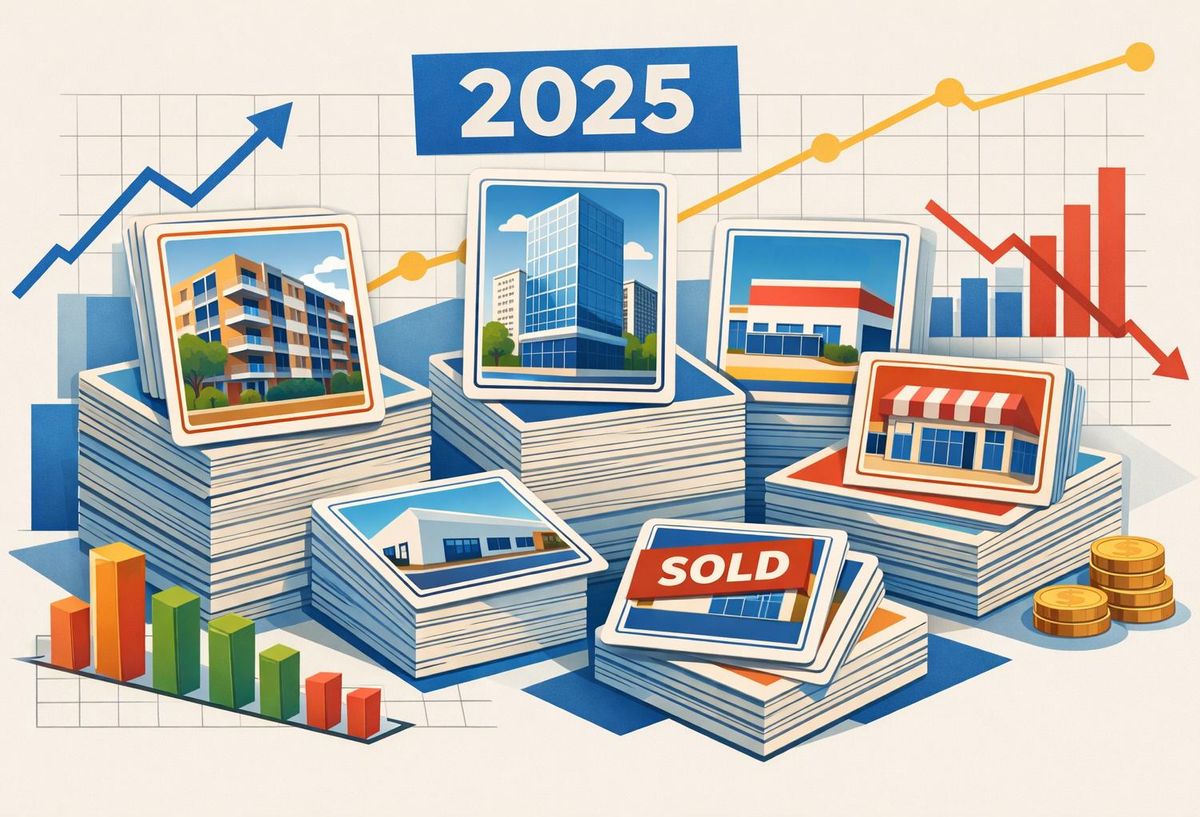
Commercial real estate finally thawed out in 2025. After years of sluggish deal volume and stubborn market uncertainty, investors pushed more than $255B into multifamily, industrial, office and retail assets. As major players recalibrated their strategies around interest rate shifts, political turbulence and evolving space demand, a clear theme emerged: opportunity waits for no one.
In today’s shifting professional landscape, understanding these market dynamics isn’t just valuable — it’s essential. Whether you’re deep in your real estate career or launching a new professional chapter through licensing programs, institutions like Cameron Academy help you stay sharp, agile and competitive.
According to a detailed analysis of CoStar data published by Bisnow, every major sector saw momentum build quarter after quarter in 2025. Interest rate cuts, moderating bond yields and a surprising willingness among investors to look past political and economic turbulence fueled this resurgence.
James Nelson of Avison Young described the landscape simply: “All asset classes are firing on all cylinders.” Despite trade disputes, AI concerns and geopolitical noise, investors weren’t waiting around. They moved decisively — and in enormous volume.
Multifamily: The Heavyweight Champion of 2025
With more than $115B in transactions, multifamily dominated 2025, representing nearly half of all CRE investment. The biggest mover? Harbor Group International, securing $2.5B in acquisitions spanning New England and the Sun Belt.
Competition tightened as institutional giants like FPA Multifamily, Cortland and CALSTRS fought for market share. Portfolio trades took center stage, signaling strong confidence in rental demand — particularly as homeownership affordability remains historically strained.
Even liquidation moves from firms such as Elme Communities and Aimco sent noticeable tremors through the sector, highlighting how quickly REIT strategies continue to evolve.
Industrial: Private Equity Takes the Wheel
Industrial real estate extended its winning streak into 2025, closing the year with nearly $62B in deals. EQT AB led the charge with $2.7B in acquisitions, showcasing widespread confidence in logistics and warehouse performance.
With four of the top 10 buyers focused exclusively on industrial assets, the sector remained a prime arena for private equity and global capital. Blackstone, Ares, Morgan Stanley and Norges Bank all made bold moves, further validating the resilience of logistics demand.
Blackstone alone offloaded $4.6B in assets — a striking figure reflecting its ongoing strategic rotation across markets like South Florida.
Office: Owner-Users Take the Stage
Office real estate saw an unexpected revival in 2025, driven largely by owner-user purchases. Total volume hit $47.2B as companies opted to buy, not lease, their spaces — a unique post-pandemic trend fueled by discounted pricing and widespread vacancy.
Apple topped all buyers with over $1B in Silicon Valley acquisitions, securing long-term control of several buildings it already occupied. Pacific Gas & Electric advanced its consolidation strategy with a $906M headquarters purchase in Oakland.
The State Teachers Retirement System of Ohio led all sellers with a massive $1.1B Manhattan disposition — bolstered by Elliott Investment Management and Apollo Global Management.
Retail: Resilient, Attractive and Investor-Friendly
Retail proved its durability in 2025, maintaining historically low vacancy levels despite major bankruptcies. Investors poured $5.4B into retail assets, driven by stable net lease opportunities and strong demand for grocery-anchored centers.
RCG Ventures closed the year’s largest retail deal — a $1.8B portfolio acquisition supported by Goldman Sachs, Koch Real Estate and Ares. Meanwhile, retail titan Simon Property Group invested $721M including a key Miami mall purchase.
Strategic Value Partners topped the seller charts with $1.4B in dispositions, spreading capital across a broad mix of buyers including Brixmor and Invesco.
The Bigger Picture for Professionals
The 2025 CRE narrative makes one thing clear: while headlines may highlight uncertainty, the professionals who understand market direction are the ones who win. Multifamily remains king, industrial continues its dominance, office redefines itself and retail demonstrates remarkable endurance.
For real estate agents, investors, mortgage professionals and specialists across countless industries, staying ahead of these shifts isn’t optional — it’s essential. That’s why institutions like Cameron Academy continue to play a critical role across Florida and the U.S., empowering professionals to upgrade, expand and elevate their careers.
As we move deeper into 2026, the market’s biggest players have already made their moves. Now the real question is: where will you plant your flag?
More Articles
Getting licensed or staying ahead in your career can be a journey—but it doesn’t have to be overwhelming. Grab your favorite coffee or tea, take a moment to relax, and browse through our articles. Whether you’re just starting out or renewing your expertise, we’ve got tips, insights, and advice to keep you moving forward. Here’s to your success—one sip and one step at a time!
Los Alamitos Race Course is facing its most serious crisis in years after 18 horses died in 2025, prompting regulators to warn the track that its racing license is at risk without immediate safety reforms. Following three catastrophic injuries in a single day, the California Horse Racing Board has ordered urgent changes—including more veterinarians, stricter medication rules, and enhanced on‑track medical support—as pressure mounts for stronger oversight in a sport already under national scrutiny.
Canadian investors have poured more than US$5.8 billion into U.S. commercial real estate this year, making the U.S. their top destination even amid a lingering tariff dispute. Tight inventory in Canada and greater deal availability south of the border are driving the trend, with data centers and industrial properties emerging as the hottest targets for 2025.
Florida’s insurance commissioner says even industry pros struggle to read today’s 150‑page homeowners policies—leaving residents shocked when hurricane claims are denied. With rising premiums, high replacement costs, and widespread confusion over exclusions like flood and water damage, the state is pushing for simpler, clearer policy language so homeowners know what they’re actually covered for before the next storm hits.
Following the 2025 elections, major metros like New York, Chicago, Miami, Los Angeles, and Boston are implementing policy shifts that could reshape property values, rental income, development timelines, and investment strategy heading into 2026. From New York’s push toward aggressive rent reform to Chicago’s sustainability mandates and Miami’s uncertain mayoral runoff, these changes signal a new era where local politics increasingly dictate market performance. This breakdown highlights the biggest post‑election real estate pivots and what they mean for investors, agents, and finance professionals preparing for a rapidly evolving landscape.
Florida’s Insurance Commissioner is sounding the alarm after thousands of homeowners discovered—only after hurricanes Helene and Milton—that the coverage they thought they had didn’t exist. With nearly 150,000 unpaid claims tied to misunderstood flood exclusions, water‑damage caps, and buried policy clauses, state leaders are pushing to simplify the dense, confusing documents most Floridians never read. As insurance costs remain one of the state’s top concerns, this growing complexity is creating a massive opportunity for real estate, mortgage, and insurance professionals to guide consumers before disaster strikes.
Florida’s insurance market is reliving an old crisis under a new name. Despite reforms meant to stabilize the system, homeowners are being forced out of Citizens and into pricier policies from small insurers with shaky financial histories. Companies tied to past insolvencies are returning with fresh branding, while highly rated carriers continue to deny a majority of claims. With political influence muddying regulation and climate risks rising, experts warn that only a full structural overhaul—not cosmetic reforms—can restore confidence for homeowners, agents, and the entire real estate market.