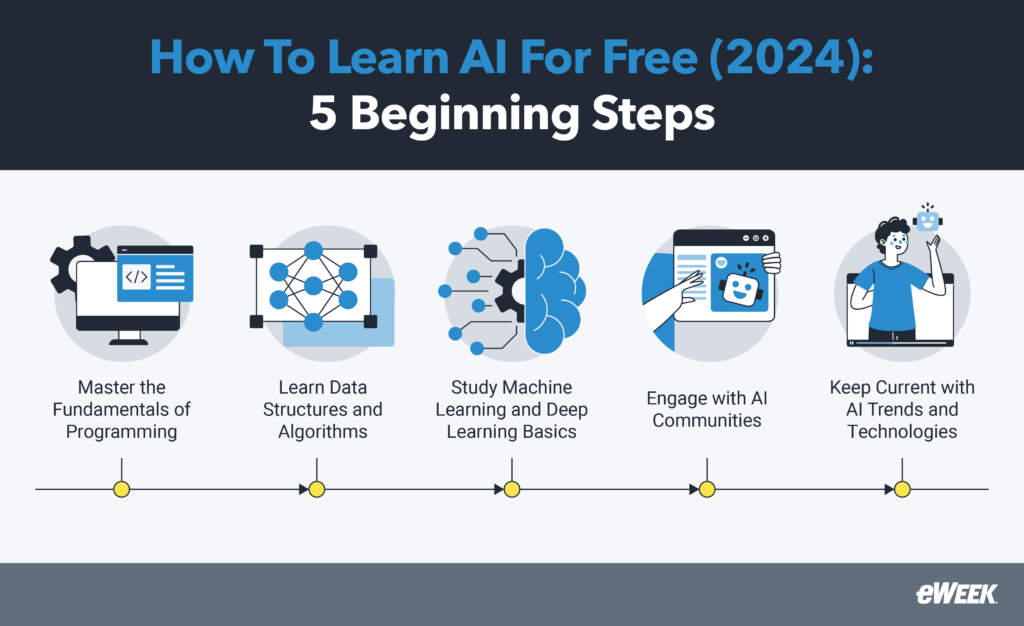
In today’s rapidly evolving digital landscape, artificial intelligence (AI) is more than just a buzzword—it’s a transformative force reshaping industries and creating new career opportunities. For those looking to dive into this exciting field without breaking the bank, there are numerous free resources available. Originally reported by eWEEK, here are five essential tips to kickstart your AI learning journey.
1. Master the Fundamentals of Programming
Programming languages are the backbone of AI development. Python, known for its simplicity and powerful libraries like NumPy, Pandas, TensorFlow, and PyTorch, is a popular choice. R is also valuable for data visualization and statistical analysis. Platforms like Codecademy and FreeCodeCamp offer beginner-friendly courses that combine theory with practical experience.
2. Learn Data Structures and Algorithms
Understanding data structures and algorithms is crucial for effective data processing in AI models. YouTube channels such as FreeCodeCamp and CS50 provide extensive tutorials on these topics. Communities like Kaggle and GitHub are excellent for sharing knowledge and collaborating on projects.
3. Study Machine Learning and Deep Learning Basics
Machine learning, a subset of AI, enables computers to learn from data. Deep learning, focusing on neural networks, mimics the human brain’s information processing. Free resources like Machine Learning for Everybody and Intermediate Machine Learning courses are available. Kaggle provides real-world datasets for hands-on experience.
4. Engage with AI Communities
Engaging with online AI communities offers opportunities for collaboration and knowledge sharing. Platforms like Kaggle and GitHub allow users to participate in challenges and collaborate on projects. Forums like PromptZone and social media groups provide spaces for discussion and networking with industry professionals.
5. Keep Current with AI Trends and Technologies
AI is a dynamic field with constant innovations. Staying updated with the latest trends and technologies is essential. Subscribing to newsletters from industry leaders like OpenAI, Google, IBM, AWS, and Microsoft can help you stay informed.
3 Free Resources to Learn AI Today
In addition to the above tips, here are three recommended resources:
Introduction to Generative AI & Machine Learning Essentials by AWS: An online course emphasizing practical uses of AI in cloud computing.
Artificial Intelligence: Foundations of Computational Agents by David Poole and Alan Mackworth: A free book that dives into AI’s theoretical foundations.
There’s An AI For That (TAAFT) Forum: A vibrant community for AI enthusiasts to share resources, participate in discussions, and find collaboration opportunities.
Embarking on a successful AI learning journey requires commitment, curiosity, and the right resources. By mastering the fundamentals, engaging with communities, and staying updated, you can position yourself for success in this exciting field. For more detailed insights and resources, visit the original eWEEK article.
“`
More Articles
Getting licensed or staying ahead in your career can be a journey—but it doesn’t have to be overwhelming. Grab your favorite coffee or tea, take a moment to relax, and browse through our articles. Whether you’re just starting out or renewing your expertise, we’ve got tips, insights, and advice to keep you moving forward. Here’s to your success—one sip and one step at a time!
Florida’s insurance market is under intense pressure as millions of residents and trillions in property wealth cluster along hurricane‑vulnerable coastlines. This article breaks down how decades of growth in high‑risk zones created today’s crisis, why traditional pricing models can’t keep up, and what real estate and insurance professionals must do to stay ahead. It offers actionable insights on underwriting, risk communication, policy partnerships, and resilience planning—critical knowledge for anyone advising Florida homeowners or navigating the state’s evolving insurance landscape.
Florida’s homeowners insurance market may have stabilized, but not in the way residents hoped. After years of runaway increases, premiums have stopped spiking—but they’re holding at painfully high levels. Coastal properties remain the hardest hit, with some policies topping $15,000 a year, while insurers continue demanding costly upgrades and resisting calls for transparency. For real estate professionals, understanding these pricing pressures is becoming essential as insurance costs increasingly shape buyer decisions across the state.
Florida homeowners face soaring premiums, shrinking insurer options, and storms that grow stronger each year. This article breaks down what hurricane insurance actually covers, how deductibles really work, why flood insurance is essential, and what professionals in real estate, mortgage, and insurance must understand to protect clients and properties before the next major storm hits.
Teresa King Kinney, one of the most influential executives in modern real estate, is retiring after 33 years as CEO of the MIAMI Association of Realtors. Under her leadership, the organization grew from 5,000 members to 60,000, became a global real estate powerhouse, and built the nation’s largest association‑owned MLS. As she transitions into CEO Emeritus, MIAMI prepares for a new era shaped by the foundation she spent decades building.
Miami’s commercial property market is heating up again, posting an 11% jump in investment volume for 2025. The surge is driven largely by a revitalized retail sector fueled by population growth, strong tourism, and new mixed‑use development. While office and industrial activity remains steady but softer, investor confidence is returning as Miami’s CRE landscape matures and buyers re‑enter the market with renewed interest in high‑traffic retail opportunities.
The Federal Reserve is preparing major changes to mortgage regulations in an effort to pull more mortgage activity back into the banking sector. With banks losing significant market share to nonbank lenders over the past decade, Fed Vice Chair for Supervision Michelle Bowman says new proposals may ease capital requirements and make mortgage servicing more attractive for banks. These shifts could have wide‑ranging effects on real estate professionals, lenders, and borrowers as the balance of power in the mortgage market begins to shift once again.