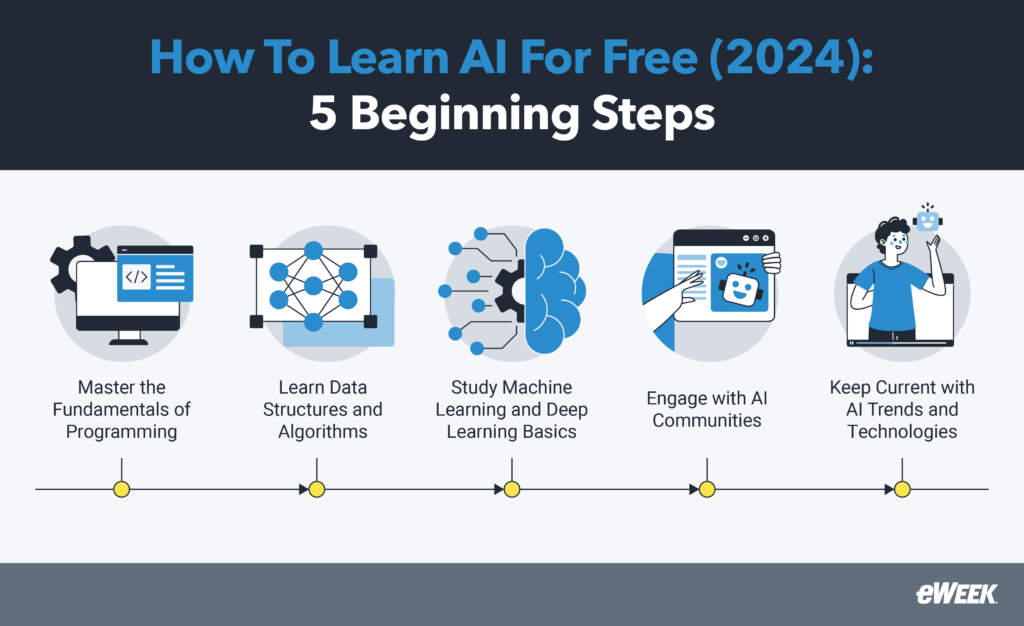
In today’s rapidly evolving digital landscape, artificial intelligence (AI) is more than just a buzzword—it’s a transformative force reshaping industries and creating new career opportunities. For those looking to dive into this exciting field without breaking the bank, there are numerous free resources available. Originally reported by eWEEK, here are five essential tips to kickstart your AI learning journey.
1. Master the Fundamentals of Programming
Programming languages are the backbone of AI development. Python, known for its simplicity and powerful libraries like NumPy, Pandas, TensorFlow, and PyTorch, is a popular choice. R is also valuable for data visualization and statistical analysis. Platforms like Codecademy and FreeCodeCamp offer beginner-friendly courses that combine theory with practical experience.
2. Learn Data Structures and Algorithms
Understanding data structures and algorithms is crucial for effective data processing in AI models. YouTube channels such as FreeCodeCamp and CS50 provide extensive tutorials on these topics. Communities like Kaggle and GitHub are excellent for sharing knowledge and collaborating on projects.
3. Study Machine Learning and Deep Learning Basics
Machine learning, a subset of AI, enables computers to learn from data. Deep learning, focusing on neural networks, mimics the human brain’s information processing. Free resources like Machine Learning for Everybody and Intermediate Machine Learning courses are available. Kaggle provides real-world datasets for hands-on experience.
4. Engage with AI Communities
Engaging with online AI communities offers opportunities for collaboration and knowledge sharing. Platforms like Kaggle and GitHub allow users to participate in challenges and collaborate on projects. Forums like PromptZone and social media groups provide spaces for discussion and networking with industry professionals.
5. Keep Current with AI Trends and Technologies
AI is a dynamic field with constant innovations. Staying updated with the latest trends and technologies is essential. Subscribing to newsletters from industry leaders like OpenAI, Google, IBM, AWS, and Microsoft can help you stay informed.
3 Free Resources to Learn AI Today
In addition to the above tips, here are three recommended resources:
Introduction to Generative AI & Machine Learning Essentials by AWS: An online course emphasizing practical uses of AI in cloud computing.
Artificial Intelligence: Foundations of Computational Agents by David Poole and Alan Mackworth: A free book that dives into AI’s theoretical foundations.
There’s An AI For That (TAAFT) Forum: A vibrant community for AI enthusiasts to share resources, participate in discussions, and find collaboration opportunities.
Embarking on a successful AI learning journey requires commitment, curiosity, and the right resources. By mastering the fundamentals, engaging with communities, and staying updated, you can position yourself for success in this exciting field. For more detailed insights and resources, visit the original eWEEK article.
“`
More Articles
Getting licensed or staying ahead in your career can be a journey—but it doesn’t have to be overwhelming. Grab your favorite coffee or tea, take a moment to relax, and browse through our articles. Whether you’re just starting out or renewing your expertise, we’ve got tips, insights, and advice to keep you moving forward. Here’s to your success—one sip and one step at a time!
Financial analysis remains one of the strongest career paths for professionals seeking high earnings, steady growth, and long-term stability. With median salaries above $100K, expanding demand across industries, and clear promotion tracks leading to senior leadership roles, the field offers both opportunity and resilience—even as AI reshapes the workplace. This article breaks down what analysts do, salary expectations, job outlook, industry demand, and whether this career is the right fit for you.
After losing their home in the Los Angeles wildfires, Jessica and Matt Conkle expected their insurance policy to help them rebuild. Instead, they found themselves trapped in delays, lowball offers, and endless adjuster changes — a struggle now shared by thousands across California. Their experience highlights a nationwide problem: insurers pulling back from climate‑risk areas, soaring premiums, shrinking coverage, and regulators under fire. For professionals in real estate, mortgage, and insurance, this growing instability is reshaping transactions, lending, risk assessment, and the future of homeownership in America.
Kansas City’s housing market is finally gaining momentum heading into 2026 as falling interest rates, new construction, and a renewed focus on affordable homes open the door for first‑time buyers. Economists say improved supply and softer mortgage rates could shift the market after a challenging 2025, giving real estate professionals and buyers a promising window of opportunity.
Nevada has become the first state to allow insurers to sell homeowners policies without wildfire protection—a move aimed at lowering premiums but raising concerns about consumer risk and mortgage barriers. The law introduces new wildfire‑only policies and a regulatory sandbox for insurance innovation, potentially setting a precedent for other Western states.
Investment groups across the U.S. are rapidly expanding into tax‑deferred real estate programs as demand for Delaware Statutory Trusts (DSTs) accelerates. Major players like Blackstone, Brookfield, Denholtz, and PREP are launching new offerings fueled by stronger market certainty, a historic generational wealth transfer, and renewed confidence in 1031 exchange benefits. As DSTs move into the mainstream, real estate professionals are finding new opportunities to guide clients through advanced tax‑advantaged investment strategies.
Canada’s proptech sector is evolving fast as AI adoption accelerates and investor caution forces startups to mature. Funding has tightened, growth rounds have slowed, and companies are shifting from rapid expansion to profitability and real product‑market fit. AI‑driven platforms like Mave are gaining traction, consolidation is rising, and government housing initiatives may boost construction‑focused tech. For real estate professionals, these trends signal a new industry standard where AI tools and ongoing education are essential to staying competitive.