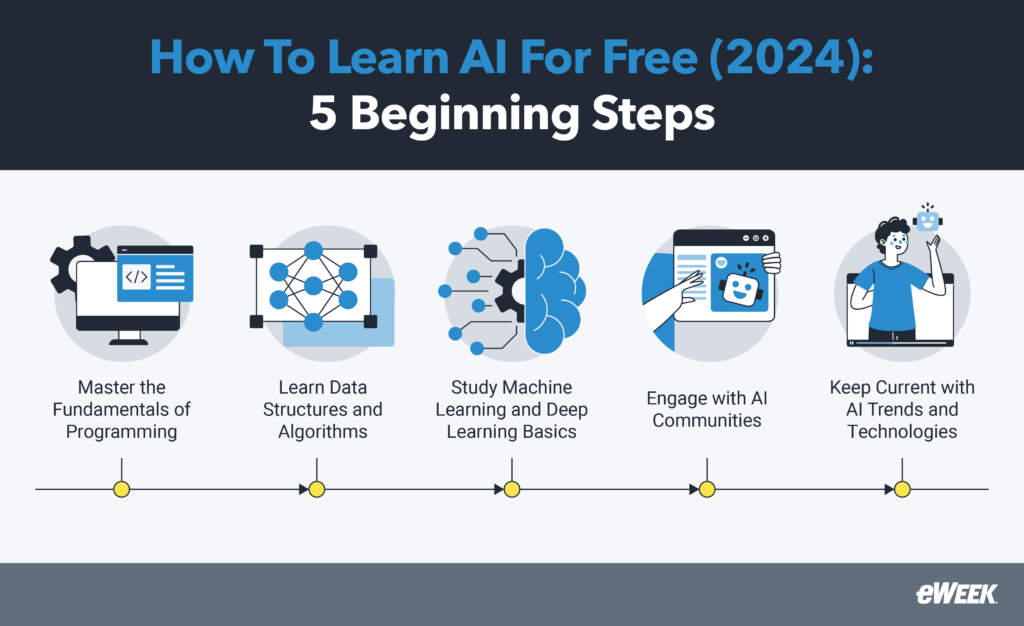
In today’s rapidly evolving digital landscape, artificial intelligence (AI) is more than just a buzzword—it’s a transformative force reshaping industries and creating new career opportunities. For those looking to dive into this exciting field without breaking the bank, there are numerous free resources available. Originally reported by eWEEK, here are five essential tips to kickstart your AI learning journey.
1. Master the Fundamentals of Programming
Programming languages are the backbone of AI development. Python, known for its simplicity and powerful libraries like NumPy, Pandas, TensorFlow, and PyTorch, is a popular choice. R is also valuable for data visualization and statistical analysis. Platforms like Codecademy and FreeCodeCamp offer beginner-friendly courses that combine theory with practical experience.
2. Learn Data Structures and Algorithms
Understanding data structures and algorithms is crucial for effective data processing in AI models. YouTube channels such as FreeCodeCamp and CS50 provide extensive tutorials on these topics. Communities like Kaggle and GitHub are excellent for sharing knowledge and collaborating on projects.
3. Study Machine Learning and Deep Learning Basics
Machine learning, a subset of AI, enables computers to learn from data. Deep learning, focusing on neural networks, mimics the human brain’s information processing. Free resources like Machine Learning for Everybody and Intermediate Machine Learning courses are available. Kaggle provides real-world datasets for hands-on experience.
4. Engage with AI Communities
Engaging with online AI communities offers opportunities for collaboration and knowledge sharing. Platforms like Kaggle and GitHub allow users to participate in challenges and collaborate on projects. Forums like PromptZone and social media groups provide spaces for discussion and networking with industry professionals.
5. Keep Current with AI Trends and Technologies
AI is a dynamic field with constant innovations. Staying updated with the latest trends and technologies is essential. Subscribing to newsletters from industry leaders like OpenAI, Google, IBM, AWS, and Microsoft can help you stay informed.
3 Free Resources to Learn AI Today
In addition to the above tips, here are three recommended resources:
Introduction to Generative AI & Machine Learning Essentials by AWS: An online course emphasizing practical uses of AI in cloud computing.
Artificial Intelligence: Foundations of Computational Agents by David Poole and Alan Mackworth: A free book that dives into AI’s theoretical foundations.
There’s An AI For That (TAAFT) Forum: A vibrant community for AI enthusiasts to share resources, participate in discussions, and find collaboration opportunities.
Embarking on a successful AI learning journey requires commitment, curiosity, and the right resources. By mastering the fundamentals, engaging with communities, and staying updated, you can position yourself for success in this exciting field. For more detailed insights and resources, visit the original eWEEK article.
“`
More Articles
Getting licensed or staying ahead in your career can be a journey—but it doesn’t have to be overwhelming. Grab your favorite coffee or tea, take a moment to relax, and browse through our articles. Whether you’re just starting out or renewing your expertise, we’ve got tips, insights, and advice to keep you moving forward. Here’s to your success—one sip and one step at a time!
PropTech investment surged nearly 68% in 2025, hitting a massive $16.7 billion and surpassing pre-pandemic highs. Investors are shifting toward practical, AI-powered tools that streamline operations, improve efficiency, and deliver immediate results. With 2026 shaping up to be a year of selective but strong growth, real estate professionals who stay ahead of tech trends will gain a major competitive edge.
Florida homeowners are finally seeing real relief as Citizens Property Insurance Corp. unveils an average 8.7% rate decrease for 2026—its largest cut in over a decade. Sparked by recent legislative reforms, a calm hurricane season, and renewed competition from insurers reentering the state, the drop is poised to significantly impact homeowners, real estate professionals, and industry trainees across Florida.
Tampa’s commercial real estate market is still growing, but investors are shifting from rapid dealmaking to highly selective, detail‑driven decisions. Population growth, steady office demand, stabilizing industrial activity, and a rebound in retail are keeping the market strong, while health‑care properties are emerging as a major sector for 2026. The region’s next chapter is defined by precision, disciplined underwriting, and long‑term strategy rather than speed.
Homesage.ai has released a new AI-powered comps engine that cuts property valuation time from hours to seconds by analyzing hundreds of data points across listings, public records, and proprietary datasets. Designed for agents, investors, and lenders, the tool delivers highly accurate comparable properties and real-time market insights, giving professionals a competitive edge in today’s rapidly shifting housing landscape.
A panel of federal judges is closely examining whether the National Association of Realtors’ billion‑dollar antitrust settlements—and similar deals struck by major brokerages—are genuinely fair to the millions of buyers and sellers affected. With plaintiffs arguing that homebuyers’ rights were improperly dismissed and compensation falls far short of true losses, the court’s upcoming decision could reshape commission practices and spark one of the most significant structural shifts in modern real estate.
The SEC is proposing a dramatic shift in how it defines a “small” registered investment adviser — raising the threshold from under 25 million in assets to under 1 billion. The change would instantly reclassify about 96 percent of RIAs and could create ripple effects across mergers and acquisitions, integration planning, and breakaway adviser activity. While the move aims to reduce administrative burden, it may also introduce new complexities for firms scaling past the billion‑dollar mark.