In today’s rapidly evolving digital landscape, artificial intelligence (AI) is more than just a buzzword—it’s a transformative force reshaping industries and creating new career opportunities. For those looking to dive into this exciting field without breaking the bank, there are numerous free resources available. Originally reported by eWEEK, here are five essential tips to kickstart your AI learning journey.
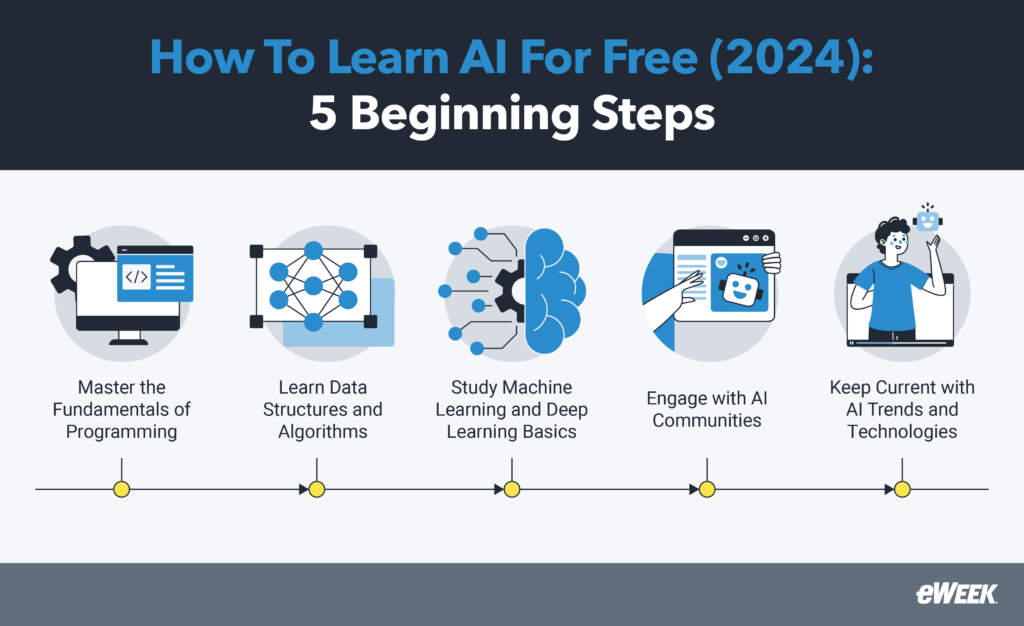
1. Master the Fundamentals of Programming
Programming languages are the backbone of AI development. Python, known for its simplicity and powerful libraries like NumPy, Pandas, TensorFlow, and PyTorch, is a popular choice. R is also valuable for data visualization and statistical analysis. Platforms like Codecademy and FreeCodeCamp offer beginner-friendly courses that combine theory with practical experience.
2. Learn Data Structures and Algorithms
Understanding data structures and algorithms is crucial for effective data processing in AI models. YouTube channels such as FreeCodeCamp and CS50 provide extensive tutorials on these topics. Communities like Kaggle and GitHub are excellent for sharing knowledge and collaborating on projects.
3. Study Machine Learning and Deep Learning Basics
Machine learning, a subset of AI, enables computers to learn from data. Deep learning, focusing on neural networks, mimics the human brain’s information processing. Free resources like Machine Learning for Everybody and Intermediate Machine Learning courses are available. Kaggle provides real-world datasets for hands-on experience.
4. Engage with AI Communities
Engaging with online AI communities offers opportunities for collaboration and knowledge sharing. Platforms like Kaggle and GitHub allow users to participate in challenges and collaborate on projects. Forums like PromptZone and social media groups provide spaces for discussion and networking with industry professionals.
5. Keep Current with AI Trends and Technologies
AI is a dynamic field with constant innovations. Staying updated with the latest trends and technologies is essential. Subscribing to newsletters from industry leaders like OpenAI, Google, IBM, AWS, and Microsoft can help you stay informed.
3 Free Resources to Learn AI Today
In addition to the above tips, here are three recommended resources:
Introduction to Generative AI & Machine Learning Essentials by AWS: An online course emphasizing practical uses of AI in cloud computing.
Artificial Intelligence: Foundations of Computational Agents by David Poole and Alan Mackworth: A free book that dives into AI’s theoretical foundations.
There’s An AI For That (TAAFT) Forum: A vibrant community for AI enthusiasts to share resources, participate in discussions, and find collaboration opportunities.
Embarking on a successful AI learning journey requires commitment, curiosity, and the right resources. By mastering the fundamentals, engaging with communities, and staying updated, you can position yourself for success in this exciting field. For more detailed insights and resources, visit the original eWEEK article.
“`
More Articles
Getting licensed or staying ahead in your career can be a journey—but it doesn’t have to be overwhelming. Grab your favorite coffee or tea, take a moment to relax, and browse through our articles. Whether you’re just starting out or renewing your expertise, we’ve got tips, insights, and advice to keep you moving forward. Here’s to your success—one sip and one step at a time!
New data from the U.S. Bureau of Labor Statistics reveals major pay gaps across industries as we head into 2025. While top roles in finance, tech, and healthcare exceed $130,000 to $160,000 a year, other professions lag far behind—even when education levels are similar. Job titles, location, experience, and specialized skills are now some of the biggest factors shaping how much you earn. If you’ve been wondering whether your paycheck is keeping up with the market, this breakdown shows exactly where you stand and what it takes to boost your earning power.
A cooling housing market is giving buyers something they haven’t had in years: room to breathe. With slower sales, more inventory, and less pressure to make snap decisions, homebuyer regret has noticeably declined in 2025. Buyers are feeling more confident thanks to fewer bidding wars, reduced overpaying, and stronger financial preparation—though maintenance surprises still pose challenges. This shift toward a true buyer’s market offers real estate professionals a prime opportunity to guide clients with clarity and confidence.
This week’s commercial real estate roundup unpacks the lingering economic fallout from the 43‑day federal shutdown, new pressures on major office markets, and the rise of STEM‑driven cities reshaping demand nationwide. With fresh Q3 data from Altus showing stronger‑than‑expected transaction momentum, plus updates on Chicago’s valuation slide and national mortgage policy debates, this edition delivers the essential trends CRE, mortgage, finance, and appraisal professionals need to stay ahead.
ATTOM has been named Inman’s 2025 Best of Proptech winner, earning top recognition for its leadership in data and intelligence platforms. With advancements like Snowflake integration, ATTOM Nexus, and enhanced parcel‑centric analytics, the company is shaping the future of AI‑driven real estate decision‑making. This win highlights ATTOM’s growing role as a trusted data backbone for real estate, mortgage, insurance, and investment professionals nationwide.
A new report reveals that Florida’s property insurance market is far from recovering. Despite political claims of stabilization, homeowners are seeing premiums up 54% since 2019, widespread insurer instability, and some companies re‑entering the market under rebranded identities. With high rates of unpaid claims, delayed payouts, and policy non‑renewals, lawmakers are now pushing for transparency and oversight. For homeowners and industry professionals alike, understanding these risks is critical as Florida’s insurance challenges continue to deepen.
Despite new insurers entering the state and lawmakers touting market improvements, a new report reveals Florida’s property insurance system is still plagued by high premiums, weak oversight, and companies with troubled histories. Rates have climbed 54% since 2019, nearly one‑fifth of homeowners are now uninsured, and Florida leads the nation in unpaid and delayed claims. Critics warn that the state’s strategy of shifting risk to undercapitalized private companies may set the stage for another crisis — leaving homeowners, buyers, and real estate professionals navigating a market that’s far from stable.