In today’s rapidly evolving digital landscape, artificial intelligence (AI) is more than just a buzzword—it’s a transformative force reshaping industries and creating new career opportunities. For those looking to dive into this exciting field without breaking the bank, there are numerous free resources available. Originally reported by eWEEK, here are five essential tips to kickstart your AI learning journey.
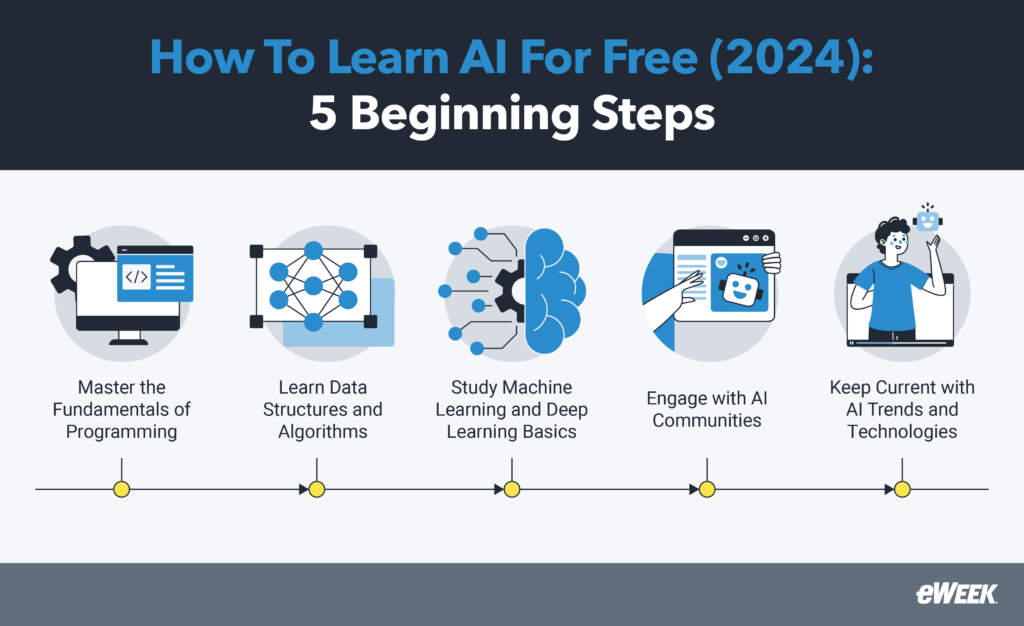
1. Master the Fundamentals of Programming
Programming languages are the backbone of AI development. Python, known for its simplicity and powerful libraries like NumPy, Pandas, TensorFlow, and PyTorch, is a popular choice. R is also valuable for data visualization and statistical analysis. Platforms like Codecademy and FreeCodeCamp offer beginner-friendly courses that combine theory with practical experience.
2. Learn Data Structures and Algorithms
Understanding data structures and algorithms is crucial for effective data processing in AI models. YouTube channels such as FreeCodeCamp and CS50 provide extensive tutorials on these topics. Communities like Kaggle and GitHub are excellent for sharing knowledge and collaborating on projects.
3. Study Machine Learning and Deep Learning Basics
Machine learning, a subset of AI, enables computers to learn from data. Deep learning, focusing on neural networks, mimics the human brain’s information processing. Free resources like Machine Learning for Everybody and Intermediate Machine Learning courses are available. Kaggle provides real-world datasets for hands-on experience.
4. Engage with AI Communities
Engaging with online AI communities offers opportunities for collaboration and knowledge sharing. Platforms like Kaggle and GitHub allow users to participate in challenges and collaborate on projects. Forums like PromptZone and social media groups provide spaces for discussion and networking with industry professionals.
5. Keep Current with AI Trends and Technologies
AI is a dynamic field with constant innovations. Staying updated with the latest trends and technologies is essential. Subscribing to newsletters from industry leaders like OpenAI, Google, IBM, AWS, and Microsoft can help you stay informed.
3 Free Resources to Learn AI Today
In addition to the above tips, here are three recommended resources:
Introduction to Generative AI & Machine Learning Essentials by AWS: An online course emphasizing practical uses of AI in cloud computing.
Artificial Intelligence: Foundations of Computational Agents by David Poole and Alan Mackworth: A free book that dives into AI’s theoretical foundations.
There’s An AI For That (TAAFT) Forum: A vibrant community for AI enthusiasts to share resources, participate in discussions, and find collaboration opportunities.
Embarking on a successful AI learning journey requires commitment, curiosity, and the right resources. By mastering the fundamentals, engaging with communities, and staying updated, you can position yourself for success in this exciting field. For more detailed insights and resources, visit the original eWEEK article.
“`
More Articles
Getting licensed or staying ahead in your career can be a journey—but it doesn’t have to be overwhelming. Grab your favorite coffee or tea, take a moment to relax, and browse through our articles. Whether you’re just starting out or renewing your expertise, we’ve got tips, insights, and advice to keep you moving forward. Here’s to your success—one sip and one step at a time!
Local elections across major U.S. cities have kicked off a wave of policy changes that could reshape development costs, rental income, and investment strategies heading into 2026. From NYC’s aggressive tenant‑protection agenda to Chicago’s sustainability push, Miami’s political uncertainty, and Boston’s steady zoning overhaul, the post‑election environment is redefining how real estate professionals, investors, and lenders should prepare for the year ahead.
Insurance carriers are rapidly rolling out AI-related exclusions that strip coverage from claims involving AI tools, automated decision‑making, or generative platforms like ChatGPT and Midjourney. With firms like Berkley and Hamilton introducing sweeping “absolute” and generative‑AI‑specific exclusions, professionals in real estate, mortgage, insurance, and finance now face new liability gaps. As AI becomes unavoidable in everyday work, understanding these exclusions is essential for protecting your career and staying compliant in a fast‑changing risk environment.
Proptech startup Venn has raised a $52 million Series B to unify the entire renting lifecycle into one intelligent platform, replacing over a dozen traditional systems and serving more than half a million tenants. As AI‑powered tools like Venn rapidly reshape property operations, real estate professionals — especially in fast‑moving markets like Florida — will need stronger education and tech‑savvy skills to stay competitive.
Florida’s Gulf Coast is undergoing a dramatic transformation as soaring insurance premiums, costly construction requirements, and the long shadow of Hurricane Ian force middle‑class families, workers, and longtime residents out of communities they once anchored. With premiums topping $5,700 a year — and many paying far more — Realtors warn of looming foreclosures, renters face steep increases, and entire neighborhoods are being rebuilt for wealthier newcomers. This mounting crisis is reshaping the state’s real estate landscape and leaving professionals scrambling to adapt.
Economic uncertainty, rapid tech advances and shifting population patterns are setting the stage for a pivotal year in commercial real estate. New findings from the Counselors of Real Estate, presented at NAR NXT, outline ten major forces reshaping strategy, investment and opportunity in 2026—from policy impacts and portfolio risk to AI adoption, capital flow changes, housing attainability and demographic shifts. This outlook offers clarity and caution for professionals across real estate, mortgage, finance and related fields.
Florida’s home insurance crisis is back in the spotlight as new reforms appear to be repeating decades‑old mistakes. Despite efforts to depopulate Citizens and attract private insurers, many of the companies taking over policies have ties to past insolvencies. Critics say weak oversight, generous ratings, and political influence are allowing unstable insurers to thrive while homeowners pay more for less protection. Experts warn that without transparent ratings, real accountability, and unified regulation, Florida’s insurance market will remain vulnerable—putting property values, lending, and the broader real estate industry at risk.