
How Does Your Salary Compare to Others in 2025?

Person opening paycheck at desk

Ever wondered how your paycheck stacks up against others in your field—or even across different industries entirely? Thanks to new data from the U.S. Bureau of Labor Statistics, we now have a much clearer view of where different professions stand as we head into 2025. Some industries are soaring, others are stagnant, and your specific job title may matter more than you think.

Source Spotlight: For the full breakdown, visit the always-insightful team over at Investopedia:
How Does Your Salary Compare to Others?

Key Takeaways

• Salary differences between industries can be dramatic—even doubling between similar education levels.
• Job titles alone can create pay gaps of $30,000+ annually.
• Location, experience, and specialized skills can dramatically push earnings higher—especially in technology and healthcare.

The 2025 Salary Landscape

According to BLS data, median salaries for in-demand roles range from $66,000 to more than $161,000. If you’ve ever wondered whether you’re being paid fairly, this snapshot is a solid place to begin.

Job Title Median Annual Salary Industry
Financial Manager $161,700 Finance
Software Developer $133,080 Technology
Nurse Practitioner $130,890 Healthcare
Information Security Analyst $124,910 Cybersecurity
Data Scientist $112,590 Technology
Project Manager $100,750 Business
Registered Nurse $93,600 Healthcare
Accountant $81,680 Finance
Marketing Manager $159,660 Marketing
Sales Representative $66,780 Sales

Industry and Job Title: The Real Drivers Behind Pay Gaps

Your industry choice alone can change your income by tens of thousands of dollars. Technology and healthcare continue to dominate the highest-paying non-executive roles, with software developers earning a median of $133,080 and nurse practitioners close behind at $130,890.

Even within the same field, job titles dramatically change earnings. Nurse practitioners earn roughly $37,000 more than registered nurses. Software developers outpace data scientists by over $20,000 annually. These differences often come down to advanced training, specialized skills, and expanded responsibilities.

Career Note: Cybersecurity, data science, and software development are among the fastest-growing careers in the U.S., with projected growth rates between 15% and 35% through 2034.

Location, Experience, and Skills: The Big Salary Boosters

Where you work matters—sometimes significantly. A fundraising manager in Washington earns a median of $153,950, compared to $112,340 for the same role in Illinois. Meanwhile, California-based software developers frequently exceed the $130,000 mark.

Experience also remains a major factor. Marketing managers with under one year of experience average $56,643, while those with up to four years make $66,633. Project managers see a median salary of $105,000, often rising into the $130,000+ range with bonuses and incentives.

Certifications and specialized training can also unlock higher pay. For example, seasoned information security analysts with advanced certifications can exceed $180,000. Technical sales representatives with high-value skills can increase their income by as much as 44%.

Advancing Your Career Through Licensing and Education

Whether you’re stepping into real estate, expanding healthcare credentials, or moving into finance or insurance, education and licensing remain some of the most effective ways to grow your income. At Cameron Academy, professionals across the nation rely on industry-leading courses to elevate their expertise and unlock better-paying roles—especially in fast-moving sectors like real estate, mortgage, insurance, and medical services.

Your income potential in 2025 depends on your industry, your skills, and your ambition. With the right training and a commitment to ongoing growth, your next salary jump may be closer than you think.

More Articles

Getting licensed or staying ahead in your career can be a journey—but it doesn’t have to be overwhelming. Grab your favorite coffee or tea, take a moment to relax, and browse through our articles. Whether you’re just starting out or renewing your expertise, we’ve got tips, insights, and advice to keep you moving forward. Here’s to your success—one sip and one step at a time!

2025 Commercial Real Estate Outlook: Navigating a New Era

The commercial real estate landscape is on the brink of transformation as leaders seek to navigate the challenges of recent years and position their organizations for future opportunities.

The Emerging Mental Health Crisis Among Healthcare Workers During the COVID-19 Pandemic

The pandemic has ushered in a wave of mental health challenges that affect healthcare workers profoundly. From the onset of COVID-19, these professionals have been at the forefront, facing immense pressure, long hours, and the constant fear of exposure.

By |December 18, 2024|Categories: Article, Healthcare Workers, Mental Health|Tags: , |0 Comments

Ethical Concerns of Large Language Models in Healthcare

Exploring the dual nature of LLMs offers substantial benefits in healthcare but also raises significant ethical concerns, underscoring the need for well-defined guidelines and human oversight.

The Role of Wearable Devices in Chronic Disease Monitoring and Patient Care: A Comprehensive Review

Wearable devices have become integral in managing chronic conditions by providing continuous health data, empowering patients and healthcare professionals with insights that were previously unattainable.

AI Training Mandates: Navigating Legal Waters in Dentistry

The integration of artificial intelligence (AI) into dental practices is more than a technological trend; it represents a seismic shift in the industry. This transformation is reshaping skill sets and prompting a thorough examination of legal and ethical implications.

By |December 17, 2024|Categories: Article, Legal, Technology|Tags: , |0 Comments

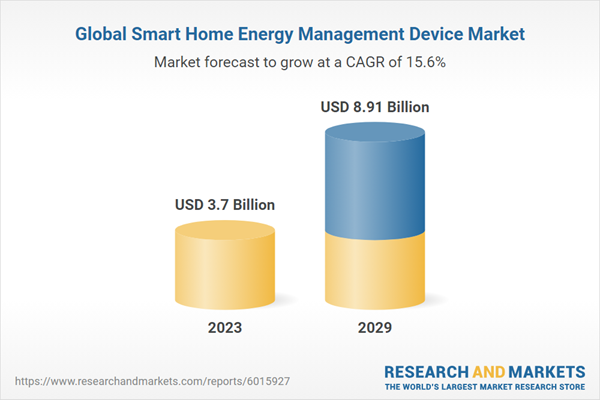
Smart Home Energy Management Devices: A Market Poised for Growth

The Global Smart Home Energy Management Device Market is on the brink of a significant transformation, driven by escalating demands for energy-efficient solutions and the increasing adoption of smart home technologies.