Ever wondered how your paycheck stacks up against others in your field—or even across different industries entirely? Thanks to new data from the U.S. Bureau of Labor Statistics, we now have a much clearer view of where different professions stand as we head into 2025. Some industries are soaring, others are stagnant, and your specific job title may matter more than you think.
• Salary differences between industries can be dramatic—even doubling between similar education levels.
• Job titles alone can create pay gaps of $30,000+ annually.
• Location, experience, and specialized skills can dramatically push earnings higher—especially in technology and healthcare.
The 2025 Salary Landscape
According to BLS data, median salaries for in-demand roles range from $66,000 to more than $161,000. If you’ve ever wondered whether you’re being paid fairly, this snapshot is a solid place to begin.
Job Title
Median Annual Salary
Industry
Financial Manager
$161,700
Finance
Software Developer
$133,080
Technology
Nurse Practitioner
$130,890
Healthcare
Information Security Analyst
$124,910
Cybersecurity
Data Scientist
$112,590
Technology
Project Manager
$100,750
Business
Registered Nurse
$93,600
Healthcare
Accountant
$81,680
Finance
Marketing Manager
$159,660
Marketing
Sales Representative
$66,780
Sales
Industry and Job Title: The Real Drivers Behind Pay Gaps
Your industry choice alone can change your income by tens of thousands of dollars. Technology and healthcare continue to dominate the highest-paying non-executive roles, with software developers earning a median of $133,080 and nurse practitioners close behind at $130,890.
Even within the same field, job titles dramatically change earnings. Nurse practitioners earn roughly $37,000 more than registered nurses. Software developers outpace data scientists by over $20,000 annually. These differences often come down to advanced training, specialized skills, and expanded responsibilities.
Career Note: Cybersecurity, data science, and software development are among the fastest-growing careers in the U.S., with projected growth rates between 15% and 35% through 2034.
Location, Experience, and Skills: The Big Salary Boosters
Where you work matters—sometimes significantly. A fundraising manager in Washington earns a median of $153,950, compared to $112,340 for the same role in Illinois. Meanwhile, California-based software developers frequently exceed the $130,000 mark.
Experience also remains a major factor. Marketing managers with under one year of experience average $56,643, while those with up to four years make $66,633. Project managers see a median salary of $105,000, often rising into the $130,000+ range with bonuses and incentives.
Certifications and specialized training can also unlock higher pay. For example, seasoned information security analysts with advanced certifications can exceed $180,000. Technical sales representatives with high-value skills can increase their income by as much as 44%.
Advancing Your Career Through Licensing and Education
Whether you’re stepping into real estate, expanding healthcare credentials, or moving into finance or insurance, education and licensing remain some of the most effective ways to grow your income. At Cameron Academy, professionals across the nation rely on industry-leading courses to elevate their expertise and unlock better-paying roles—especially in fast-moving sectors like real estate, mortgage, insurance, and medical services.
Your income potential in 2025 depends on your industry, your skills, and your ambition. With the right training and a commitment to ongoing growth, your next salary jump may be closer than you think.
More Articles
Getting licensed or staying ahead in your career can be a journey—but it doesn’t have to be overwhelming. Grab your favorite coffee or tea, take a moment to relax, and browse through our articles. Whether you’re just starting out or renewing your expertise, we’ve got tips, insights, and advice to keep you moving forward. Here’s to your success—one sip and one step at a time!
Artificial intelligence is rapidly reshaping the mortgage industry, boosting productivity, reducing manual work, and accelerating loan closings. From automated document data extraction to AI‑generated underwriting narratives and predictive analytics, lenders are using new tools that improve accuracy and drastically speed up processing times. With chatbots, next‑gen point‑of‑sale systems, and end‑to‑end automation, preapprovals that once took days now take minutes. For mortgage and real estate professionals, mastering AI is becoming a major competitive advantage—one that defines who will thrive in the future of lending.
Florida’s property insurance rates are finally starting to drop, but many homeowners are still seeing higher monthly bills. The reason isn’t insurer price hikes—it’s soaring replacement costs driven by construction inflation, labor shortages, and rising home values. Nearly 75 percent of recent premium increases came from higher property values alone. Understanding this gap between “rates” and “premiums” helps homeowners—and real estate and insurance professionals—navigate the shifting Florida market and make smarter coverage decisions.
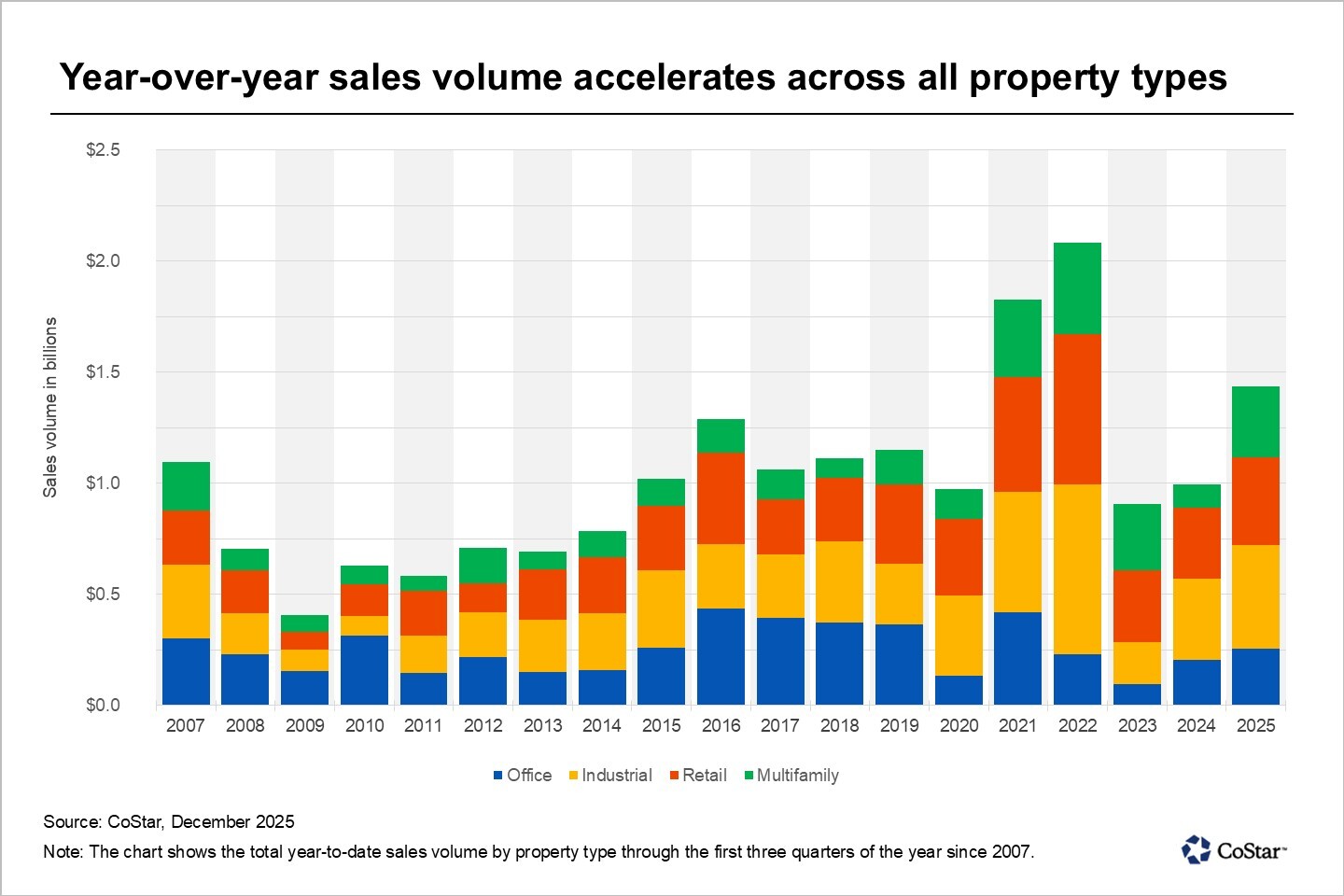
Milwaukee’s commercial real estate market is finally showing real signs of recovery, with 2025 sales volume hitting a three‑year high and investor confidence steadily returning. Driven by selective, fundamentals‑focused buying—favoring strong cash flow, quality assets, and strategic pricing—the city is moving from a period of correction into a healthier, opportunity‑rich phase. For real estate professionals nationwide, Milwaukee’s momentum reflects broader CRE market stabilization and the growing importance of disciplined underwriting and market expertise.
Industry leaders project a major surge in reverse mortgage activity heading into 2026, fueled by rising proprietary products, lender innovation, and strong investor interest. As high interest rates push originators to adopt new strategies, flexible private‑label options, senior‑focused HELOCs, and a wave of big‑capital investment are reshaping the market. With education and policy shifts poised to unlock even more demand, reverse mortgages are entering their most transformative era yet.
Experts forecast that 2026 may bring long‑awaited relief to homebuyers, with both existing and new home inventory expected to rise. NAR predicts a boost in home sales, a slight drop in mortgage rates, and a modest 4% increase in prices—conditions that could motivate more homeowners to list while builders add over a million new homes to the market. For first‑time buyers, higher loan limits and easing qualification standards may make entering the market more achievable than in recent years.
South Florida enters 2026 with renewed optimism as falling mortgage rates, improving buyer confidence, and a strong job market help stabilize a housing landscape that struggled in 2025—especially in the condo sector. While single-family homes remained resilient last year, condos faced price drops, rising fees, and hesitation tied to new safety regulations. With rates projected to fall to around 5.8% by year’s end, buying power is increasing, inventory may loosen, and activity is expected to pick up. Still, affordability challenges persist, Miami’s rental market remains intensely competitive, and the condo sector’s recovery will take time.


 The Mortgage Industry’s AI Transformation: Automation Reshapes Lending From Application to Approval Gallery