Ever wondered how your paycheck stacks up against others in your field—or even across different industries entirely? Thanks to new data from the U.S. Bureau of Labor Statistics, we now have a much clearer view of where different professions stand as we head into 2025. Some industries are soaring, others are stagnant, and your specific job title may matter more than you think.
• Salary differences between industries can be dramatic—even doubling between similar education levels.
• Job titles alone can create pay gaps of $30,000+ annually.
• Location, experience, and specialized skills can dramatically push earnings higher—especially in technology and healthcare.
The 2025 Salary Landscape
According to BLS data, median salaries for in-demand roles range from $66,000 to more than $161,000. If you’ve ever wondered whether you’re being paid fairly, this snapshot is a solid place to begin.
Job Title
Median Annual Salary
Industry
Financial Manager
$161,700
Finance
Software Developer
$133,080
Technology
Nurse Practitioner
$130,890
Healthcare
Information Security Analyst
$124,910
Cybersecurity
Data Scientist
$112,590
Technology
Project Manager
$100,750
Business
Registered Nurse
$93,600
Healthcare
Accountant
$81,680
Finance
Marketing Manager
$159,660
Marketing
Sales Representative
$66,780
Sales
Industry and Job Title: The Real Drivers Behind Pay Gaps
Your industry choice alone can change your income by tens of thousands of dollars. Technology and healthcare continue to dominate the highest-paying non-executive roles, with software developers earning a median of $133,080 and nurse practitioners close behind at $130,890.
Even within the same field, job titles dramatically change earnings. Nurse practitioners earn roughly $37,000 more than registered nurses. Software developers outpace data scientists by over $20,000 annually. These differences often come down to advanced training, specialized skills, and expanded responsibilities.
Career Note: Cybersecurity, data science, and software development are among the fastest-growing careers in the U.S., with projected growth rates between 15% and 35% through 2034.
Location, Experience, and Skills: The Big Salary Boosters
Where you work matters—sometimes significantly. A fundraising manager in Washington earns a median of $153,950, compared to $112,340 for the same role in Illinois. Meanwhile, California-based software developers frequently exceed the $130,000 mark.
Experience also remains a major factor. Marketing managers with under one year of experience average $56,643, while those with up to four years make $66,633. Project managers see a median salary of $105,000, often rising into the $130,000+ range with bonuses and incentives.
Certifications and specialized training can also unlock higher pay. For example, seasoned information security analysts with advanced certifications can exceed $180,000. Technical sales representatives with high-value skills can increase their income by as much as 44%.
Advancing Your Career Through Licensing and Education
Whether you’re stepping into real estate, expanding healthcare credentials, or moving into finance or insurance, education and licensing remain some of the most effective ways to grow your income. At Cameron Academy, professionals across the nation rely on industry-leading courses to elevate their expertise and unlock better-paying roles—especially in fast-moving sectors like real estate, mortgage, insurance, and medical services.
Your income potential in 2025 depends on your industry, your skills, and your ambition. With the right training and a commitment to ongoing growth, your next salary jump may be closer than you think.
More Articles
Getting licensed or staying ahead in your career can be a journey—but it doesn’t have to be overwhelming. Grab your favorite coffee or tea, take a moment to relax, and browse through our articles. Whether you’re just starting out or renewing your expertise, we’ve got tips, insights, and advice to keep you moving forward. Here’s to your success—one sip and one step at a time!
Florida families are feeling the squeeze as everyday costs, insurance premiums, and homeownership barriers continue to climb. House District 102 candidate Jayden D’Onofrio is calling for a broader, more unified affordability strategy—one that tackles the state’s insurance crisis, supports first‑time homebuyers, and restores real competition in the market. His message centers on transparency, practical solutions, and keeping Florida livable for the professionals, workers, and families who power its economy.
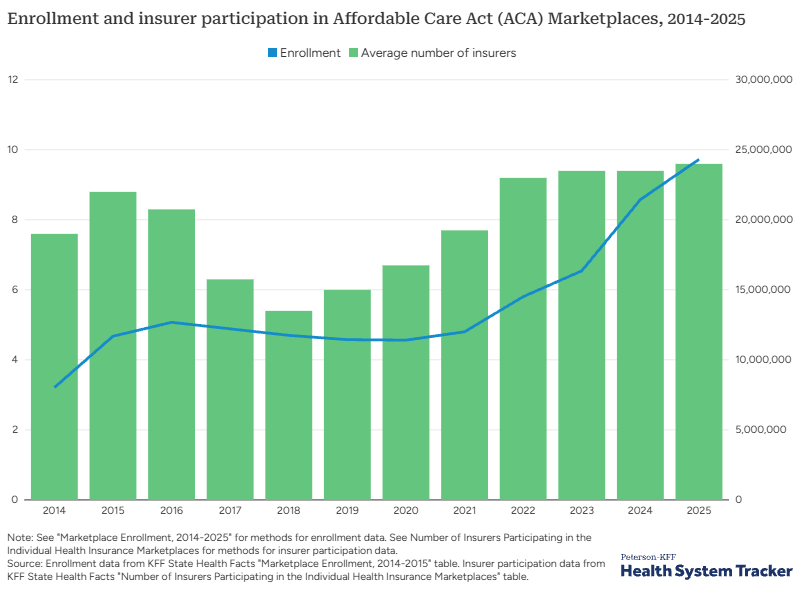
A decade of dramatic change is reshaping America’s health insurance markets. Employer group plans are becoming increasingly dominated by a few powerful insurers, while the ACA individual marketplace is experiencing record‑breaking competition and enrollment. Self‑funded plans are surging, small‑group premiums are driving employers to new coverage models, and major policy shifts in 2025 could redefine affordability for millions. This data‑driven Peterson‑KFF analysis breaks down the trends every insurance, finance, and business professional needs to understand as the industry enters a transformative new era.
Sarasota County is inching closer to approving Winchester Ranch, a massive 8,999‑home community planned for more than 3,100 acres in North Port. With a 7‑1 vote from the Planning Commission and a final decision expected in early 2026, the project could become one of Southwest Florida’s largest developments in decades—bringing new housing, commercial space, and industry while raising fresh questions about growth, the environment, and the region’s rapidly evolving real estate market.
Lument Finance Trust has closed a major $663.8 million commercial real estate CLO, marking one of the standout CRE finance deals of 2025. The transaction, LMNT 2025-FL3, features a strong reinvestment period, non‑recourse and non‑mark‑to‑market financing, and a diversified pool of 32 loans tied to 49 properties nationwide. With J.P. Morgan leading the structuring and more than $585 million placed in investment‑grade securities, the deal highlights renewed stability in transitional CRE debt—making it a development real estate and finance professionals will want to watch closely.
Walmart has partnered with Alquist 3D to roll out the nation’s first large‑scale wave of 3D‑printed commercial buildings, signaling a major shift in how future retail and industrial spaces will be constructed. After completing an 8,000‑square‑foot 3D‑printed expansion in Tennessee—the largest of its kind—the company is moving forward with over a dozen new projects nationwide, accelerating a tech‑driven transformation in commercial real estate.
Citizens Property Insurance Corp. is recommending statewide rate reductions for 2026—the first proposed decrease in more than a decade. Most Citizens policyholders could see an average 11.5% drop, reflecting recent insurance‑market reforms that have stabilized Florida’s turbulent property sector. With hundreds of thousands of policies moving back to private insurers and state‑backed Citizens shrinking to record‑low enrollment, real estate and insurance professionals should prepare for how lower premiums may influence affordability, buyer confidence, and market activity heading into 2026.