Illinois Rings In 2026 With Over 200 New Laws: Here’s What Professionals Need to Know
Illinois kicked off 2026 with a legislative shake‑up: more than 200 new laws officially took effect on January 1. From healthcare and insurance to workplace rules, education, safety, and even cocktail‑to‑go policies, nearly every resident and working professional in the state will feel some type of impact this year.
For professionals navigating licensing, compliance, and evolving industry regulations—whether in real estate, insurance, healthcare, or other fields—these updates matter. And if you’re growing your career, institutions like Cameron Academy remain committed to keeping you informed, prepared, and fully aligned with ever‑shifting professional standards.
Workplace Laws Changing the Professional Landscape
The new year brings strengthened worker protections, expanded benefits, and refined expectations for how employers must manage technology and safety. Key highlights include:
Paid Breaks for Nursing Mothers SB 0212 requires employers to provide paid pumping breaks—an important win for workplace fairness and modern family support.
AI Limitations in Hiring HB 3773 prohibits discriminatory use of artificial intelligence in employment screening, modernizing HR practices.
Part‑Time Worker Benefits HB 3094 extends commuter benefits to part‑time employees, promoting inclusivity in workforce benefits.
These laws signal a broader nationwide push toward more worker‑friendly environments—something all HR, management, and business professionals should watch closely.
Healthcare & Insurance: The Biggest Area of Change
Healthcare saw the largest cluster of new regulations, impacting patients, providers, insurers, pharmacies, and long‑term care facilities.
Insurance Coverage Expansions
Requirements now include IVF, menopause visits, PAD screenings, and non‑opioid pain treatments—expanding accessibility and lowering long‑term patient risks.
Pharmacist & Nursing Home Changes
Pharmacists can now dispense contraceptives, and nursing homes must install AEDs by 2030—critical steps for public safety.
Physician-Assisted Death Legalized
Under SB 1950, Illinois becomes the first Midwest state to legalize medical aid in dying, with full implementation later this year.
Healthcare professionals, insurance specialists, and pharmacy personnel will experience some of the most significant compliance updates—and students preparing to enter these fields should stay ahead.
Education: Safety, Accessibility, and Modernization
Illinois schools will introduce new policies targeting safety, mental health, AI usage, and academic access.
AI Guidance for Schools SB 1920 pushes the Illinois State Board of Education to implement statewide guidelines for artificial intelligence in classrooms.
Student Mental Health Support HB 3000 requires suicide hotline numbers on school employee badges, enhancing visibility of vital resources.
Early Academic Advancement HB 3039 allows middle‑schoolers to earn high‑school credit, expanding opportunities for early achievers.
State Agencies, Buildings, and Public Safety
Several new rules affect public infrastructure, environmental safety, and state services.
New Water Quality Standards SB 0727 mandates testing for PFAs and 1,4‑Dioxane, improving public water safety.
Emergency Response Upgrades SB 0784 allows Illinois agencies to assist nearby states during natural disasters, enhancing regional protection.
Library & Courthouse Rules
New mandates require opioid antagonists in libraries and give courthouses more flexibility in flag placement.
Why These Laws Matter for Professionals
Whether you’re in healthcare, insurance, education, government, public safety, business, or any regulated profession, these updates underscore one reality: professional compliance is evolving faster than ever.
That’s why institutions like Cameron Academy help professionals across all 50 states stay licensed, informed, and ahead of industry change through comprehensive education and continuing‑ed programs.
Explore the Full Legislative List
For those who want to review every bill taking effect, here is the complete PDF from state lawmakers:
Stay informed. Stay licensed. Stay ahead.
2026 will be a defining year for Illinois professionals.
More Articles
Getting licensed or staying ahead in your career can be a journey—but it doesn’t have to be overwhelming. Grab your favorite coffee or tea, take a moment to relax, and browse through our articles. Whether you’re just starting out or renewing your expertise, we’ve got tips, insights, and advice to keep you moving forward. Here’s to your success—one sip and one step at a time!
In 2026, financial advisors are no longer just experimenting with AI — they’re relying on it. Once confined to back-office duties, AI now supports meeting prep, portfolio analysis, and even early-stage financial planning. Advisors say the tech is strengthening client relationships by freeing them from administrative overload, though entry-level roles like paraplanners may feel the squeeze as automation accelerates.
Cybercriminals are weaponizing AI to launch highly convincing email scams and system breaches across the mortgage industry, overwhelming lenders and servicers whose cybersecurity measures can’t keep up. With major companies already hit and regulation lagging behind, experts warn the sector—now considered critical infrastructure—must rapidly upgrade protections, collaborate on threat intelligence, and improve AI governance before the risks escalate further.
Escrow payments are quietly surging across the country as property taxes and insurance premiums spike—pushing many homeowners toward delinquencies and even foreclosure. New data from Cotality shows the sharpest increases hitting the South and Midwest, with Florida among the hardest‑hit states. Even with fixed mortgage rates, rising escrow requirements are driving monthly payments higher and threatening affordability heading into 2026.
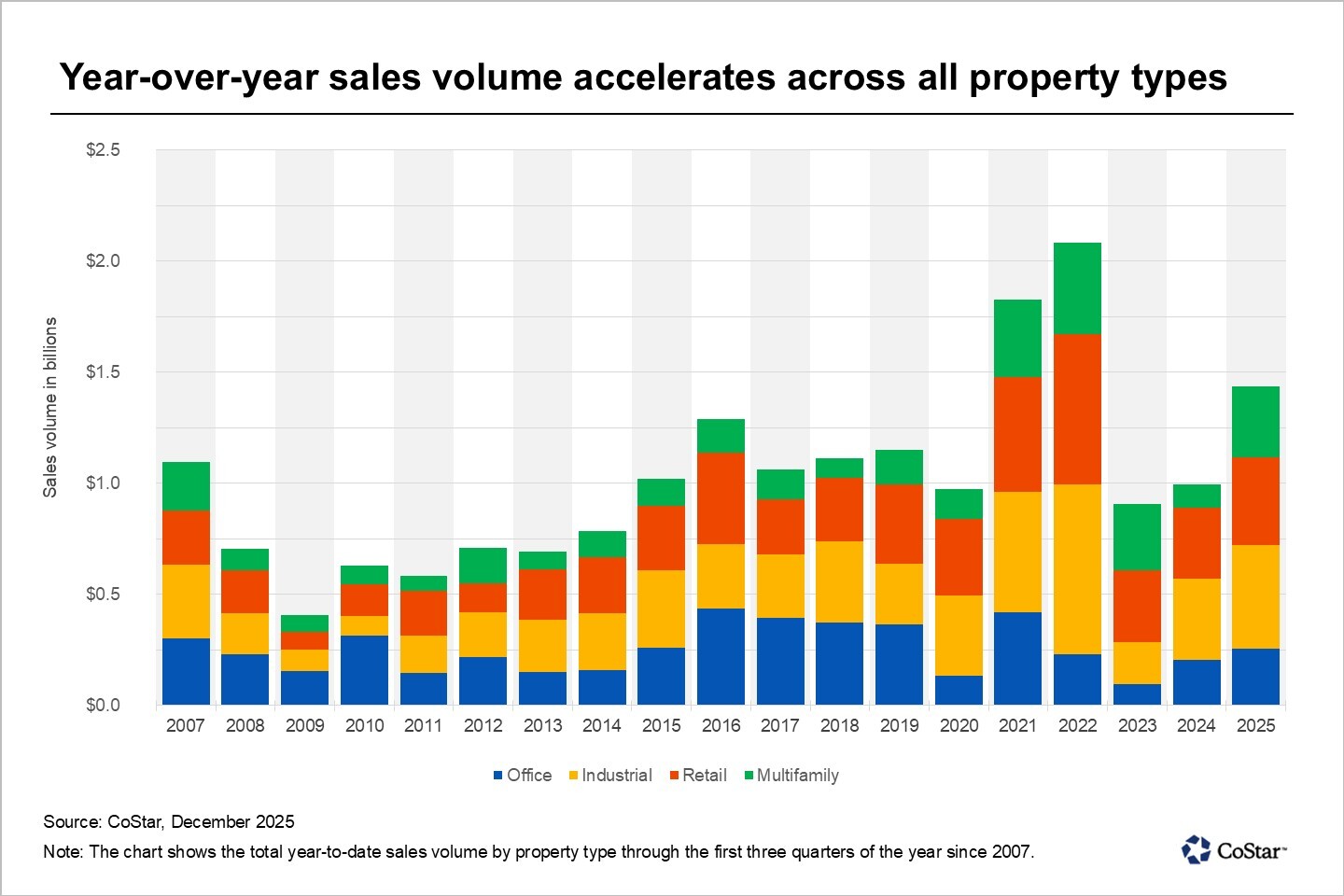
Milwaukee entered 2025 with renewed momentum, posting its strongest commercial real estate sales volume in three years. After a period of uncertainty and high capital costs, investors are returning with a sharper focus on quality assets, realistic pricing, and reliable cash flow. Activity is increasing across industrial, office, multifamily, and retail sectors, signaling a broad-based recovery fueled by stabilizing interest rates and improved market confidence.
As 2026 approaches, the title insurance industry is navigating a complex mix of market recovery, rising fraud threats, and sweeping regulatory changes. Industry leaders say the path forward centers on smarter technology, leaner operations, and stronger support for title agents. With AI-driven workflows, enhanced fraud prevention, and new compliance demands—including FinCEN’s expanded Geographic Targeting Orders—companies like Stewart and First American are reshaping how title work gets done. For real estate and mortgage professionals, the year ahead promises more automation, heightened standards, and major opportunities for those who stay ahead of the curve.
The real estate industry is undergoing a major transformation in 2025 as advancements in AI, proptech, blockchain, and data intelligence redefine how properties are marketed, valued, financed, and experienced. From instant digital valuations and immersive virtual tours to tokenized investments and predictive analytics, technology is reshaping every stage of the real estate lifecycle. Professionals who embrace these innovations—while maintaining the human expertise clients still rely on—will lead the next era of the industry.