Illinois Updates Insurance Supplier Diversity Reporting Rules: What Professionals Need to Know for 2026
Illinois has officially refreshed its rules for insurance supplier diversity reporting — and the changes affect nearly every major insurance‑related organization doing business in the state.
On February 6, 2026, the Illinois Department of Insurance (IDOI) released Company Bulletin 2026‑03, replacing its 2024 guidance and outlining how companies must file their annual Supplier Diversity Reports beginning April 1, 2026.
Who Must File?
According to the IDOI, the requirement applies to every company authorized or accredited to do business in Illinois with at least $50 million in total net admitted assets. This includes:
Insurance companies
Health maintenance organizations (HMOs)
Limited health service organizations
Dental service plan corporations
Accredited reinsurers
Certain entities are exempt, such as fraternal benefit societies, domestic captive insurers, qualified group workers’ compensation pools, and Medicare‑only risk‑bearing entities.
Quick Snapshot: Are You Required to File?
Use this quick checklist:
Your organization has at least $50M in admitted assets
You operate or are accredited in Illinois
You are not exclusively a Medicare Part C or D organization
You are not a captive, fraternal, or exempt pool
If this describes you, the Supplier Diversity Report is required.
How Companies Must File Their Reports
The IDOI requires reporting entities to use the official state fillable PDF template located on the Insurance Supplier Diversity webpage. Reports must be submitted through SERFF and marked as publicly accessible under 215 ILCS 5/155.49(b).
For companies operating multiple lines of business, the IDOI allows a single filing — meaning companies writing both property & casualty and life or health business may submit one unified report.
Details Matter: Formatting Requirements for Questions 3–6
The bulletin highlights precise formatting expectations for procurement categories and reporting metrics. These include:
Comma‑separated certification types
Carriage‑return formatting for goals and results
Proper use of commodity codes or procurement identifiers
Relevant symbols (# / $ / %) depending on metric type
Companies within the same holding group may file individually or as a group — but cannot combine assets to meet filing thresholds.
Why This Update Matters
Supplier diversity continues to rise as a strategic and regulatory priority across insurance and financial sectors. Illinois’ refined guidelines reflect a push for increased transparency and more equitable contracting opportunities across the industry.
For professionals in insurance, compliance, procurement, and finance, understanding and correctly completing these requirements is essential. Inaccurate or incomplete filings can lead to regulatory delays and reputational risk.
Want to Read the Full Original Report?
The full story is available via Insurance Business Magazine.
How Cameron Academy Supports Insurance Professionals
As compliance requirements evolve — from licensing rules to reporting obligations — professionals need a reliable, modern, and flexible education partner.
At Cameron Academy, we empower insurance professionals across all 50 states with streamlined licensing courses, continuing education, and real‑time regulatory insights designed to keep you ahead of every update.
Whether you’re advancing your insurance career or expanding your credentials across states, the right education partner makes all the difference. Cameron Academy is here to help you move forward confidently.
More Articles
Getting licensed or staying ahead in your career can be a journey—but it doesn’t have to be overwhelming. Grab your favorite coffee or tea, take a moment to relax, and browse through our articles. Whether you’re just starting out or renewing your expertise, we’ve got tips, insights, and advice to keep you moving forward. Here’s to your success—one sip and one step at a time!
Florida families are feeling the squeeze as everyday costs, insurance premiums, and homeownership barriers continue to climb. House District 102 candidate Jayden D’Onofrio is calling for a broader, more unified affordability strategy—one that tackles the state’s insurance crisis, supports first‑time homebuyers, and restores real competition in the market. His message centers on transparency, practical solutions, and keeping Florida livable for the professionals, workers, and families who power its economy.
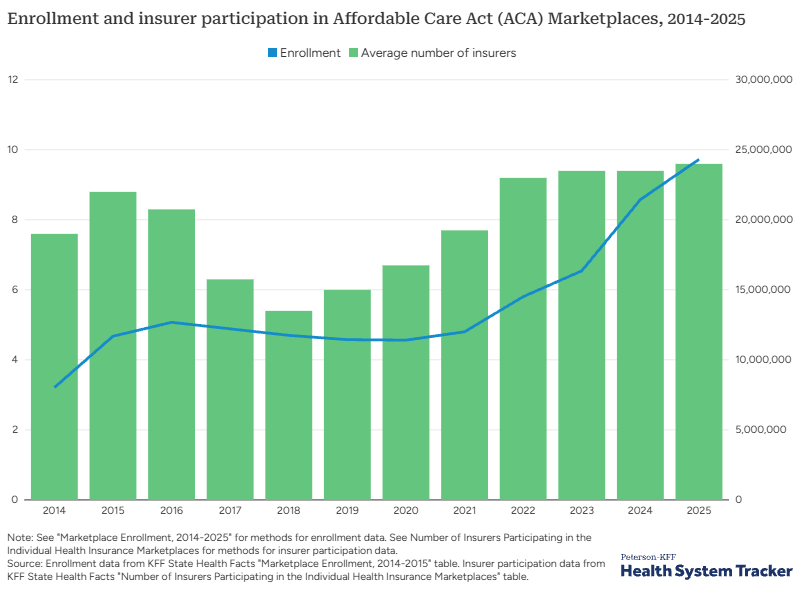
A decade of dramatic change is reshaping America’s health insurance markets. Employer group plans are becoming increasingly dominated by a few powerful insurers, while the ACA individual marketplace is experiencing record‑breaking competition and enrollment. Self‑funded plans are surging, small‑group premiums are driving employers to new coverage models, and major policy shifts in 2025 could redefine affordability for millions. This data‑driven Peterson‑KFF analysis breaks down the trends every insurance, finance, and business professional needs to understand as the industry enters a transformative new era.
Sarasota County is inching closer to approving Winchester Ranch, a massive 8,999‑home community planned for more than 3,100 acres in North Port. With a 7‑1 vote from the Planning Commission and a final decision expected in early 2026, the project could become one of Southwest Florida’s largest developments in decades—bringing new housing, commercial space, and industry while raising fresh questions about growth, the environment, and the region’s rapidly evolving real estate market.
Lument Finance Trust has closed a major $663.8 million commercial real estate CLO, marking one of the standout CRE finance deals of 2025. The transaction, LMNT 2025-FL3, features a strong reinvestment period, non‑recourse and non‑mark‑to‑market financing, and a diversified pool of 32 loans tied to 49 properties nationwide. With J.P. Morgan leading the structuring and more than $585 million placed in investment‑grade securities, the deal highlights renewed stability in transitional CRE debt—making it a development real estate and finance professionals will want to watch closely.
Walmart has partnered with Alquist 3D to roll out the nation’s first large‑scale wave of 3D‑printed commercial buildings, signaling a major shift in how future retail and industrial spaces will be constructed. After completing an 8,000‑square‑foot 3D‑printed expansion in Tennessee—the largest of its kind—the company is moving forward with over a dozen new projects nationwide, accelerating a tech‑driven transformation in commercial real estate.
Citizens Property Insurance Corp. is recommending statewide rate reductions for 2026—the first proposed decrease in more than a decade. Most Citizens policyholders could see an average 11.5% drop, reflecting recent insurance‑market reforms that have stabilized Florida’s turbulent property sector. With hundreds of thousands of policies moving back to private insurers and state‑backed Citizens shrinking to record‑low enrollment, real estate and insurance professionals should prepare for how lower premiums may influence affordability, buyer confidence, and market activity heading into 2026.