In the heart of California, a state renowned for its innovation and economic prowess, a housing crisis looms large. The demand for housing far exceeds the supply, leading to skyrocketing costs and a severe affordability gap. According to the National Low Income Housing Coalition’s annual report, there are only 24 affordable housing units available for every 100 extremely low-income households in California.
This crisis is exacerbated by the fact that California ranks among the highest states with cost-burdened renters, with nearly 30% of renters paying more than half of their income on housing, as noted by the PPIC blog. Families are forced to make tough choices between essential needs and housing costs, often leading to displacement or homelessness.
Can California Solve Its Affordable Housing Crisis?
Despite these daunting challenges, there is hope. The Chan Zuckerberg Initiative (CZI) believes that California can indeed solve its affordable housing crisis. Through innovative solutions and collaborative efforts, progress is being made. One such initiative, Project Roomkey, launched in response to the COVID-19 pandemic, successfully moved approximately 62,000 unhoused individuals into hotel rooms, demonstrating the power of flexible funding and innovative approaches.
Building on this success, California has continued the program under the name Homekey, allocating $300 million to extend its reach. Furthermore, the passage of Proposition 1 has secured $6.4 billion in bond money to support mental health and permanent supportive housing for veterans and those experiencing homelessness.
Innovative Solutions to Housing
One promising avenue is exploring new methods of construction. With construction costs in California having increased by 36.5% from January 2021 to January 2024, as reported by the California Construction Cost Index, modular and industrialized construction methods offer a potential solution. These technologies promise lower costs and faster build times, crucial for addressing the housing shortage.
Additionally, alternative forms of homeownership such as community land trusts and housing cooperatives are being explored to address systemic barriers and create permanently affordable housing. These models offer shared wealth-building opportunities and have shown promise in reimagining ownership in the U.S.
Cross-Sector Collaboration and Legislative Support
Solving the housing crisis requires a comprehensive approach involving multiple sectors. The Partnership for the Bay’s Future exemplifies this by using innovative financing and bringing together diverse voices to tackle housing affordability. Celebrating five years of impact, this partnership has protected over 73,000 tenants and financed thousands of homes.
Learning from successful COVID-19 housing solutions, such as statewide eviction moratoriums and rental relief programs, has also been pivotal. These measures have prevented evictions and supported hundreds of thousands of households during the pandemic.
Transforming Underutilized Lands
Another innovative strategy involves transforming surplus and underutilized lands into affordable homes. Legislation has been passed to prioritize building on government-owned land, unlocking vast potential for new housing developments. Faith communities, with acres of unused land, are also being encouraged to participate in these efforts.
Preserving Existing Affordable Housing
Preservation of existing affordable housing is equally crucial. Initiatives like the Los Angeles Local Rental Owners Collaborative aim to support local landlords and prevent tenant displacement, keeping communities intact and housing affordable.
While there is no single solution to California’s housing crisis, the combination of innovative construction, alternative ownership models, cross-sector collaboration, legislative support, and preservation efforts offers a multifaceted approach to rebuilding the housing system. As the Chan Zuckerberg Initiative emphasizes, the solutions are there; it’s about staying committed to seeing them through.
“`
More Articles
Getting licensed or staying ahead in your career can be a journey—but it doesn’t have to be overwhelming. Grab your favorite coffee or tea, take a moment to relax, and browse through our articles. Whether you’re just starting out or renewing your expertise, we’ve got tips, insights, and advice to keep you moving forward. Here’s to your success—one sip and one step at a time!
Despite billions poured into proptech and a decade of flashy digital upgrades, the real estate experience remains largely unchanged. Apps made processes smoother, but not more transparent — because the industry’s core structures, data control and power dynamics stayed the same. True disruption will come from platforms that shift information and control to consumers, not just digitize outdated systems.
Early 2026 is delivering a clear message: commercial real estate is entering a recalibration phase. Construction is softening, pending home sales just saw a sharp drop, consumer sentiment is inching upward but remains fragile, and capital markets are tightening as major CRE sectors face rising distress. From data centers powering ahead to CMBS foreclosures climbing and office-to-residential conversions gaining momentum, professionals across real estate, mortgage, insurance, and finance need to stay sharp as the industry shifts.
Discover the real estate roles earning the biggest paychecks in 2026. From investment consultants to commercial leasing managers, this breakdown highlights the salaries, responsibilities, and career paths offering the strongest financial potential in today’s evolving market—perfect for newcomers and seasoned professionals mapping their next big move.
Montana is taking major steps to remove outdated licensing barriers and strengthen its workforce. Governor Greg Gianforte has created a new Licensing Reform Task Force aimed at modernizing regulations, speeding up approvals, and helping more professionals enter high‑demand fields like construction and healthcare. With licensing numbers doubling over the past decade and rural communities facing critical shortages, the state is pushing for faster, more efficient pathways to work. The task force begins meeting in February and will deliver its full reform report by September 2026 — a move that could influence licensing modernization efforts nationwide.
Artificial intelligence has officially moved from novelty to necessity in the real estate world. According to new industry data, 97% of brokerage leaders say their agents now rely on AI tools for everything from listing descriptions to full-scale marketing campaigns. As adoption skyrockets, so do concerns over training, accuracy, and compliance — especially among smaller firms. The message is clear: for today’s real estate professionals, AI literacy isn’t optional anymore.
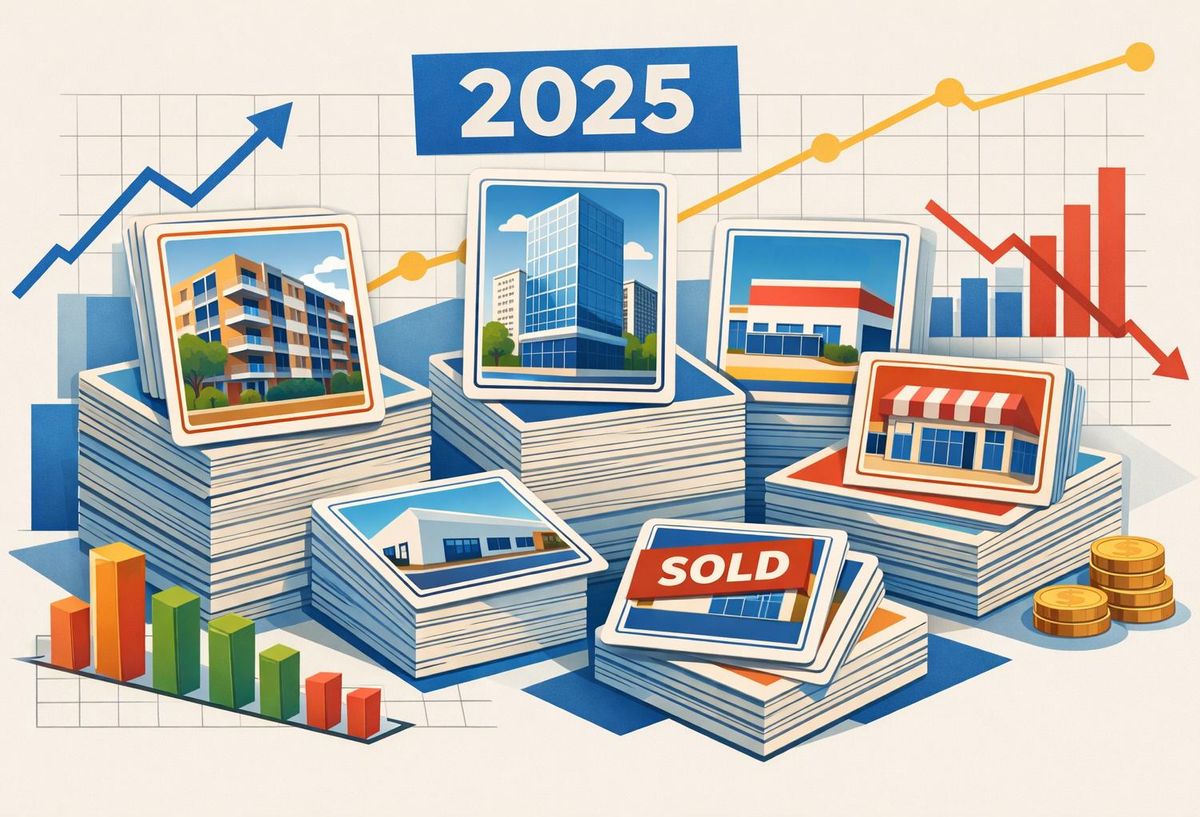
Commercial real estate roared back to life in 2025, with more than $255B pouring into multifamily, industrial, office and retail assets. Major investors moved fast on falling interest rates, improving bond yields and rising confidence across sectors. Multifamily dominated with over $115B in deals, industrial surged under private equity leadership, office saw renewed activity from owner-users and retail proved surprisingly resilient. For today’s real estate and finance professionals, the message is clear: opportunity favors those who stay informed and ready to act.