Investopedia’s Comprehensive Review of Online Real Estate Schools
In a rapidly evolving digital landscape, Investopedia has undertaken a rigorous evaluation of online real estate schools to assist aspiring professionals in selecting the best educational path. The detailed study, conducted in February 2025, scrutinized nine popular institutions based on 38 criteria across four pivotal categories: fees, customer satisfaction, features, and availability.
Investopedia’s commitment to thorough research is evident in their methodology, which involved analyzing data from company websites and customer support representatives. Each school was assessed using “Investopedia’s Rating” scale, ranging from 0.00 to 5.00, ensuring an objective comparison. The criteria included salesperson pre-licensing, exam preparation, continuing education, post-licensing, and broker preparation.
Key Evaluation Categories
The evaluation emphasized fees, accounting for 27% of the total score. This included scrutinizing pre-licensing fees across California, Florida, Virginia, and Texas. Schools offering free trials were rewarded, reflecting Investopedia’s focus on accessibility.
Customer satisfaction, another 27% of the score, was gauged through pass rates and customer ratings from various platforms. Schools with higher pass rates and accreditations, such as those recognized by ARELLO and IDECC, scored favorably.
Features accounted for 26% of the evaluation, highlighting the importance of practice questions, mock exams, and teacher support. Schools offering robust educational resources and pass guarantees were rated higher.
Finally, availability made up 20% of the score, focusing on state-specific course offerings and the year each school was established. Schools with broader state availability and longer course access received higher scores.
Meet the Team
The meticulous research was led by Isaac Braun, former Research Manager at Investopedia, alongside Brendan Harkness, Senior Editor of Financial Products and Services. Their expertise ensured the accuracy and reliability of the findings, providing invaluable guidance for prospective real estate professionals.
For more detailed insights, visit the original article on Investopedia – How We Review and Rate Online Real Estate Schools.
More Articles
Getting licensed or staying ahead in your career can be a journey—but it doesn’t have to be overwhelming. Grab your favorite coffee or tea, take a moment to relax, and browse through our articles. Whether you’re just starting out or renewing your expertise, we’ve got tips, insights, and advice to keep you moving forward. Here’s to your success—one sip and one step at a time!
Fintech has evolved from simple digital banking tools into a global force transforming how we pay, borrow, invest, and manage financial data. With AI, blockchain, and open banking leading the way, fintech is opening new opportunities for consumers, businesses, and professionals across real estate, mortgage, insurance, and finance.
After months of hesitation, the commercial real estate market showed a major resurgence in Q3 2025. Large single‑asset transactions over $10 million jumped to $76 billion — the strongest level since 2022 — signaling renewed liquidity and growing confidence among institutional buyers. While overall volumes remain below peak highs, rising deal counts, stabilizing prices, and increased activity across industrial, multifamily, office, and retail sectors point toward a market steadily moving back toward normalization.
California’s property insurance market didn’t collapse overnight—it unraveled over years of political delays, soaring wildfire losses, and mounting pressure on insurers and reinsurers. As major carriers pulled out and rate approvals stalled, millions of homeowners were left scrambling for coverage under an overwhelmed FAIR Plan. At the center of the controversy stands Insurance Commissioner Ricardo Lara, whose decisions, industry ties, and behind‑the‑scenes negotiations have drawn sharp criticism. The result is a destabilized market affecting homeowners, real estate professionals, lenders, and entire communities—and the question of whether current reforms can truly fix what’s broken.
After a slow start to the year, commercial real estate showed a major resurgence in Q3 2025 as large single‑asset deals over $10 million surged past $76 billion in volume. With 1,826 major trades and the strongest growth rate in more than a decade, investor confidence appears to be returning across U.S. markets. While overall volumes still trail the record highs of 2021–2022, the renewed momentum in big‑ticket transactions points to improving liquidity, clearer pricing, and a potentially pivotal turning point for brokers, investors, and industry professionals.
California’s property insurance market has unraveled into one of the most expensive and consequential crises in U.S. history. Major carriers pulled back, wildfire risks soared, regulators stalled, and the state’s FAIR Plan exploded in size — leaving hundreds of thousands of homeowners without affordable coverage. Now, with victims underinsured, premiums surging, and a billion‑dollar bailout looming, the fallout is spilling beyond California. For real estate, mortgage, finance, and insurance professionals across the country, this is a warning of what happens when rising climate risks collide with outdated regulatory systems.
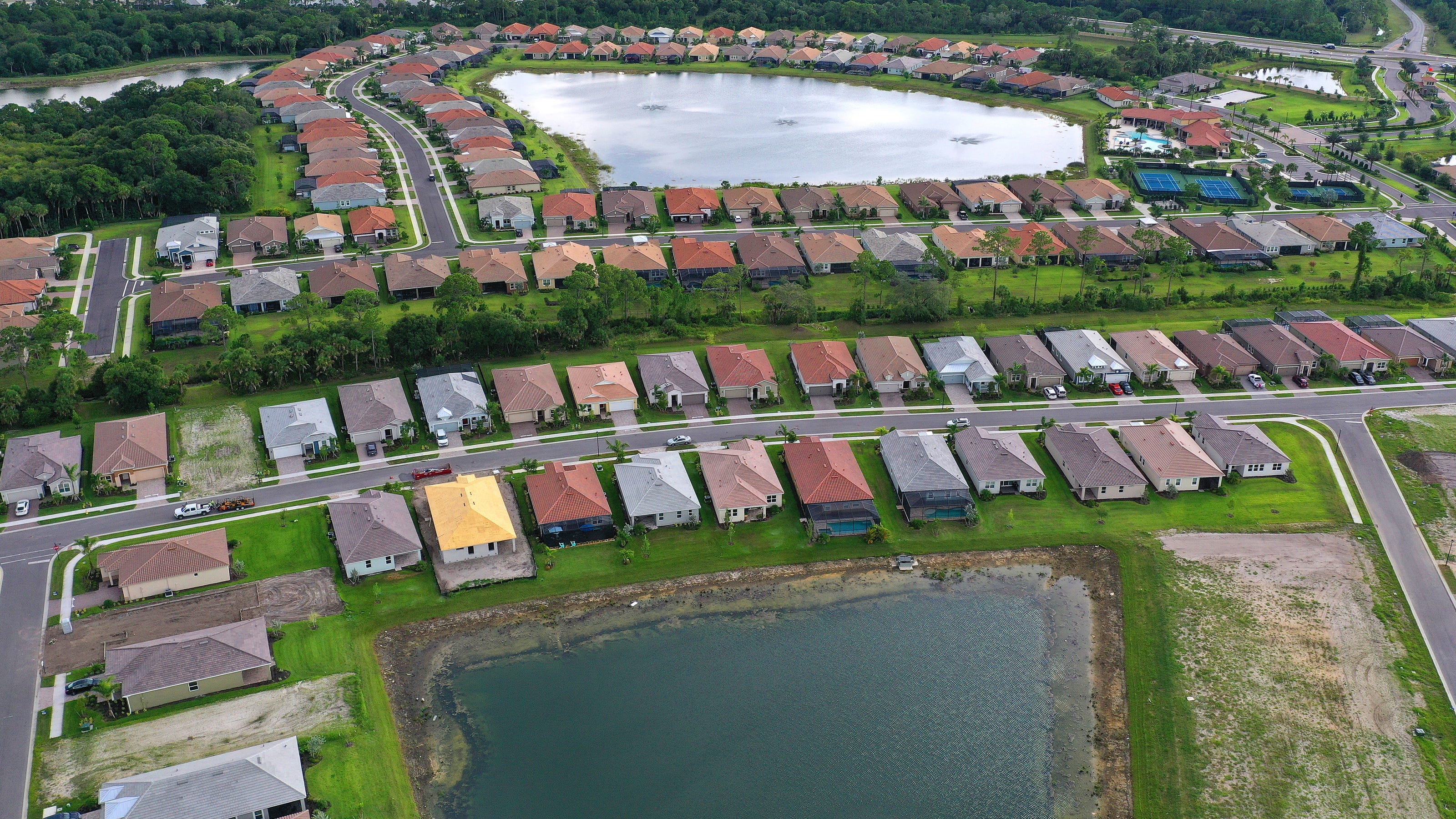
Sarasota County is on the brink of one of its largest modern expansions as the Winchester Ranch project moves closer to approval. Spanning more than 3,100 acres near North Port, the planned mega-development could bring up to 8,999 homes plus major commercial and industrial space. With construction projected to begin in 2027–2028, the community has sparked both excitement over new housing opportunities and concerns about environmental impact, placing it at the center of Florida’s ongoing growth debate.

:max_bytes(150000):strip_icc():format(webp)/IsaacBraunHeadshot-bf38db2bea1740e89527cc58c4fc1348.png "Investopedia'S 2025 Evaluation Of Online Real Estate Schools 2")
:max_bytes(150000):strip_icc():format(webp)/B-Harkness-Headshot-edit-ec63ec9233ff4373a43817750e28afd2.jpg "Investopedia'S 2025 Evaluation Of Online Real Estate Schools 3")