Why Investors Are Backing Away From Florida Housing (Except for Wall Street South)
Florida’s housing market, once the crown jewel of pandemic-era real estate investing, is now losing momentum as investors pull back. A new Redfin study shows that while investor activity across the United States remains sluggish, Florida stands out with sharp, double-digit declines in several major metros. But one city is breaking the trend: West Palm Beach, also known as Wall Street South.
Why This Shift Matters
The national housing market has been stuck in a holding pattern for months. More than 600,000 more sellers than buyers are active across the country, yet prices have not meaningfully fallen. Instead, growth has simply cooled. Mortgage rates remain high, leaving many would-be buyers priced out or waiting for a more favorable moment.
Investors face similar uncertainty. Nearly one in ten investor-owned homes sold in December closed at a loss, up from 7.1 percent a year earlier. For investors accustomed to easy profits during the pandemic boom, those margins are no longer guaranteed.
Florida’s Investor Drop-Off: What the Numbers Show
Across the 38 largest U.S. metros analyzed, Florida cities dominate the decline leaderboard. Orlando posted the steepest cut with a 16 percent year-over-year drop in investor purchases. Fort Lauderdale followed closely at 15 percent, with Jacksonville down 7 percent. These numbers reflect a broader cooling that began once remote work normalized, mortgage rates surged, and construction boomed.
Florida experienced some of the fastest appreciation during the pandemic as low borrowing costs and lifestyle migration drove intense demand. But that surge has since reversed. With inventory rising due to heavy construction and demand falling, prices in many areas experienced year-over-year declines throughout 2024 and 2025.
Add rising home insurance premiums and climbing HOA fees, and the math becomes even tougher for investors looking to flip or rent properties. Many investors simply cannot make the numbers work.
The Lone Bright Spot: West Palm Beach
While much of Florida cools, West Palm Beach is heating up. Investor purchases climbed 17 percent in Q4, powered by soaring luxury demand. Redfin data shows pending luxury sales nationwide dipped 3.6 percent in January, but West Palm Beach surged by an incredible 30 percent.
This mirrors the city’s transformation into Wall Street South, a hub for financial firms seeking sun, space, and lifestyle appeal.
Where Investors Are Looking Instead
Investors shifting away from Florida are diverting capital into West Coast and high-priced northern markets. The leaders include Seattle, up 37 percent year-over-year in investor purchases, followed by Portland at 27 percent and Milwaukee and San Francisco at 24 percent each. Providence also saw a strong 20 percent rise.
Expert Insight
Chen Zhao, Redfin’s head of economics research, summarizes the shift succinctly: Some investors are keeping their pocketbooks closed, which eliminates competition for everyday first-time buyers. She notes that the frenzy that sidelined so many first-time buyers has largely fizzled, though affordability challenges remain.
Policy Moves and What Comes Next
President Donald Trump has proposed limiting institutional investors from expanding single-family home portfolios. Experts remain skeptical about whether such a policy would meaningfully increase housing supply or improve affordability for everyday Americans. For now, investor market share remains stable at about 18 percent of all home purchases in late 2025.
What This Means for Future Real Estate Professionals
Shifts like these often signal opportunity. When investors pull back, everyday buyers experience less competition. This creates space for new agents to enter the field and build relationships with first-time buyers who finally feel like they have a chance.
For those preparing for a real estate career, understanding investor activity is essential. At Cameron Academy, our Florida real estate licensing programs help students decode these trends so they can guide customers with confidence through any market cycle.
Source Spotlight
This analysis is based on original reporting from Newsweek. For the full article and additional insights, visit:
Getting licensed or staying ahead in your career can be a journey—but it doesn’t have to be overwhelming. Grab your favorite coffee or tea, take a moment to relax, and browse through our articles. Whether you’re just starting out or renewing your expertise, we’ve got tips, insights, and advice to keep you moving forward. Here’s to your success—one sip and one step at a time!
In 2026, financial advisors are no longer just experimenting with AI — they’re relying on it. Once confined to back-office duties, AI now supports meeting prep, portfolio analysis, and even early-stage financial planning. Advisors say the tech is strengthening client relationships by freeing them from administrative overload, though entry-level roles like paraplanners may feel the squeeze as automation accelerates.
Cybercriminals are weaponizing AI to launch highly convincing email scams and system breaches across the mortgage industry, overwhelming lenders and servicers whose cybersecurity measures can’t keep up. With major companies already hit and regulation lagging behind, experts warn the sector—now considered critical infrastructure—must rapidly upgrade protections, collaborate on threat intelligence, and improve AI governance before the risks escalate further.
Escrow payments are quietly surging across the country as property taxes and insurance premiums spike—pushing many homeowners toward delinquencies and even foreclosure. New data from Cotality shows the sharpest increases hitting the South and Midwest, with Florida among the hardest‑hit states. Even with fixed mortgage rates, rising escrow requirements are driving monthly payments higher and threatening affordability heading into 2026.
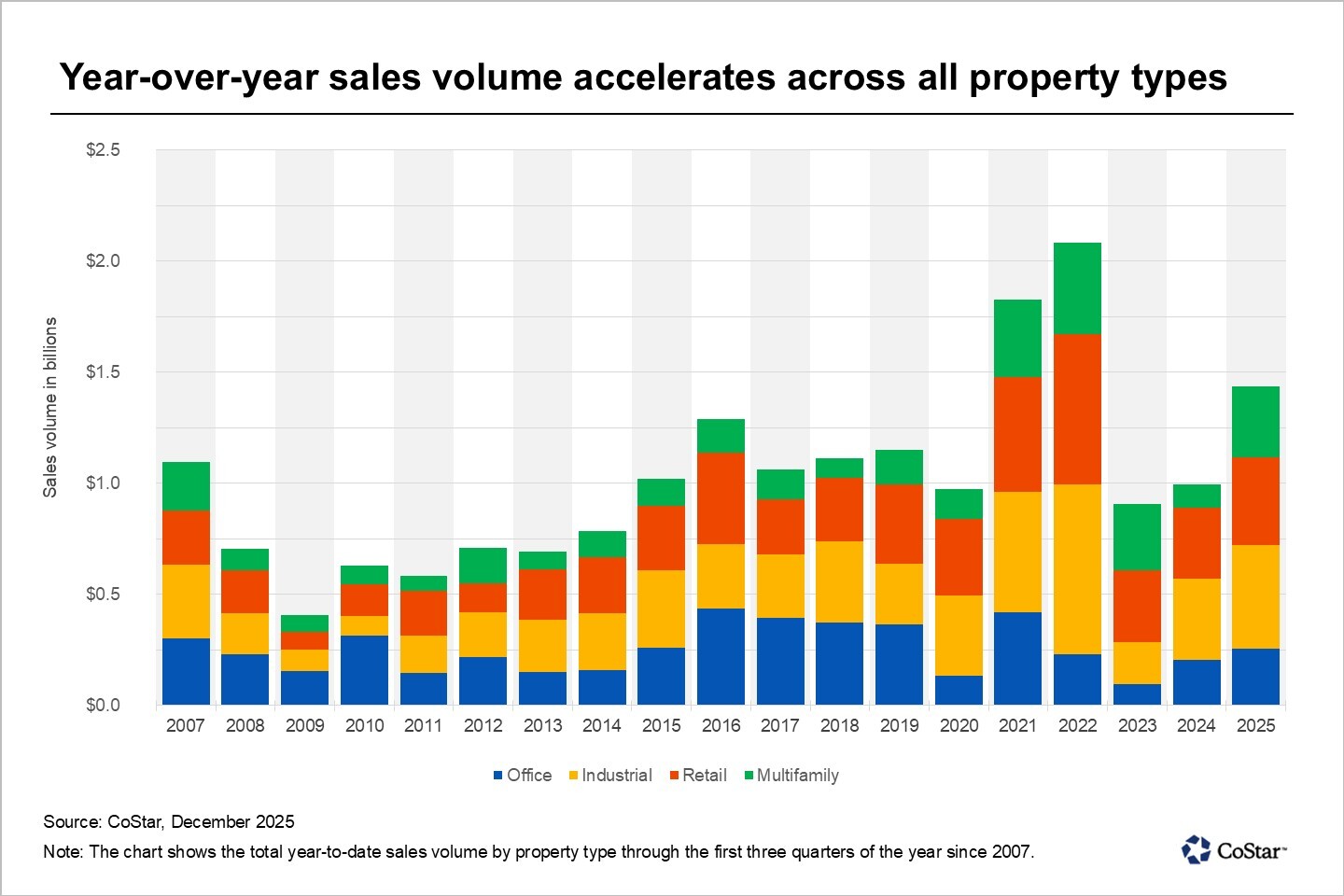
Milwaukee entered 2025 with renewed momentum, posting its strongest commercial real estate sales volume in three years. After a period of uncertainty and high capital costs, investors are returning with a sharper focus on quality assets, realistic pricing, and reliable cash flow. Activity is increasing across industrial, office, multifamily, and retail sectors, signaling a broad-based recovery fueled by stabilizing interest rates and improved market confidence.
As 2026 approaches, the title insurance industry is navigating a complex mix of market recovery, rising fraud threats, and sweeping regulatory changes. Industry leaders say the path forward centers on smarter technology, leaner operations, and stronger support for title agents. With AI-driven workflows, enhanced fraud prevention, and new compliance demands—including FinCEN’s expanded Geographic Targeting Orders—companies like Stewart and First American are reshaping how title work gets done. For real estate and mortgage professionals, the year ahead promises more automation, heightened standards, and major opportunities for those who stay ahead of the curve.
The real estate industry is undergoing a major transformation in 2025 as advancements in AI, proptech, blockchain, and data intelligence redefine how properties are marketed, valued, financed, and experienced. From instant digital valuations and immersive virtual tours to tokenized investments and predictive analytics, technology is reshaping every stage of the real estate lifecycle. Professionals who embrace these innovations—while maintaining the human expertise clients still rely on—will lead the next era of the industry.