Investors Gear Up for a Big 2026 as U.S. Commercial Real Estate Finds Its Footing
The commercial real estate world is stepping into 2026 with something it hasn’t felt in years: genuine momentum. According to the new CBRE 2026 North America Investor Intentions Survey, investor confidence is rising as pricing stabilizes, debt pressure eases, and capital begins flowing back into the market.
A remarkable 95% of surveyed investors say they plan to buy as much—or more—commercial real estate compared to last year. Even better, 55% plan to increase their capital allocations, a sharp improvement that signals renewed faith in long-term fundamentals.
Source Spotlight
This article draws from reporting originally published by the Boston Real Estate Times, one of the industry’s most respected voices for reliable market analysis and forward‑looking insights.
Dallas Dominates, Sun Belt Shines, New Markets Rise
Dallas once again claims the crown as the top investment market for U.S. investors—its fifth consecutive year. Atlanta and San Francisco secure the next spots, while rapidly growing metros like Charlotte, Nashville, Tampa, and Seattle break into the top 10.
Sun Belt cities continue attracting capital, but major coastal gateways are beginning to look irresistible thanks to appealing price resets and strategic entry points rarely seen in the last decade.
Multifamily Remains the Favorite
No surprise here: multifamily leads at 74%, continuing its reign as the nation’s most dependable asset class. Industrial and logistics follow at 37%, supported by strong e‑commerce demand.
Retail is mounting a subtle but promising rebound at 27%, while office struggles at 16% as hybrid and flexible work reshape tenant demand.
Alternative assets—healthcare, cold storage, land, and self‑storage—earned interest from 11% of investors who are still prioritizing discounted opportunities in traditional sectors.
Value‑Add Strategies Lead the Pack
With stability returning, investors are pursuing value‑add and core‑plus strategies that balance moderate risk with strong performance potential. Meanwhile, distressed and opportunistic approaches have cooled as market sentiment shifts toward recovery instead of rescue.
Debt Takes a Back Seat as Equity Gains Appeal
Despite the optimism, leverage remains a sticking point. Over 70% plan to maintain current debt‑to‑equity ratios, and nearly half expect a year or more of negative leverage.
Interest rate uncertainty and refinancing challenges persist, but many see this period as a rare window for equity‑driven opportunity.
What This Means for Professionals and Future Investors
For professionals in the field—and those preparing to enter it—the 2026 landscape offers both opportunity and complexity. Understanding market cycles, capital flows, and investor psychology has become more important than ever.
Educational partners like Cameron Academy continue helping students and professionals build the knowledge needed to thrive in markets just like this—especially as real estate, mortgage, finance, and insurance sectors evolve across the U.S.
The Great Office Reinvention
Want to dive deeper into the changing office market? Check out Eventbrite’s powerful session, “The Great Office Reinvention,” exploring what truly works in 2026 and beyond.
As investors move from caution to calculated confidence, 2026 is shaping up to be a year of strategic growth, bold repositioning, and renewed optimism. For professionals across every sector, staying informed will be the key to staying ahead.
More Articles
Getting licensed or staying ahead in your career can be a journey—but it doesn’t have to be overwhelming. Grab your favorite coffee or tea, take a moment to relax, and browse through our articles. Whether you’re just starting out or renewing your expertise, we’ve got tips, insights, and advice to keep you moving forward. Here’s to your success—one sip and one step at a time!
Despite billions poured into proptech and a decade of flashy digital upgrades, the real estate experience remains largely unchanged. Apps made processes smoother, but not more transparent — because the industry’s core structures, data control and power dynamics stayed the same. True disruption will come from platforms that shift information and control to consumers, not just digitize outdated systems.
Early 2026 is delivering a clear message: commercial real estate is entering a recalibration phase. Construction is softening, pending home sales just saw a sharp drop, consumer sentiment is inching upward but remains fragile, and capital markets are tightening as major CRE sectors face rising distress. From data centers powering ahead to CMBS foreclosures climbing and office-to-residential conversions gaining momentum, professionals across real estate, mortgage, insurance, and finance need to stay sharp as the industry shifts.
Discover the real estate roles earning the biggest paychecks in 2026. From investment consultants to commercial leasing managers, this breakdown highlights the salaries, responsibilities, and career paths offering the strongest financial potential in today’s evolving market—perfect for newcomers and seasoned professionals mapping their next big move.
Montana is taking major steps to remove outdated licensing barriers and strengthen its workforce. Governor Greg Gianforte has created a new Licensing Reform Task Force aimed at modernizing regulations, speeding up approvals, and helping more professionals enter high‑demand fields like construction and healthcare. With licensing numbers doubling over the past decade and rural communities facing critical shortages, the state is pushing for faster, more efficient pathways to work. The task force begins meeting in February and will deliver its full reform report by September 2026 — a move that could influence licensing modernization efforts nationwide.
Artificial intelligence has officially moved from novelty to necessity in the real estate world. According to new industry data, 97% of brokerage leaders say their agents now rely on AI tools for everything from listing descriptions to full-scale marketing campaigns. As adoption skyrockets, so do concerns over training, accuracy, and compliance — especially among smaller firms. The message is clear: for today’s real estate professionals, AI literacy isn’t optional anymore.
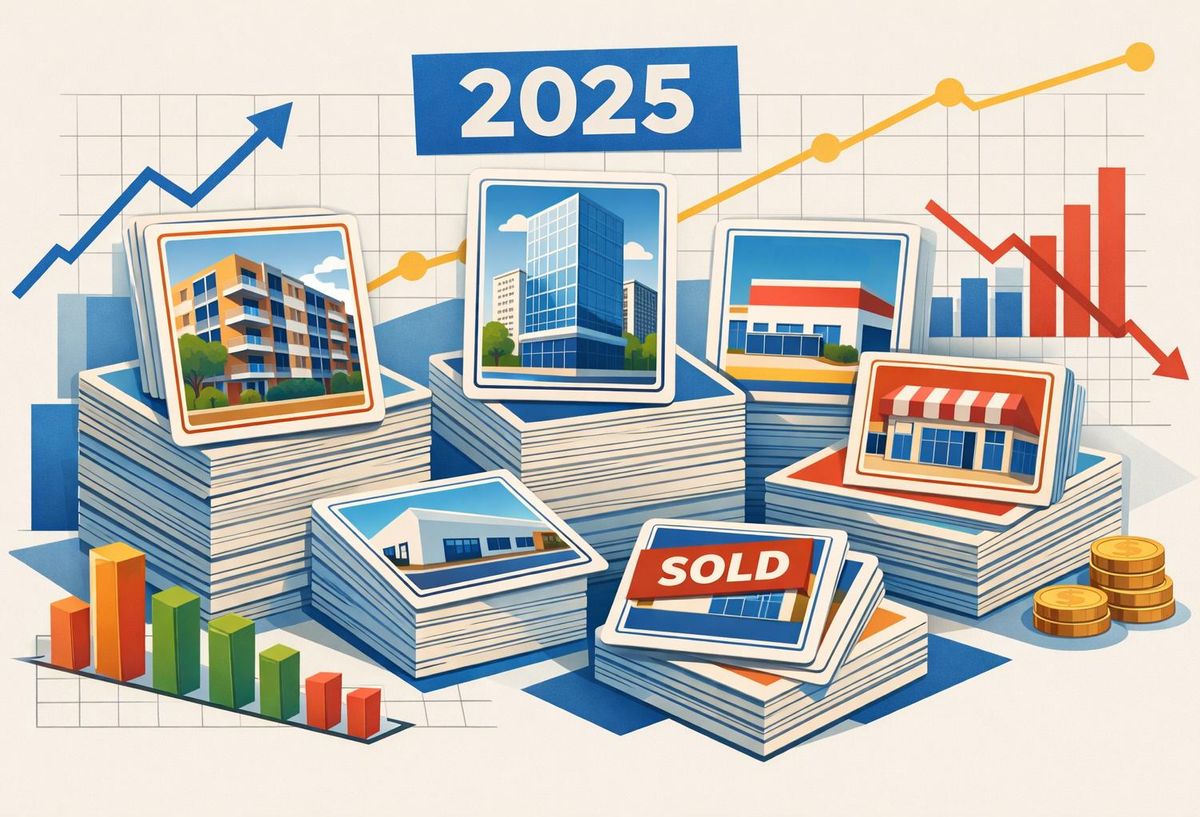
Commercial real estate roared back to life in 2025, with more than $255B pouring into multifamily, industrial, office and retail assets. Major investors moved fast on falling interest rates, improving bond yields and rising confidence across sectors. Multifamily dominated with over $115B in deals, industrial surged under private equity leadership, office saw renewed activity from owner-users and retail proved surprisingly resilient. For today’s real estate and finance professionals, the message is clear: opportunity favors those who stay informed and ready to act.