Investors Gear Up for a Big 2026 as U.S. Commercial Real Estate Finds Its Footing
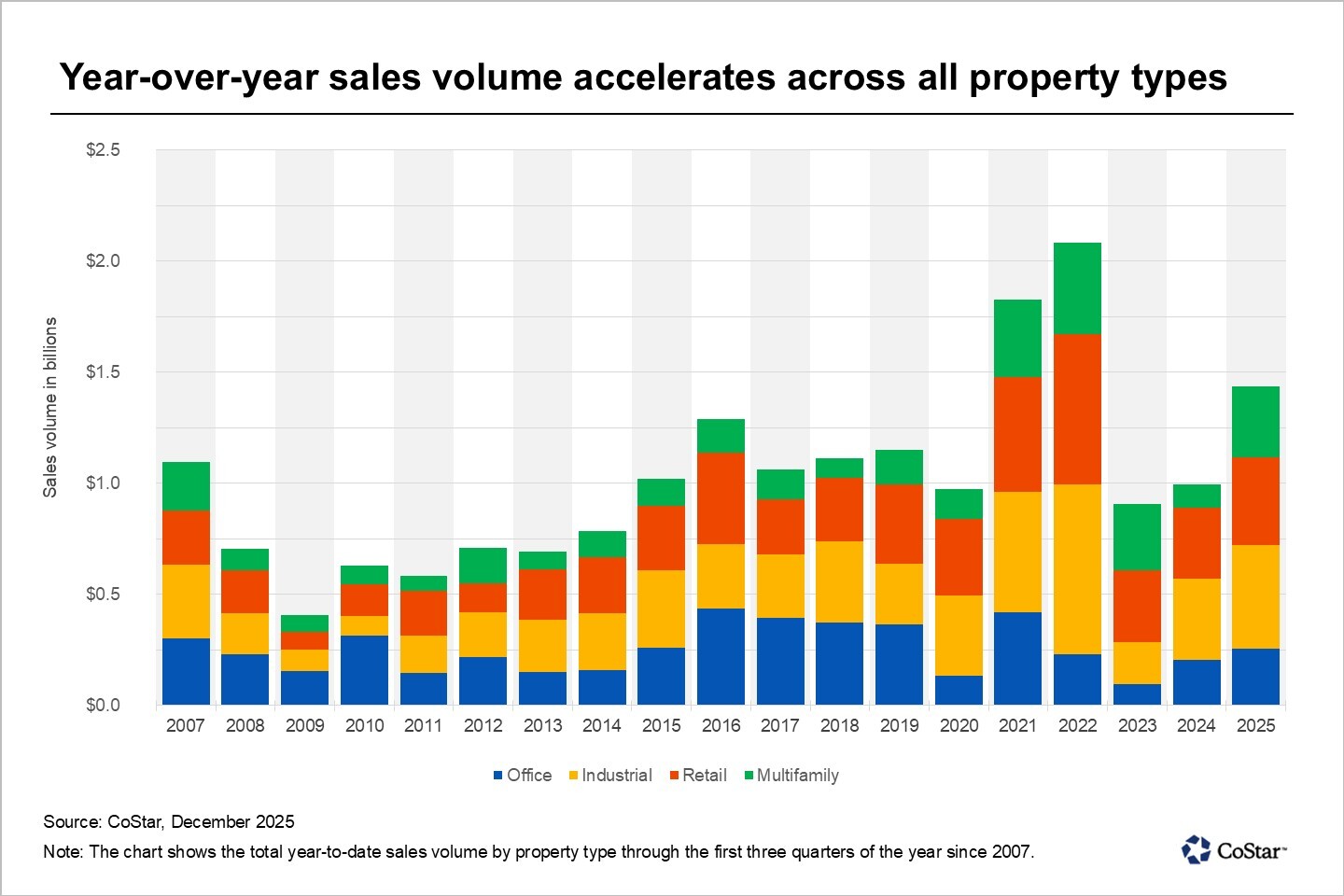
The commercial real estate world is stepping into 2026 with something it hasn’t felt in years: genuine momentum. According to the new CBRE 2026 North America Investor Intentions Survey, investor confidence is rising as pricing stabilizes, debt pressure eases, and capital begins flowing back into the market.
A remarkable 95% of surveyed investors say they plan to buy as much—or more—commercial real estate compared to last year. Even better, 55% plan to increase their capital allocations, a sharp improvement that signals renewed faith in long-term fundamentals.
Source Spotlight
This article draws from reporting originally published by the Boston Real Estate Times, one of the industry’s most respected voices for reliable market analysis and forward‑looking insights.
Dallas Dominates, Sun Belt Shines, New Markets Rise
Dallas once again claims the crown as the top investment market for U.S. investors—its fifth consecutive year. Atlanta and San Francisco secure the next spots, while rapidly growing metros like Charlotte, Nashville, Tampa, and Seattle break into the top 10.
Sun Belt cities continue attracting capital, but major coastal gateways are beginning to look irresistible thanks to appealing price resets and strategic entry points rarely seen in the last decade.
Multifamily Remains the Favorite
No surprise here: multifamily leads at 74%, continuing its reign as the nation’s most dependable asset class. Industrial and logistics follow at 37%, supported by strong e‑commerce demand.
Retail is mounting a subtle but promising rebound at 27%, while office struggles at 16% as hybrid and flexible work reshape tenant demand.
Alternative assets—healthcare, cold storage, land, and self‑storage—earned interest from 11% of investors who are still prioritizing discounted opportunities in traditional sectors.
Value‑Add Strategies Lead the Pack
With stability returning, investors are pursuing value‑add and core‑plus strategies that balance moderate risk with strong performance potential. Meanwhile, distressed and opportunistic approaches have cooled as market sentiment shifts toward recovery instead of rescue.
Debt Takes a Back Seat as Equity Gains Appeal
Despite the optimism, leverage remains a sticking point. Over 70% plan to maintain current debt‑to‑equity ratios, and nearly half expect a year or more of negative leverage.
Interest rate uncertainty and refinancing challenges persist, but many see this period as a rare window for equity‑driven opportunity.
What This Means for Professionals and Future Investors
For professionals in the field—and those preparing to enter it—the 2026 landscape offers both opportunity and complexity. Understanding market cycles, capital flows, and investor psychology has become more important than ever.
Educational partners like Cameron Academy continue helping students and professionals build the knowledge needed to thrive in markets just like this—especially as real estate, mortgage, finance, and insurance sectors evolve across the U.S.
The Great Office Reinvention
Want to dive deeper into the changing office market? Check out Eventbrite’s powerful session, “The Great Office Reinvention,” exploring what truly works in 2026 and beyond.
As investors move from caution to calculated confidence, 2026 is shaping up to be a year of strategic growth, bold repositioning, and renewed optimism. For professionals across every sector, staying informed will be the key to staying ahead.
More Articles
Getting licensed or staying ahead in your career can be a journey—but it doesn’t have to be overwhelming. Grab your favorite coffee or tea, take a moment to relax, and browse through our articles. Whether you’re just starting out or renewing your expertise, we’ve got tips, insights, and advice to keep you moving forward. Here’s to your success—one sip and one step at a time!
In 2026, financial advisors are no longer just experimenting with AI — they’re relying on it. Once confined to back-office duties, AI now supports meeting prep, portfolio analysis, and even early-stage financial planning. Advisors say the tech is strengthening client relationships by freeing them from administrative overload, though entry-level roles like paraplanners may feel the squeeze as automation accelerates.
Cybercriminals are weaponizing AI to launch highly convincing email scams and system breaches across the mortgage industry, overwhelming lenders and servicers whose cybersecurity measures can’t keep up. With major companies already hit and regulation lagging behind, experts warn the sector—now considered critical infrastructure—must rapidly upgrade protections, collaborate on threat intelligence, and improve AI governance before the risks escalate further.
Escrow payments are quietly surging across the country as property taxes and insurance premiums spike—pushing many homeowners toward delinquencies and even foreclosure. New data from Cotality shows the sharpest increases hitting the South and Midwest, with Florida among the hardest‑hit states. Even with fixed mortgage rates, rising escrow requirements are driving monthly payments higher and threatening affordability heading into 2026.
Milwaukee entered 2025 with renewed momentum, posting its strongest commercial real estate sales volume in three years. After a period of uncertainty and high capital costs, investors are returning with a sharper focus on quality assets, realistic pricing, and reliable cash flow. Activity is increasing across industrial, office, multifamily, and retail sectors, signaling a broad-based recovery fueled by stabilizing interest rates and improved market confidence.
As 2026 approaches, the title insurance industry is navigating a complex mix of market recovery, rising fraud threats, and sweeping regulatory changes. Industry leaders say the path forward centers on smarter technology, leaner operations, and stronger support for title agents. With AI-driven workflows, enhanced fraud prevention, and new compliance demands—including FinCEN’s expanded Geographic Targeting Orders—companies like Stewart and First American are reshaping how title work gets done. For real estate and mortgage professionals, the year ahead promises more automation, heightened standards, and major opportunities for those who stay ahead of the curve.
The real estate industry is undergoing a major transformation in 2025 as advancements in AI, proptech, blockchain, and data intelligence redefine how properties are marketed, valued, financed, and experienced. From instant digital valuations and immersive virtual tours to tokenized investments and predictive analytics, technology is reshaping every stage of the real estate lifecycle. Professionals who embrace these innovations—while maintaining the human expertise clients still rely on—will lead the next era of the industry.