Is AI Really Taking Over Finance Jobs? Wall Street’s Layoffs May Be More Smoke Than Fire
Artificial intelligence may be the headline-stealing villain of the finance world, but according to industry experts interviewed by
Fortune,
the panic swirling around AI-driven layoffs is mostly hype—at least for now.
Even as major players like JPMorgan, Goldman Sachs, and Morgan Stanley tighten their headcounts, economists argue that these cuts have more to do with
post-pandemic overhiring and economic uncertainty than robots replacing bankers.
Tap to reflect:
Is AI becoming the convenient scapegoat for deeper economic issues in the financial sector?
The AI Panic: What’s Real and What’s Just Noise?
In a widely discussed shareholder letter, JPMorgan CEO Jamie Dimon warned that AI may reshape the workforce as profoundly as electricity or the internet.
The financial world took notice—but experts say the fears of AI dominating all banking jobs are premature.
NYU Stern’s Robert Seamans suggests companies often cite AI to avoid admitting missteps in hiring strategy or acknowledging broader economic pressures such as tariffs or weakening consumer demand.
Banks continue investing billions into AI tools like the analyst-speeding “Socrates.”
And yes—Citigroup’s research shows that over half of financial jobs have high automation potential.
But despite that, real-world layoffs directly tied to AI are still limited.
Hiring Freezes, Not Mass Firings
Current data shows that overall staffing in major banks is holding steady.
Bank of America maintains nearly identical employee numbers to last year. JPMorgan even added more than 2,000 workers.
Goldman Sachs, despite layoffs, still increased staff year over year.
Instead of eliminating roles outright, banks appear to be using AI to slow hiring for as long as possible.
Experts predict this reduced hiring pace may continue for the next two years as banks ride a wave of AI-driven productivity.
Did you know?
Some banks use AI efficiencies to avoid hiring hundreds of additional employees—not to replace current workers.
MBA Graduates Still Winning… But Less Easily
Top MBA graduates from Columbia, NYU Stern, Wharton, Duke, and others still land jobs at impressive rates—often above 85%.
But beneath that success lies a more sobering trend: placements at elite business schools have declined meaningfully since 2021.
At Harvard, the percentage of graduates with no job offer after three months rose from 4% to 15% in just three years.
MIT saw similar spikes. Even prestigious programs feel the tightening market.
Which Finance Jobs Are Safe—and Which Are on the Edge?
Surprisingly, junior analysts may not be the first AI casualties.
Consulting and banking roles involve high-stakes decisions with zero margin for error—tasks AI still struggles to replicate.
Every acquisition, negotiation, or audit is unique, leaving room for human judgment.
Tech roles in finance, however, are booming. Nearly 76% of banks expect to expand tech hiring due to AI.
But some professions remain vulnerable. Accounting and marketing roles may face notable turbulence, as AI excels at routine verification, data processing, and content generation.
What This Means for Professionals Across All Industries
AI isn’t replacing everyone—but it is reshaping career paths.
Professionals in finance, real estate, insurance, healthcare, and beyond will increasingly rely on continuous learning to stay competitive.
This is why forward-focused institutions like Cameron Academy continue expanding licensing and professional development opportunities across all 50 states—helping driven individuals stay market-ready.
Whether you’re entering a new field or strengthening your current trajectory, upskilling remains your strongest advantage in the age of accelerating AI.
Explore Career Growth:
Looking to future-proof your career? Training leaders like Cameron Academy offer flexible licensing and professional skill‑building programs to help you stay one step ahead.
More Articles
Getting licensed or staying ahead in your career can be a journey—but it doesn’t have to be overwhelming. Grab your favorite coffee or tea, take a moment to relax, and browse through our articles. Whether you’re just starting out or renewing your expertise, we’ve got tips, insights, and advice to keep you moving forward. Here’s to your success—one sip and one step at a time!
A growing share of American homeowners now carry mortgage rates above 5%—a dramatic shift that’s reshaping refinancing, inventory, and buyer behavior nationwide. With more than 30% of borrowers locked into rates over 5% and 20% above 6%, the market is split between owners holding on to low pandemic‑era loans and new buyers taking on higher‑rate mortgages. Federal efforts to push rates down could unlock millions of refinancing opportunities, while buyers see only modest monthly savings. For real estate professionals, understanding these rate dynamics is crucial as they increasingly drive inventory levels, affordability, and market activity.
New Moody’s data shows commercial real estate deal volume slipped 20% in December, marking a second monthly decline. Yet the full year tells a different story: 2025 ended with a 17% gain, signaling a quiet but resilient recovery. The biggest surprise came from the office sector, which posted a 21% jump in activity as return‑to‑office trends and AI‑driven job growth boosted demand. Multifamily, retail, and alternative assets like data centers also saw strong momentum, giving real estate professionals a market full of fresh opportunities heading into 2026.
Florida drivers and industry professionals are heading into 2026 with good news: auto insurance rates are dropping across the state as the market shows strong signs of stabilization. USAA leads the latest wave with a 7% average rate decrease expected in May 2026, saving members more than $125 million annually. They join several major insurers — including State Farm, Progressive, AAA, Allstate, and Florida Farm Bureau — all approving significant reductions. Officials credit recent legislative reforms, especially tort reform, for the improved loss ratios and renewed insurer confidence. With both auto and home insurance markets strengthening, Florida’s real estate, mortgage, and insurance professionals can expect more consumer confidence, smoother transactions, and expanding career opportunities.
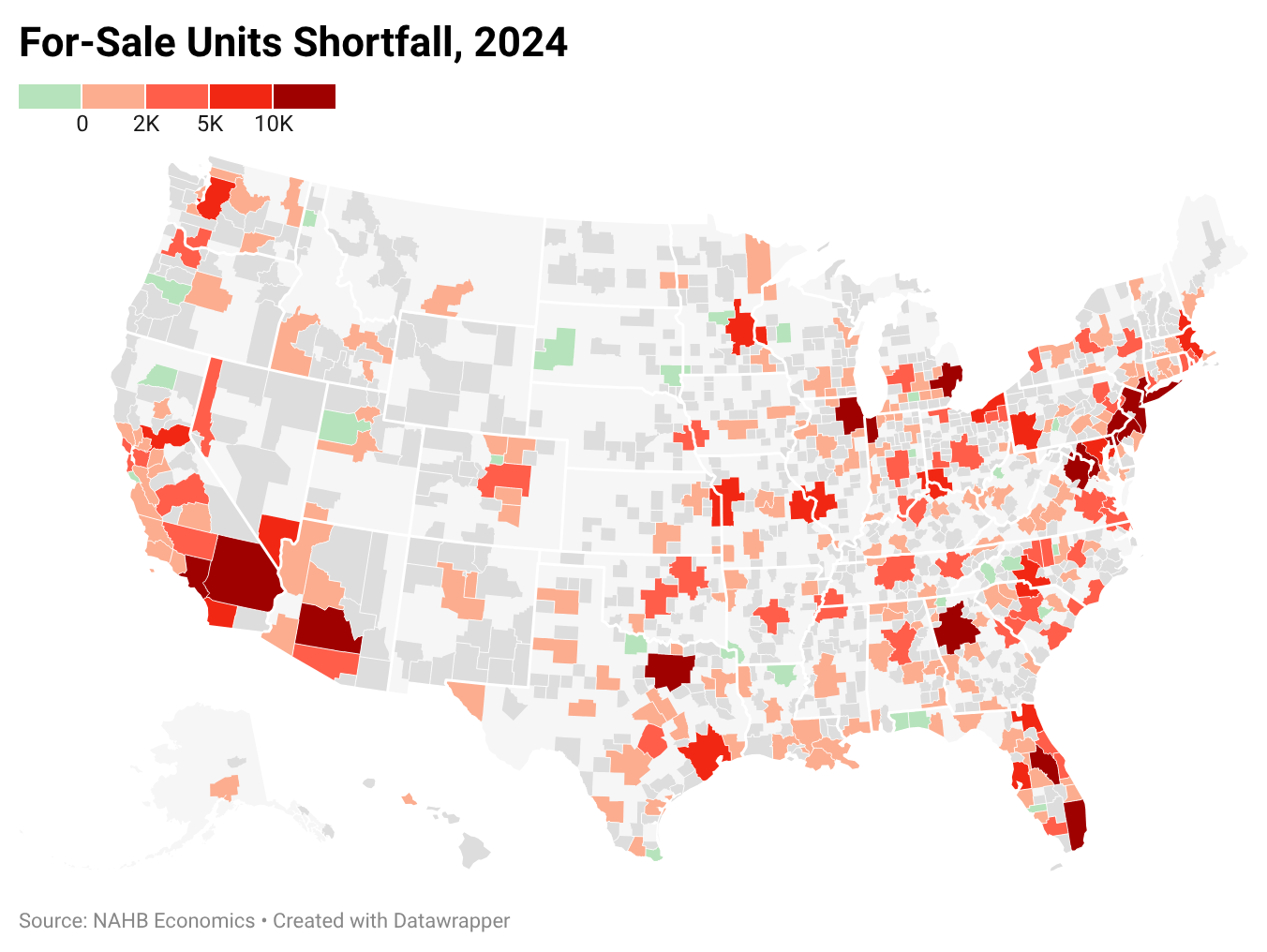
New data from Eye On Housing and the NAHB shows the U.S. remains short more than 1.2 million housing units, keeping pressure on both rents and home prices. Record‑low vacancy rates, slow single‑family construction, and restrictive zoning continue to fuel intense competition in 2024. Major metros like Chicago, New York, and Atlanta face some of the deepest deficits, and the true nationwide shortfall may be even higher when accounting for overcrowding and aging homes. For real estate professionals, the ongoing shortage means sustained demand, tighter inventory, and major opportunities for those who understand the evolving market.
Top real estate coach Jason Pantana says the divide between agents today isn’t about who has “tried” AI — it’s about who is immersed in it. In a new HousingWire interview, he explains why AI isn’t a gimmick but a full business system that amplifies output, improves authenticity, and reshapes how clients search for agents. From prompt mastery to AI‑driven visibility on Google, Pantana reveals how agents who commit even 15 minutes a day to learning AI are already outperforming those who hesitate.
Dallas–Fort Worth’s commercial real estate market closed 2025 with a split personality. Industrial dominated with massive new deliveries and soaring leasing demand, retail held steady with some of the market’s strongest fundamentals in years, and office continued to falter under remote‑work pressures. High vacancies, weak absorption, and rising demand for top‑tier space show the sector’s ongoing reset. Meanwhile, industrial and retail strength position the Metroplex for another powerhouse year heading into 2026.