Is Becoming a Financial Analyst Really a Good Career in 2025–2026?

Finance career banner
Published January 29, 2026 • Read Time: 8 minutes

If you’re exploring your first career, pivoting into finance, or simply searching for a high-growth path with strong earning potential, there’s a good chance the financial analyst role has made its way onto your radar. But is it truly a good career in today’s fast-evolving job market?

According to the Corporate Finance Institute’s in-depth breakdown, the answer is often yes—depending on what you value in a job, your appetite for growth, and how much you enjoy working with numbers and strategy.

What Does a Financial Analyst Actually Do?

Financial analysts are the decision-drivers hidden behind the spreadsheets. They analyze data, build financial models, evaluate performance, and advise leadership on how a company should move forward.

At the entry level, expect a mix of research, Excel modeling, budgeting, presentation creation, and trend analysis. Smaller companies may require analysts to wear multiple hats, while investment banking or M&A roles offer high intensity and high reward.

Salary Outlook for 2025–2026: A High-Earning Path

The U.S. Bureau of Labor Statistics reports a mean salary of $116,490 and a median salary of $101,350 for financial analysts. Total compensation can climb much higher depending on bonuses, stock awards, and sector specialization.

Other salary sources like Glassdoor and Robert Half place early-career salaries between $63,000 and $105,000. Senior analysts in competitive fields—like investment banking—can easily surpass $180,000+.

How Financial Analysts Compare to Other Finance Roles

• Accountants: $81,680 median
• Risk analysts: $106,000 median
• Data scientists: $112,590 median
• Financial managers: $161,700 median

Analysts outperform many entry-level finance paths and have a clear advancement route toward high-paying management roles.

Job Demand: Stable, Growing, and AI-Resistant

Demand continues to rise. The BLS projects 6% job growth through 2034—faster than the national average, translating into nearly 29,900 job openings yearly.

AI may automate tasks, but companies still depend on analysts for judgment, nuance, and communication—skills machines can’t replace.

Industries Seeking Financial Analysts

Financial analysts operate across nearly every modern industry:

• Corporate finance
• Tech and SaaS
• Banking and investment firms
• Healthcare and energy

A Career with Predictable Growth

One major advantage: the career path is clear. Most professionals progress from junior analyst to analyst, senior analyst, manager, director, and even executive roles like VP or CFO.

Exit Opportunities for Financial Analysts

• FP&A
• Consulting and strategy
• Corporate development (M&A)
• MBA or executive leadership

Starting as a financial analyst opens doors—not limits.

Pros and Cons: The Honest Breakdown

Pros
• Strong earning potential
• Clear advancement
• Transferable skills
• High demand

Cons
• Long hours in some fields
• High accountability
• Repetitive entry-level tasks
• Competitive job market

Work-Life Balance

Work-life balance depends on your sector:

• Corporate finance: predictable
• Tech: reasonable
• Investment banking: intense

Is This Career Right for You?

You’ll excel if you enjoy working with data, solving problems, and communicating insights. It’s less ideal if you prefer purely creative work or dislike repetitive tasks early in your career.

Final Verdict

Financial analysis remains a stable, rewarding, and high-paying career path—especially as businesses seek clarity and insight in a rapidly changing financial landscape.

Learn Financial Analysis Skills

If you’re serious about elevating your career, the CFI FMVA program is one of the most respected certifications available. Explore the original resource:

Read the Full Original Analysis from CFI

And if you’re exploring additional professional pathways—real estate, mortgage, insurance, business, and more—Cameron Academy continues empowering professionals nationwide with licensing education designed for modern learners.

More Articles

Getting licensed or staying ahead in your career can be a journey—but it doesn’t have to be overwhelming. Grab your favorite coffee or tea, take a moment to relax, and browse through our articles. Whether you’re just starting out or renewing your expertise, we’ve got tips, insights, and advice to keep you moving forward. Here’s to your success—one sip and one step at a time!

Is Florida’s Booming Real Estate Market Becoming Unaffordable?

Florida is facing a real estate crisis marked by skyrocketing insurance premiums, stringent FEMA rules, and a surge in hedge fund property acquisitions.

By |November 14, 2024|Categories: Article, Finance/Economy, Real Estate|Tags: , |0 Comments

Revolutionizing Cancer Therapy: The Promise of Patient-Derived Organoids

Patient-derived organoids offer an unprecedented opportunity to replicate the complex structure and genetic makeup of cancers, providing a more accurate model for clinical drug screening and pharmacognostic assessment.

The AI Revolution in Dermatology: A Systematic Review

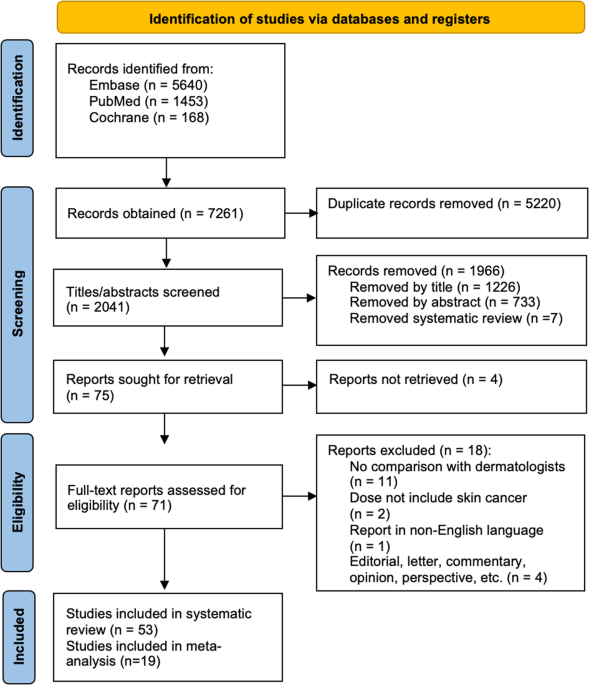
In a groundbreaking study published in Nature, researchers have delved into the burgeoning field of artificial intelligence (AI) in dermatology, specifically examining its role in diagnosing skin cancer. The study, titled "A Systematic Review and Meta-Analysis of Artificial Intelligence Versus Clinicians for Skin Cancer Diagnosis," offers a comprehensive look at how AI stacks up against human clinicians in this critical area of healthcare.

By |November 14, 2024|Categories: AI in Healthcare, Article, Dermatology|Tags: , |0 Comments

The Fast Lane to Fully Autonomous Vehicles: Industry Innovations and Future Prospects

The automotive world is abuzz with announcements from major players like Tesla, Rimac, Renault, and Nissan, each unveiling plans to introduce autonomous vehicles in the near future. Tesla's much-anticipated "CyberCab" is set for an October 2024 debut, while Rimac and Renault are gearing up for releases in 2026.

Futureproofing for Insurers: The Role of AI and Hyper-Personalization

In a rapidly evolving industry, insurance companies are turning to artificial intelligence (AI) and hyper-personalization to stay ahead of the curve.

Revolutionizing Healthcare: The Power and Potential of AI

AI technology offers a multitude of benefits, from enhancing patient outcomes to reducing healthcare costs and improving population health. Its application ranges from preventive screenings to complex diagnostic procedures, marking a new era in medical care.


By |November 13, 2024|Categories: Article, Artificial Intelligence, Healthcare|Tags: , |0 Comments