January’s Weak Job Growth Puts Pressure on the Fed — And Raises New Questions for 2025
With the ongoing federal government shutdown delaying official Bureau of Labor Statistics reporting, a newly released ADP update has stepped into the spotlight — and it’s painting a much more fragile picture of the U.S. labor market than expected. According to ADP, private employers added only 22,000 jobs in January, less than half of what economists had forecasted.
ADP and Stanford researchers also revised December’s payroll totals downward — from a previously reported 41,000 additions to just 37,000 — strengthening a growing concern that the labor market is cooling as 2025 begins.
Wage Growth Steady, But Job Creation Slows
Wage growth remains surprisingly steady despite slower hiring. Employees staying with their current companies saw wages rise 4.5%, while job changers experienced an average pay bump of 6.4%, slightly down from December’s 6.6%.
But the real story lies in which industries are gaining — and which are shrinking. Education and health services added 74,000 jobs, nearly carrying the month on their own. Meanwhile, professional and business services dropped 57,000 positions, the sharpest decline across all sectors.
Manufacturing Still Struggling
Despite political promises of a revitalized manufacturing boom, the sector continues its decline. ADP reports that manufacturing lost another 8,000 jobs in January — marking almost two full years of monthly declines since March 2024.
Where Jobs Are Growing — And Shrinking
Medium-sized companies showed the strongest numbers, adding 41,000 jobs, while large employers cut 18,000 positions, and small businesses broke even.
Regionally, the Northeast and Midwest saw modest gains — 17,000 and 25,000, respectively — while the South and West slipped by around 10,000 each.
What This Means for Interest Rates — and Your Career Path
The Federal Reserve paused its rate-cut cycle in January, citing persistent inflation and a seemingly stable unemployment rate. However, weakening private hiring could pressure the Fed into cutting earlier than planned.
Industry veteran Melissa Cohn emphasized that a cooling labor market “could open the door for the Fed to cut rates earlier in the year.” Traders still predict June — but confidence is wavering.
For fields tied closely to economic cycles — including real estate, mortgage, insurance, and finance — shifts like these can directly impact buyer behavior, client demand, lending trends, and long-term planning.
Why This Matters for Professionals — Especially in Licensed Fields
During periods of slower job growth, professionals often use the opportunity to enhance skills, earn new certifications, or pivot into more stable industries. This is why institutions like Cameron Academy continue to see strong enrollment across real estate, mortgage licensing, insurance, and other high‑demand fields.
With flexible online programs, industry‑driven curriculum, and licensing options across the U.S., Cameron Academy empowers professionals to stay competitive — no matter what the economy is doing.
Explore upcoming courses and licensing programs here:
Cameron Academy.
More Articles
Getting licensed or staying ahead in your career can be a journey—but it doesn’t have to be overwhelming. Grab your favorite coffee or tea, take a moment to relax, and browse through our articles. Whether you’re just starting out or renewing your expertise, we’ve got tips, insights, and advice to keep you moving forward. Here’s to your success—one sip and one step at a time!
In 2026, financial advisors are no longer just experimenting with AI — they’re relying on it. Once confined to back-office duties, AI now supports meeting prep, portfolio analysis, and even early-stage financial planning. Advisors say the tech is strengthening client relationships by freeing them from administrative overload, though entry-level roles like paraplanners may feel the squeeze as automation accelerates.
Cybercriminals are weaponizing AI to launch highly convincing email scams and system breaches across the mortgage industry, overwhelming lenders and servicers whose cybersecurity measures can’t keep up. With major companies already hit and regulation lagging behind, experts warn the sector—now considered critical infrastructure—must rapidly upgrade protections, collaborate on threat intelligence, and improve AI governance before the risks escalate further.
Escrow payments are quietly surging across the country as property taxes and insurance premiums spike—pushing many homeowners toward delinquencies and even foreclosure. New data from Cotality shows the sharpest increases hitting the South and Midwest, with Florida among the hardest‑hit states. Even with fixed mortgage rates, rising escrow requirements are driving monthly payments higher and threatening affordability heading into 2026.
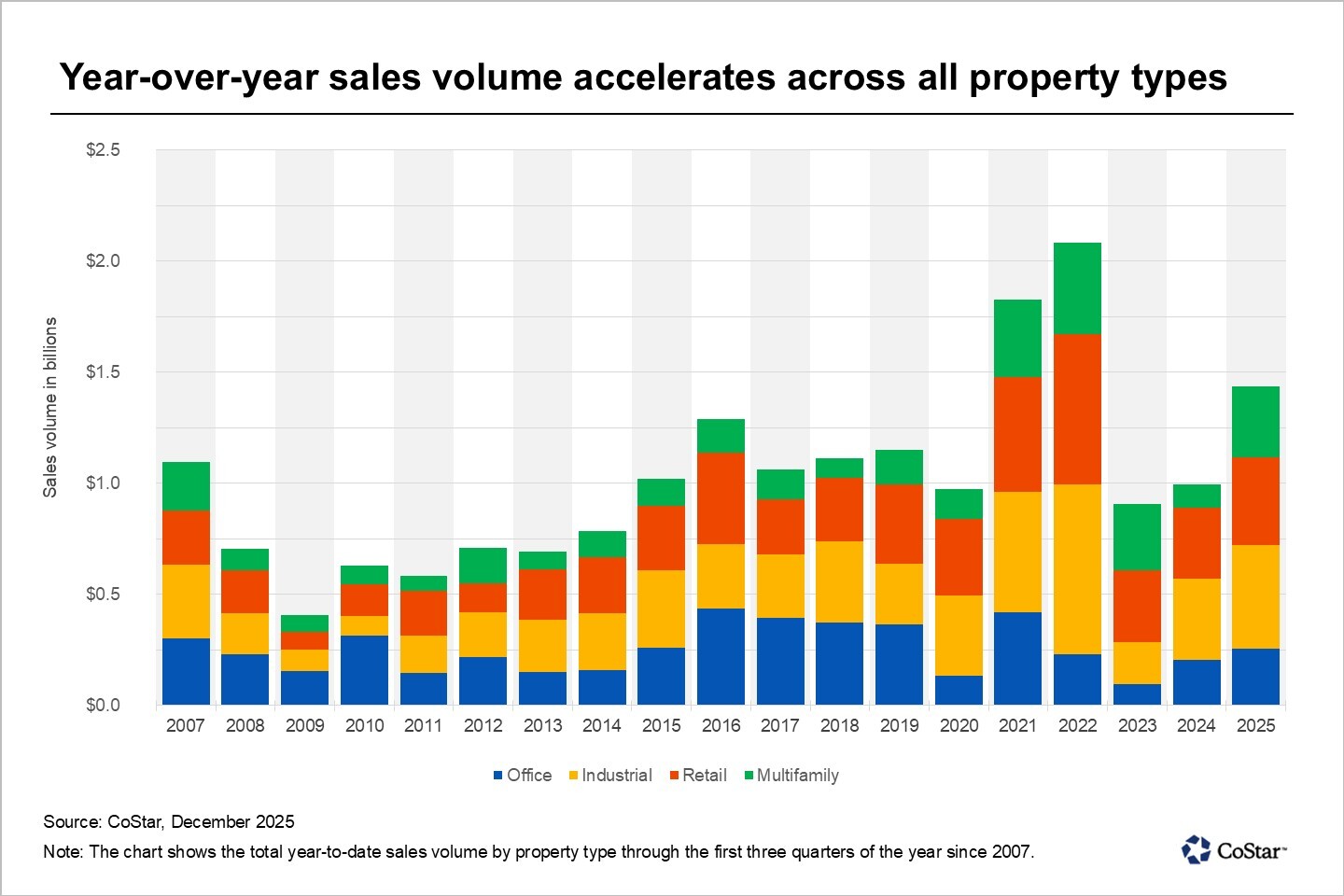
Milwaukee entered 2025 with renewed momentum, posting its strongest commercial real estate sales volume in three years. After a period of uncertainty and high capital costs, investors are returning with a sharper focus on quality assets, realistic pricing, and reliable cash flow. Activity is increasing across industrial, office, multifamily, and retail sectors, signaling a broad-based recovery fueled by stabilizing interest rates and improved market confidence.
As 2026 approaches, the title insurance industry is navigating a complex mix of market recovery, rising fraud threats, and sweeping regulatory changes. Industry leaders say the path forward centers on smarter technology, leaner operations, and stronger support for title agents. With AI-driven workflows, enhanced fraud prevention, and new compliance demands—including FinCEN’s expanded Geographic Targeting Orders—companies like Stewart and First American are reshaping how title work gets done. For real estate and mortgage professionals, the year ahead promises more automation, heightened standards, and major opportunities for those who stay ahead of the curve.
The real estate industry is undergoing a major transformation in 2025 as advancements in AI, proptech, blockchain, and data intelligence redefine how properties are marketed, valued, financed, and experienced. From instant digital valuations and immersive virtual tours to tokenized investments and predictive analytics, technology is reshaping every stage of the real estate lifecycle. Professionals who embrace these innovations—while maintaining the human expertise clients still rely on—will lead the next era of the industry.