In the bustling arena of American politics, where clashes are common and agreements rare, Vice President Kamala Harris and former President Donald Trump find common ground on an issue that strikes at the heart of many voters: the escalating cost of housing.
Both leaders acknowledge the pressing need for more housing, but their strategies diverge significantly. As housing costs continue to rise, outpacing wages and burdening renters, the stakes are high for their respective plans to resonate with the public.
Kamala Harris’s Vision for Affordable Housing
Vice President Harris brings a personal touch to her housing agenda, reflecting on her mother’s journey to homeownership. Her plan is a blend of increasing housing supply and providing financial support to aspiring homeowners. Harris aims to build three million new housing units, a goal she believes will alleviate the housing shortage and reduce costs.
To achieve this, Harris proposes expanding existing tax credits for affordable rental housing and introducing new incentives for building starter homes. Her plan includes a $40 billion fund to innovate housing construction and a $25,000 down payment assistance for first-time buyers, although some economists argue this could inadvertently drive prices higher.
Harris also targets corporate landlords, advocating for legislation to remove tax breaks from large investors and curb rent-increasing algorithms. Her comprehensive approach seeks to address both supply and demand in the housing market.
Donald Trump’s Approach to Housing Costs
Former President Trump’s housing strategy, while less detailed, focuses on deregulation and opening federal lands for development. Trump has frequently mentioned the need to build more homes and reduce regulatory barriers, echoing some of Harris’s sentiments.
Trump also emphasizes lowering mortgage rates, although the president does not directly set these rates. He links high mortgage rates to inflation and promises to bring them down by curbing inflation, despite critiques that some of his economic policies might exacerbate it.
Immigration and Housing
Trump and his vice-presidential nominee, JD Vance, have attributed rising housing costs to undocumented immigrants, suggesting that reducing illegal immigration would alleviate the pressure on housing prices. However, experts like Albert Saiz from MIT argue that while population growth can affect housing demand, the impact of immigration on prices is relatively small.
Trump’s proposed mass deportation of undocumented immigrants could decrease housing demand but might also lead to a shortage of construction workers, potentially increasing building costs.
As the 2024 election approaches, both candidates will need to convince voters that their housing strategies can effectively address the affordability crisis. For a deeper dive into their plans, the original NPR article provides comprehensive insights.
Getting licensed or staying ahead in your career can be a journey—but it doesn’t have to be overwhelming. Grab your favorite coffee or tea, take a moment to relax, and browse through our articles. Whether you’re just starting out or renewing your expertise, we’ve got tips, insights, and advice to keep you moving forward. Here’s to your success—one sip and one step at a time!
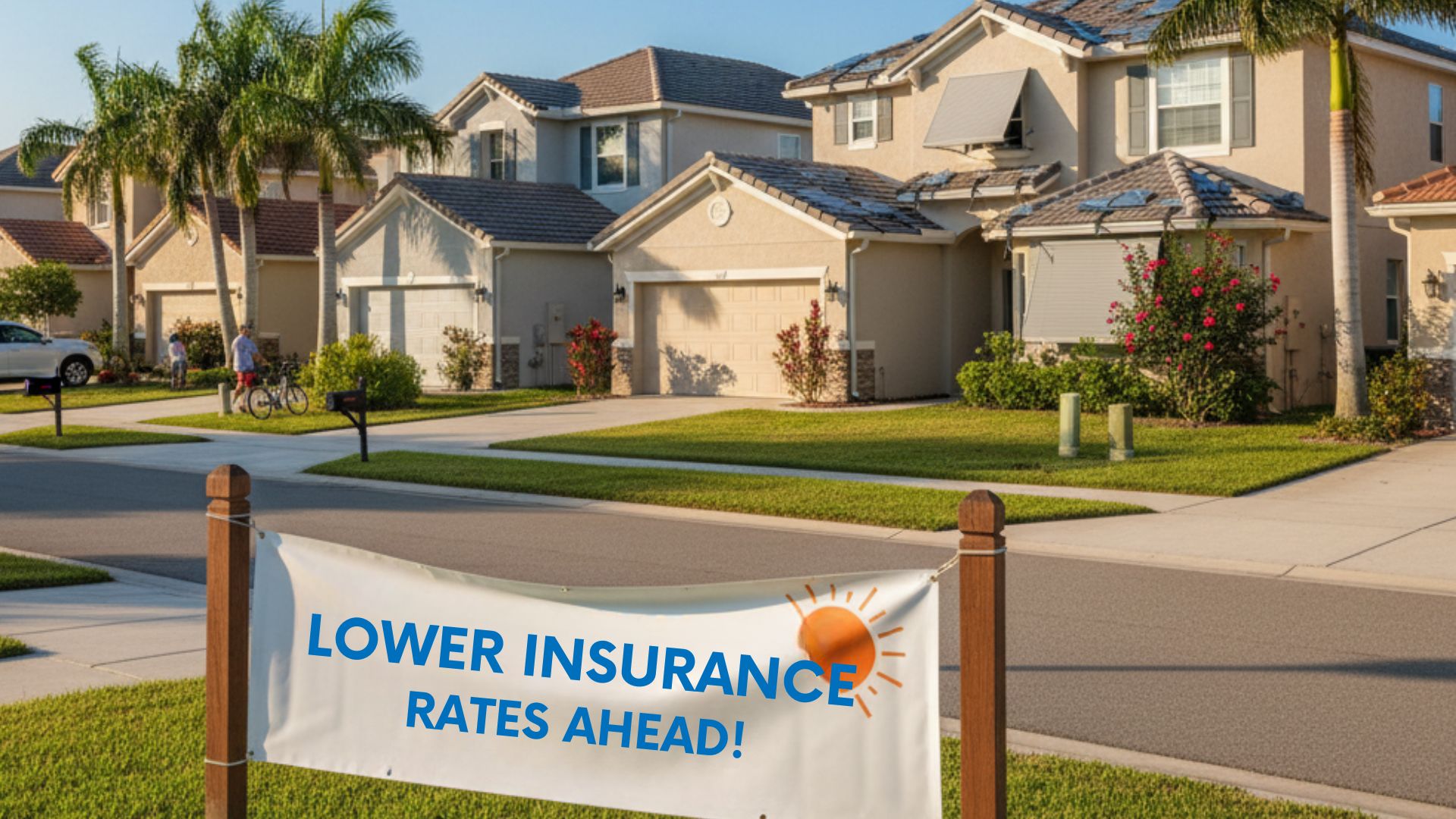
Florida homeowners are getting long‑awaited relief this spring as insurance premiums drop across the state, with some counties seeing reductions of up to 14 percent. After years of skyrocketing rates and insurer withdrawals, a series of legislative reforms has attracted new companies, reduced lawsuits, and restored competition—leading to lower costs for more than 330,000 Citizens policyholders and multiple private‑market rate cuts. This shift is boosting not only homeowners, but also Florida’s broader economy and real estate market, offering valuable insights for professionals in real estate, insurance, mortgage, and finance.
Artificial intelligence has transformed real estate marketing by making it easy to generate polished, digitally enhanced listing photos. But as AI tools increasingly replace reality with idealized versions of homes, a new issue has emerged: housefishing. Buyers and renters are showing up to properties that look nothing like the online images, leading regulators to step in and require transparency. With laws like California’s newly enacted Assembly Bill 723, the industry is being pushed toward clearer labeling and ethical use of AI. As trust becomes a growing concern, real estate professionals must balance innovation with accuracy to stay compliant and credible.
Massachusetts has unanimously advanced bill S.2947, a major push to curb housing discrimination by expanding fair housing education requirements for real estate agents. The proposal increases training hours for both current and future licensees and doubles penalties for violations, marking a significant shift toward stronger consumer protections and higher professional standards across the state’s housing market.
Energy costs have moved from a background expense to a major force influencing affordability, property values, and development across the Hudson Valley. Aging housing stock, grid constraints, and rising utility bills are reshaping both residential and commercial real estate decisions—rewarding energy‑efficient properties and pressuring households already struggling to balance essential expenses.
AI is transforming the daily workflow of real estate pros by speeding up marketing, simplifying client communication, and sharpening pricing strategies. As highlighted in an NBC 6 feature, agents are using AI to draft listing descriptions, generate social media content, organize inquiries, and analyze market data in minutes. Whether you're new to the industry or an experienced agent, AI is quickly becoming an essential tool for working smarter and staying competitive.