Large CRE Deals Come Roaring Back: What Q3 2025 Means for Today’s Professionals
After several quarters of hesitation, the U.S. commercial real estate market saw a major pulse of confidence in Q3 2025. According to fresh data from Altus Group, large single‑asset deals valued at $10 million or more surged back into the spotlight, hitting $76 billion for the quarter — the strongest performance since 2022.
For professionals across real estate, finance, and investment sectors, this shift isn’t just a statistic. It’s a directional signal: liquidity is returning, high‑value buyers are stepping back in, and the upper tier of the market is showing long‑awaited signs of normalization.
The Return of the Big Deal
Altus Group’s Q3 2025 Investment & Transactions Report reveals a notable trend reversal. For the first time in several quarters, both quarterly and annual deal counts increased. But what truly stands out is the composition — large, single‑asset transactions made a powerful comeback.
Q3 2025 recorded 1,826 single‑asset deals above $10M — the highest since Q3 2022.
This accounted for nearly 68% of all single‑asset dollars traded, a level not seen since mid‑2022. Even outside the record‑breaking volatility of the post‑pandemic period, this quarter delivered the strongest growth rate for major deals in more than a decade.
A Market Rebound — But Not a Full Return to Peak Conditions
Despite the strong resurgence in activity, overall transaction volume still trails the highs of 2021 and 2022. The main cause? Deal size. The median large‑deal value landed at $19.6 million, roughly 9% below the late 2021 peak of $21.4 million.
Every major sector remains below its historic high:
Office continues to be the long‑term laggard, while industrial remains closest to full recovery. Multifamily, meanwhile, is showing renewed momentum with a 14.2% rise from post‑pandemic lows.
Pricing Trends Hint at Stabilization
The median price per square foot across property types rose 0.6% both quarterly and annually — a subtle but encouraging sign of stabilization. Office properties, however, continue their downward drift, losing 3% QoQ and 4.4% YoY.
Investors appear increasingly comfortable re‑entering the market, even if valuations remain below peak highs — suggesting improved price discovery and growing confidence in long‑term underwriting.
Why This Matters for Today’s Professionals
Commercial real estate often acts as a barometer for broader economic risk appetite. The return of large‑scale deals signals that institutional players believe conditions are returning to equilibrium. For real estate agents, mortgage professionals, and investors, this means new opportunities are emerging.
For those looking to upskill or transition into CRE roles, now is the time to enhance your professional profile. Schools like Cameron Academy provide flexible, career‑focused licensing and continuing education designed to keep professionals competitive during shifting market cycles.
A Step Toward Market Normalization
The key question now: will this momentum continue? As borrowing costs settle and underwriting clarity improves, Q4 and early 2026 could bring even greater liquidity — or a cautious pause.
For now, Q3 stands as the clearest sign in years that capital is flowing back into the big‑deal segment — and that investors are once again ready to make meaningful, future‑focused moves.
Getting licensed or staying ahead in your career can be a journey—but it doesn’t have to be overwhelming. Grab your favorite coffee or tea, take a moment to relax, and browse through our articles. Whether you’re just starting out or renewing your expertise, we’ve got tips, insights, and advice to keep you moving forward. Here’s to your success—one sip and one step at a time!
The financial landscape in South Korea is poised for a seismic shift as KBank, a major digital bank, grapples with a legislative curveball. The bank, which is heavily reliant on deposits from Upbit, Korea’s dominant cryptocurrency exchange, is facing a potential profit squeeze. The new Virtual Asset User Protection Act, set to take effect on July 19, 2024, mandates that banks must pay interest on crypto exchange deposits, a move that could severely impact KBank's bottom line.
AI's ability to analyze vast amounts of data is paving the way for a profound change in medical diagnostics. Khosla predicted that AI could take over up to 80% of standard medical tasks, reducing errors and biases in human diagnosis. This is particularly evident in fields like radiology and pathology, where AI's proficiency in analyzing medical imaging allows for the early detection of diseases such as cancer, significantly improving treatment outcomes.
The COVID-19 pandemic has dramatically reshaped the housing market landscape, resulting in an unprecedented surge in home prices throughout the United States.
In a world where technology is rapidly evolving, artificial intelligence (AI) is proving to be a game-changer in the healthcare sector. AI-powered tools are improving patient outcomes, enhancing operational efficiency, and reducing costs, reshaping the very fabric of healthcare delivery.
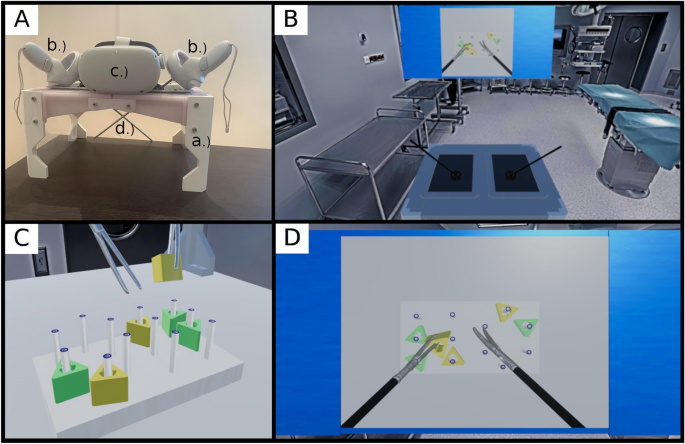
In a groundbreaking study published by Nature, researchers have unveiled a novel approach to surgical training using a low-fidelity virtual reality (VR) simulator enhanced with artificial intelligence (AI) for objective assessment. This pioneering method is poised to transform how medical students acquire laparoscopic skills, offering a cost-effective and efficient alternative to traditional training models.
AI in healthcare is projected to grow into a $188 billion industry worldwide by 2030, promising to revolutionize the field. From drug development to improved diagnostics, AI is already making significant strides, transforming medical practices and enhancing patient care efficiency.