Lofty Unveils the First Agentic AI Operating System: A New Era for Real Estate Productivity

Human and ai collaboration illustration

Artificial intelligence has officially entered its next evolution in the real estate world—and it’s far more than just smart prompts or automated messages. Lofty has launched Lofty AOS, the industry’s first agentic AI operating system, built to autonomously plan, execute, and manage entire real estate workflows.

For busy agents and brokerages, this marks a transformative shift. Instead of juggling dozens of manual tasks or relying on disconnected platforms, Lofty AOS acts like an intelligent digital workforce that manages lead handling, marketing, websites, transactions, and more—without waiting for step-by-step prompting.

AOS: AI That Doesn’t Wait for Instructions

Traditional AI reacts. Agentic AI takes initiative. Lofty AOS understands priorities, coordinates tasks, and completes end-to-end operations while adapting to each brokerage’s structure and goals.

Lofty CEO Joe Chen highlighted this evolution, emphasizing that organizations embracing agentic systems will “move beyond simple AI tools” and unlock exponential growth in productivity and business performance.

A Fully Specialized Network of AI Agents

Lofty AOS functions as a team of advanced digital agents—each one mastering a crucial pillar of real estate operations:

  • AI Assistant – Prioritizes high-value agent activities
  • Sales Agent – Engages leads, qualifies prospects, analyzes calls, and generates scripts
  • Social Agent – Builds and executes social media strategies
  • Homeowner Agent – Enriches databases and automates valuation-driven marketing
  • Website Builder – Creates SEO-optimized websites without design expertise
  • SEO/AEO Manager – Boosts visibility across traditional and AI-driven search systems
  • Transaction Coordinator – Manages mission‑critical steps during property transactions

Together, these agents eliminate tedious administrative work and ensure nothing slips through the cracks—something every real estate professional can appreciate.

Changing How Real Estate Teams Work

According to Taylor from Lofty, transitioning from traditional to agentic AI is more than a technological upgrade—it’s a reshaping of brokerage operations. This shift encourages teams to rethink workflows and redefine responsibilities to unlock AI’s true potential.

In a world where agents must balance marketing, lead nurturing, client communication, and compliance, offloading these tasks to an autonomous AI system could entirely redefine what “productive” means.

What This Means for Real Estate Professionals

Tools like Lofty AOS are reshaping the skill sets modern agents need. While AI handles more operational work, the industry still heavily relies on licensed, knowledgeable professionals who excel at negotiation, contract comprehension, and client guidance.

This is where Cameron Academy remains vital. As AI transforms workflows, agents who are well-trained, well-licensed, and adaptable will not just keep up—they’ll thrive.

Professionals who combine strong foundational knowledge with a keen understanding of emerging technologies will be the ones who lead the next wave of real estate success.

Explore Lofty AOS firsthand at lofty.com. Original coverage from RISMedia can be found here: read the full article.

More Articles

Getting licensed or staying ahead in your career can be a journey—but it doesn’t have to be overwhelming. Grab your favorite coffee or tea, take a moment to relax, and browse through our articles. Whether you’re just starting out or renewing your expertise, we’ve got tips, insights, and advice to keep you moving forward. Here’s to your success—one sip and one step at a time!

Proptech Promised a Revolution — So Why Does Real Estate Still Feel the Same?

Despite billions poured into proptech and a decade of flashy digital upgrades, the real estate experience remains largely unchanged. Apps made processes smoother, but not more transparent — because the industry’s core structures, data control and power dynamics stayed the same. True disruption will come from platforms that shift information and control to consumers, not just digitize outdated systems.

CRE Markets Wake Up in 2026: What Real Estate Professionals Need to Know

Early 2026 is delivering a clear message: commercial real estate is entering a recalibration phase. Construction is softening, pending home sales just saw a sharp drop, consumer sentiment is inching upward but remains fragile, and capital markets are tightening as major CRE sectors face rising distress. From data centers powering ahead to CMBS foreclosures climbing and office-to-residential conversions gaining momentum, professionals across real estate, mortgage, insurance, and finance need to stay sharp as the industry shifts.

Top 10 Highest-Paying Real Estate Careers of 2026

Discover the real estate roles earning the biggest paychecks in 2026. From investment consultants to commercial leasing managers, this breakdown highlights the salaries, responsibilities, and career paths offering the strongest financial potential in today’s evolving market—perfect for newcomers and seasoned professionals mapping their next big move.

Montana Launches Bold Licensing Reform Task Force to Boost Workforce Participation

Montana is taking major steps to remove outdated licensing barriers and strengthen its workforce. Governor Greg Gianforte has created a new Licensing Reform Task Force aimed at modernizing regulations, speeding up approvals, and helping more professionals enter high‑demand fields like construction and healthcare. With licensing numbers doubling over the past decade and rural communities facing critical shortages, the state is pushing for faster, more efficient pathways to work. The task force begins meeting in February and will deliver its full reform report by September 2026 — a move that could influence licensing modernization efforts nationwide.

AI Becomes Standard Gear for Real Estate Agents in 2026

Artificial intelligence has officially moved from novelty to necessity in the real estate world. According to new industry data, 97% of brokerage leaders say their agents now rely on AI tools for everything from listing descriptions to full-scale marketing campaigns. As adoption skyrockets, so do concerns over training, accuracy, and compliance — especially among smaller firms. The message is clear: for today’s real estate professionals, AI literacy isn’t optional anymore.

How the Biggest Players Shaped the 2025 Commercial Real Estate Comeback

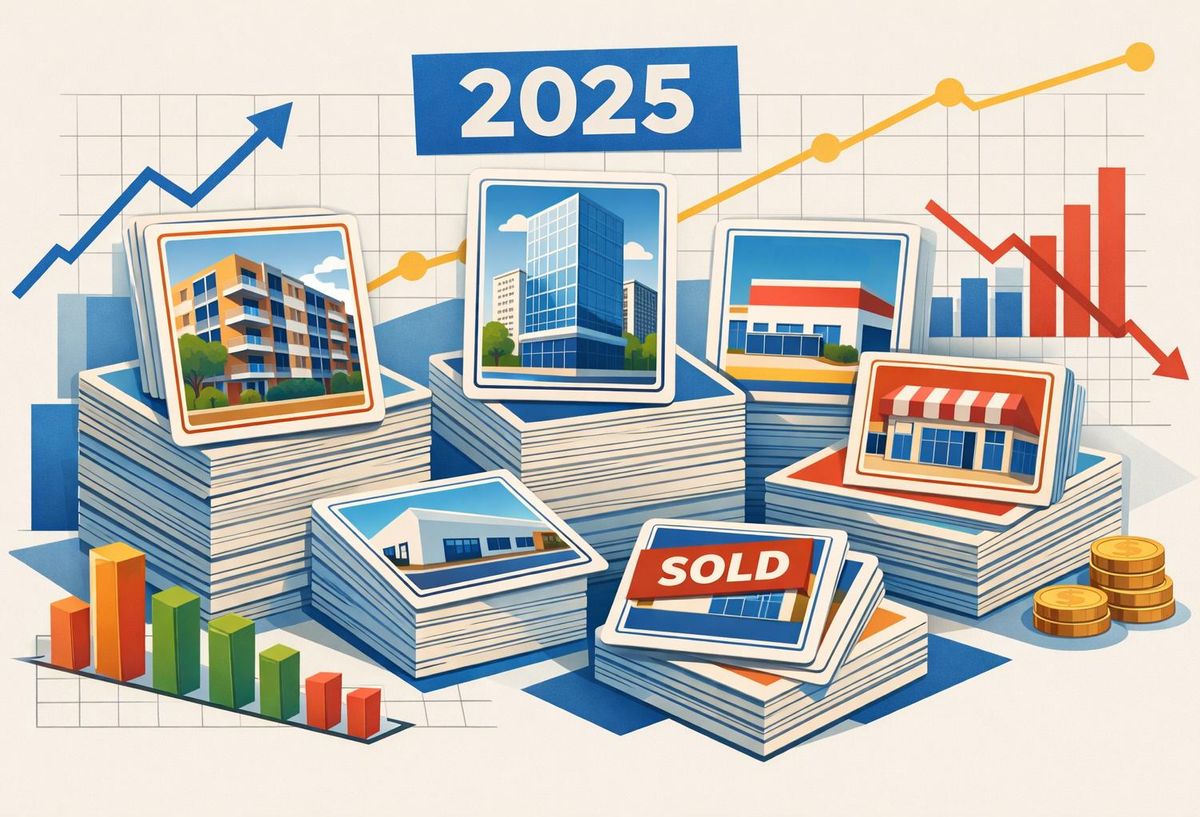
Commercial real estate roared back to life in 2025, with more than $255B pouring into multifamily, industrial, office and retail assets. Major investors moved fast on falling interest rates, improving bond yields and rising confidence across sectors. Multifamily dominated with over $115B in deals, industrial surged under private equity leadership, office saw renewed activity from owner-users and retail proved surprisingly resilient. For today’s real estate and finance professionals, the message is clear: opportunity favors those who stay informed and ready to act.