Medical Schools Falling Behind in Digital Health Training

As the world of medicine continues to embrace the digital revolution, a recent study published in BMC Medical Education highlights a pressing issue: top-ranked medical schools are not adequately preparing future physicians to harness the power of Digital Health Technology (DHT). Despite the increasing prominence of technologies such as wearable devices and virtual reality in healthcare, medical curricula seem to be lagging, leaving a significant gap in the education of upcoming doctors.


Lagging Behind the Digital Curve

The study, conducted through a descriptive landscape analysis of 60 top-ranked medical schools worldwide, reveals a stark reality. Out of the 57 universities analyzed, none explicitly mentioned DHT in their mission statements, and only nine made vague references to innovation. This lack of emphasis on digital health in foundational educational documents underscores the need for a major curricular overhaul.


In the study’s second phase, researchers delved into the actual curricular offerings regarding DHT. The findings were concerning: only four universities had integrated some form of digital health education into their programs. Notable examples include Stanford University and Johns Hopkins University, which have incorporated DHT through elective courses and innovation programs emphasizing problem-based learning and multidisciplinary collaboration.


Implications for Future Physicians

This gap in digital health education poses significant implications for the future of healthcare. As technologies like wearable tech and virtual reality continue to evolve, the ability to effectively utilize these tools will be crucial for enhancing patient care. However, without structured training, future physicians may find themselves ill-equipped to leverage these advancements.


The study’s authors call for urgent curricular adjustments to bridge this educational gap. They emphasize the importance of integrating digital health and innovation into medical education to ensure that future doctors are well-prepared to meet the demands of modern healthcare.


Moving Forward

The findings of this study serve as a wake-up call for medical schools worldwide. As the healthcare landscape continues to evolve, educational institutions must adapt their curricula to keep pace with technological advancements. By doing so, they can equip future physicians with the competencies necessary to improve the quality of care and meet the needs of an increasingly digital world.


For more insights into the study, visit the original article on BMC Medical Education.

More Articles

Getting licensed or staying ahead in your career can be a journey—but it doesn’t have to be overwhelming. Grab your favorite coffee or tea, take a moment to relax, and browse through our articles. Whether you’re just starting out or renewing your expertise, we’ve got tips, insights, and advice to keep you moving forward. Here’s to your success—one sip and one step at a time!

Precision Medicine Market: A Tailored Approach Revolutionizing Healthcare

With increasing governmental and private investments, the demand for precision medicine is expected to rise steadily. The commitment to addressing chronic conditions, coupled with strategic industry collaborations and advanced diagnostic tools, will sustain market growth.

U.S. Wearable Medical Devices Market: Growth Trends and Future Prospects

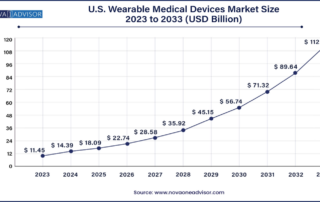
The U.S. wearable medical devices market, currently valued at an estimated $11.45 billion in 2023, is set to experience an astronomical rise to approximately $112.67 billion by 2033.

By |December 3, 2024|Categories: Article, Healthcare, Technology|Tags: |0 Comments

The Future of Real Estate Market: What Lies Ahead?

The real estate market is on the brink of transformation, captivating the attention of buyers, sellers, investors, and industry professionals. As we look toward the end of 2024, experts predict a shift in the landscape, particularly with home prices expected to decline due to increased inventory levels.

By |December 3, 2024|Categories: Article, Market Trends, Real Estate|Tags: , |0 Comments

Bridging the Healthcare Gap in Rural Areas with Telehealth

According to the World Health Organization (WHO), nearly two billion people in rural and remote areas worldwide lack access to essential healthcare solutions. This staggering statistic highlights a critical issue: the digital divide that limits telehealth services, primarily due to inadequate broadband access.

By |December 2, 2024|Categories: Article, Healthcare, Technology|Tags: , |0 Comments

Navigating Ethical Challenges: AI in Healthcare

As AI becomes a staple in medical practice, it carries the risk of reinforcing existing biases entrenched in historical data. These biases can lead to skewed outcomes, particularly affecting marginalized communities such as the LGBTQIA+ and certain ethnic groups.

By |December 2, 2024|Categories: Article, Ethics, Healthcare|Tags: , |0 Comments

New SCLC Biomarkers Enable Advances in Precision Medicine Approaches

A groundbreaking study published in Volume 15 of Oncotarget on October 11, 2024, titled 'Relationship between the expressions of DLL3, ASC1, TTF-1 and Ki-67: First steps of precision medicine at SCLC' showcases pivotal advancements in the fight against small cell lung cancer (SCLC).

By |December 2, 2024|Categories: Article, Cancer Treatment, Medical Research|Tags: , |0 Comments