In a compelling move towards economic rejuvenation, Michigan is considering a policy shift that could significantly bolster its workforce and population growth. The Mackinac Center for Public Policy has published an insightful piece titled “Work Without Walls,” which delves into the potential benefits of implementing universal licensing reciprocity in the state. This policy would allow Michigan to recognize occupational licenses from other states, enabling professionals to begin working immediately upon arrival.

For decades, Michigan has grappled with slow population growth. However, the introduction of universal licensing reciprocity could serve as a catalyst for change. By legally validating out-of-state occupational licenses, Michigan could attract a diverse array of skilled professionals, thereby fostering economic expansion and addressing workforce shortages.

The article highlights that 26 states have already embraced similar reforms, with recent legislative support spanning across party lines. This bipartisan backing underscores the widespread recognition of the policy’s potential to enhance interstate migration and stimulate local economies.

Michigan’s current licensing laws, which require rigorous compliance from out-of-state professionals, often act as barriers to entry. By streamlining these processes, the state could not only increase its population but also invigorate its labor market. The Mackinac Center’s research, supported by findings from the W.E. Upjohn Institute, suggests that states with generous reciprocity laws experience higher rates of interstate migration, further validating the proposed reform.

The story of Anne Davis, a psychotherapist whose transition to Michigan was delayed due to licensing complexities, exemplifies the challenges faced by professionals under the current system. Her experience, as detailed in the article, underscores the need for reform to prevent similar bureaucratic hurdles in the future.

The Mackinac Center’s proposal aligns with recommendations from the Growing Michigan Together Council, which advocates for a comprehensive review of professional licensing requirements. By adopting universal licensing reciprocity, Michigan could position itself as a welcoming hub for professionals nationwide, ultimately leading to a more vibrant and competitive economy.

For more information on this topic, including a detailed map of state licensing reciprocity laws, visit the original article on the Mackinac Center’s website.

More Articles

Getting licensed or staying ahead in your career can be a journey—but it doesn’t have to be overwhelming. Grab your favorite coffee or tea, take a moment to relax, and browse through our articles. Whether you’re just starting out or renewing your expertise, we’ve got tips, insights, and advice to keep you moving forward. Here’s to your success—one sip and one step at a time!

Artificial Intelligence in Diagnostics: A Revolution in Healthcare

The global market for artificial intelligence in diagnostics is poised for remarkable growth, with projections estimating it to reach USD 7.3 billion by 2032.

By |December 10, 2024|Categories: Article, Artificial Intelligence, Healthcare|Tags: , |0 Comments

Revolutionizing Medical Education with Extended Reality

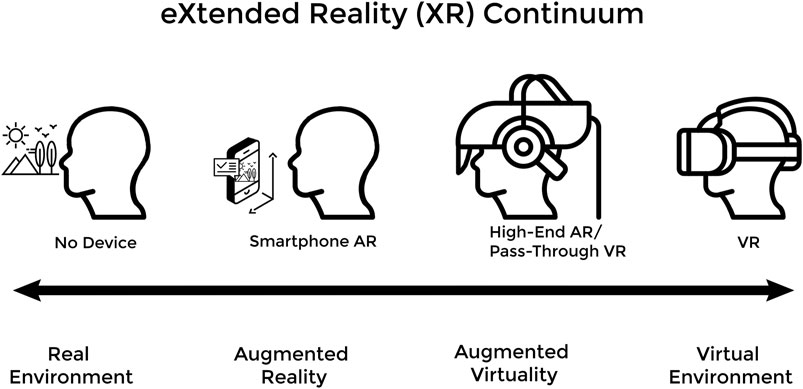
In the ever-evolving landscape of medical education, a new player has emerged, promising to revolutionize the way future doctors are trained. The integration of eXtended Reality (XR) technologies is reshaping the educational landscape by addressing the limitations of traditional methods.

Genetic Testing: A New Dawn in Healthcare

Genetic testing represents more than just a scientific advancement; it signifies a fundamental shift in how we approach health and wellness.

Sustainable Architecture: Blending Innovation with Ecological Responsibility

The journey toward sustainable architecture is ongoing, with each project serving as a beacon of what's achievable when creativity meets ecological awareness.

By |December 9, 2024|Categories: Architecture, Article, Sustainability|Tags: |0 Comments

AI in Clinical and Molecular Diagnostics: A Market on the Rise

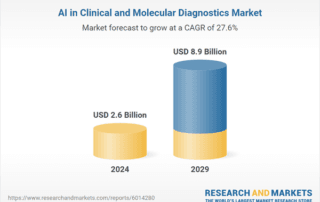
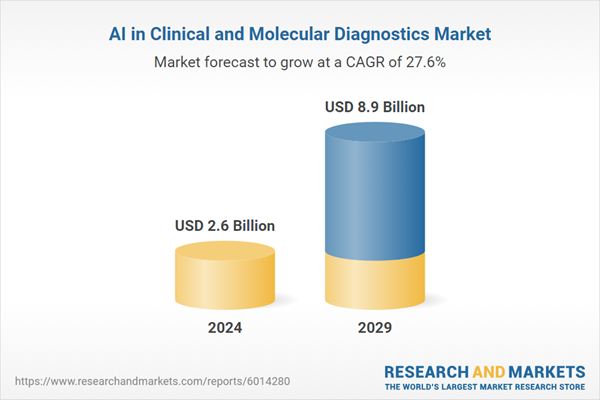
AI in Clinical and Molecular Diagnostics Market is set to experience remarkable growth, projected to surge from USD 2.6 billion in 2024 to USD 8.9 billion by 2029. This growth is driven by the integration of advanced AI technologies such as machine learning and deep learning into traditional diagnostic methodologies like imaging, genomics, and laboratory testing.

AI: A Revolution in Healthcare’s Future

AI is not a distant dream but a present reality, already integrated into everyday life through virtual assistants like Alexa and Siri. AI shows promise in enhancing medical accuracy, such as in predicting mesothelioma survival and improving colonoscopy accuracy, it is not intended to replace healthcare professionals.