
Milwaukee’s Commercial Real Estate Market Is Turning the Corner

A Broad-Based Recovery Driven by Quality, Cash Flow, and Renewed Investor Confidence

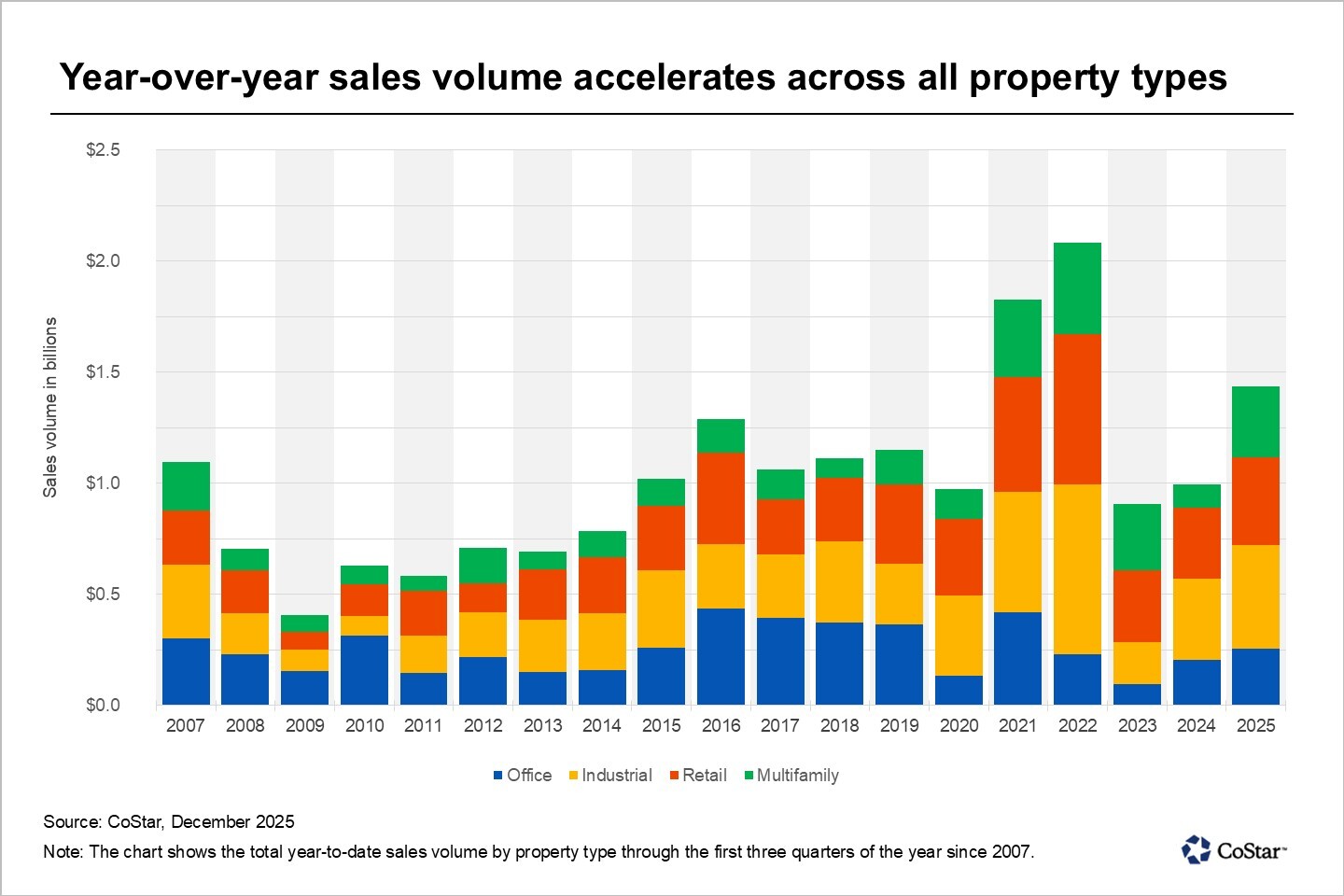
Milwaukee’s commercial real estate investment landscape entered 2025 with a revitalized surge of momentum. By the end of the third quarter, the city celebrated its strongest sales volume in three years. After recent cycles of economic uncertainty and elevated capital costs, investors have narrowed their attention toward value-driven decisions — focusing on high-quality assets, justified pricing, and steady cash flow.

According to CoStar Insight, this rebound reaches across the board. Industrial, office, multifamily, and retail sectors are all experiencing renewed traction. Yet investors remain intentional and highly selective — deals advance only when asset fundamentals meet today’s more disciplined underwriting standards.

Commercial sales volume by property type

The rise in transaction activity signals stronger faith in Milwaukee’s long-term economic vitality. Although pricing discipline continues to guide decision-making, the increased flow of capital proves that investor confidence is not only returning — it’s accelerating.

CoStar anticipates that the remainder of 2025 will bring even more investors back into the market, especially as interest rates find stability and leasing performance shows ongoing resilience.

For professionals tracking commercial real estate trends — including those moving into appraisal, brokerage, investment analysis, or portfolio expansion — staying ahead of shifts like Milwaukee’s is essential. If you’re seeking to elevate your expertise or pursue licensing in real estate, mortgage, insurance, or related fields, Cameron Academy delivers industry-leading programs built for both newcomers and established professionals.

Explore the complete CoStar breakdown and exclusive video insights by visiting the source: Read the full CoStar Report

Follow CoStar on Social Media

More Articles

Getting licensed or staying ahead in your career can be a journey—but it doesn’t have to be overwhelming. Grab your favorite coffee or tea, take a moment to relax, and browse through our articles. Whether you’re just starting out or renewing your expertise, we’ve got tips, insights, and advice to keep you moving forward. Here’s to your success—one sip and one step at a time!

Unlocking Real Estate Wealth in 2025: Strategies for Success

Step into 2025, where the real estate market emerges as a resilient beacon amidst economic unpredictability. Investors are increasingly drawn to secondary cities like Austin and Manchester, attracted by their growth potential, affordability, and enhanced quality of life.

By |February 18, 2025|Categories: Article, Investment Strategies, Real Estate|Tags: , |0 Comments

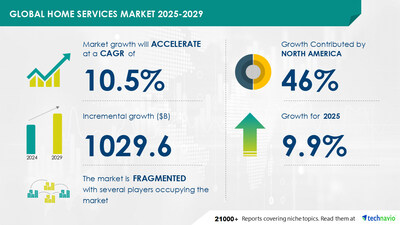
AI and Urbanization Drive Home Services Market Growth

The global home services market is poised for significant growth, with projections indicating an increase of USD 1.03 trillion from 2025 to 2029. This forecasted expansion is attributed to increasing urbanization and the transformative impact of AI on market trends, according to a recent report by Technavio.

Decoding the U.S. Housing Crisis: A Study of Historic Policy Missteps and Demographic Shift

In a revealing study by USC, the roots of the current housing crisis in the United States are traced back to policy missteps and demographic changes that have been unfolding since the early 2000s. The study highlights how these factors have left millennials and people of color disproportionately affected.

Best Real Estate Crowdfunding Platforms for February 2025: Investopedia’s Top Picks

Fundrise stands out for offering investors a chance to diversify their portfolios with real estate exposure through proprietary funds. With a minimum investment as low as $10, it opens doors to beginners and seasoned investors alike.

Top Real Estate Investment Apps of 2025: A Guide for First-Time and Experienced Investors

Business Insider has reviewed a range of platforms available in 2025, focusing on key factors like fees, accessibility for accredited vs. non-accredited investors, and the types of real estate investments offered.