Milwaukee’s Commercial Real Estate Market Turns a Corner
Milwaukee’s commercial real estate investment scene is showing clear signs of renewed life, and for professionals monitoring national CRE trends, the shift is both significant and refreshing. After several years of uneven performance and heightened price sensitivity across major metros, the city is now experiencing a strategic, broad-based recovery driven by smarter investor entry points, high‑quality assets, and long-term cash‑flow stability.
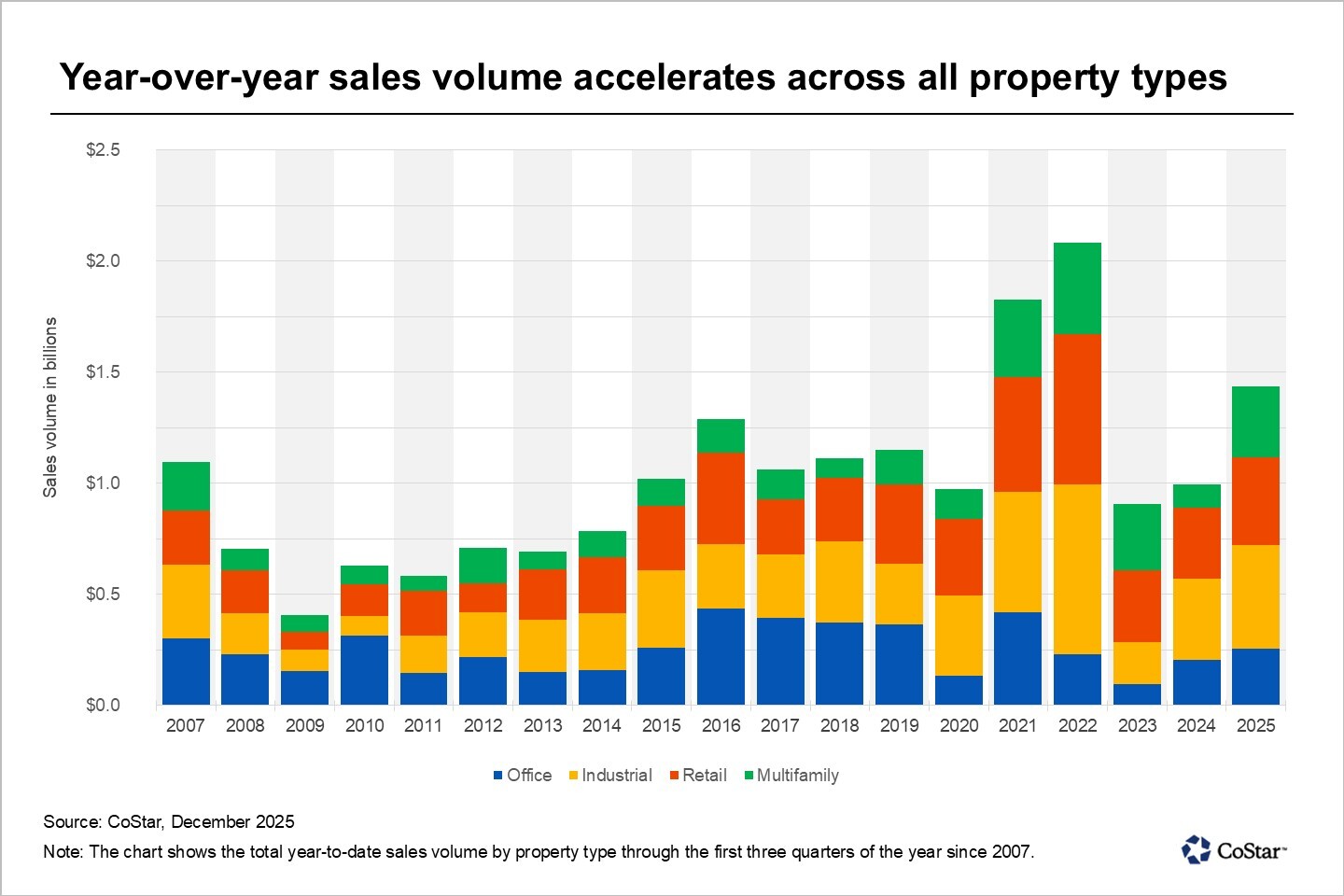
According to CoStar, total sales volume during the first nine months of 2025 hit a three-year high. While the rebound remains selective and price‑driven, this positive trajectory reflects a meaningful improvement in investor confidence—an important milestone for a market that has spent years recalibrating under broader economic and lending pressures.
A Selective but Stronger Investment Environment
The current activity in Milwaukee’s CRE landscape goes beyond rising deal volume. Investors are dialing in on fundamentals that matter most in today’s cautious lending environment: purchase basis, asset quality, and cash‑flow reliability. This disciplined approach is influencing transaction behavior nationwide, and Milwaukee is aligning with a more sustainable investment strategy.
For real estate professionals, these indicators reveal a market shifting from reactive pricing corrections to proactive value targeting. As liquidity improves, well‑positioned industrial properties, stabilized retail assets, and multifamily buildings with strong occupancy are attracting growing buyer interest.
Insight Boost: CoStar’s full analytics remain subscriber-exclusive, but the overarching trend is unmistakable—Milwaukee’s CRE market is entering a healthier, opportunity‑rich phase. Investors who underwrite conservatively and act decisively may find themselves ahead of the next market cycle.
Why This Matters for Real Estate Professionals
Whether you are a seasoned investor, a broker adapting to evolving client priorities, or a new professional exploring specialization, this market shift is meaningful. Selective recoveries often reward those with strong analysis skills and updated market education.
If you’re expanding your career in real estate, mortgage, insurance, or related licensed fields, staying informed is essential. Trusted education providers like Cameron Academy offer flexible licensing programs, continuing education, and professional training that help learners stay competitive across all 50 states.
Looking Ahead
Milwaukee’s upward momentum suggests promising potential heading into 2026—especially if interest rates stabilize and capital flows increase across asset types. Investors will continue watching performance data, tenant behavior, and macroeconomic indicators closely. But for now, it’s clear: Milwaukee has turned a corner.
To explore the complete original report and access industry‑leading CRE insights, visit CoStar.
More Articles
Getting licensed or staying ahead in your career can be a journey—but it doesn’t have to be overwhelming. Grab your favorite coffee or tea, take a moment to relax, and browse through our articles. Whether you’re just starting out or renewing your expertise, we’ve got tips, insights, and advice to keep you moving forward. Here’s to your success—one sip and one step at a time!
Florida’s insurance market is under intense pressure as millions of residents and trillions in property wealth cluster along hurricane‑vulnerable coastlines. This article breaks down how decades of growth in high‑risk zones created today’s crisis, why traditional pricing models can’t keep up, and what real estate and insurance professionals must do to stay ahead. It offers actionable insights on underwriting, risk communication, policy partnerships, and resilience planning—critical knowledge for anyone advising Florida homeowners or navigating the state’s evolving insurance landscape.
Florida’s homeowners insurance market may have stabilized, but not in the way residents hoped. After years of runaway increases, premiums have stopped spiking—but they’re holding at painfully high levels. Coastal properties remain the hardest hit, with some policies topping $15,000 a year, while insurers continue demanding costly upgrades and resisting calls for transparency. For real estate professionals, understanding these pricing pressures is becoming essential as insurance costs increasingly shape buyer decisions across the state.
Florida homeowners face soaring premiums, shrinking insurer options, and storms that grow stronger each year. This article breaks down what hurricane insurance actually covers, how deductibles really work, why flood insurance is essential, and what professionals in real estate, mortgage, and insurance must understand to protect clients and properties before the next major storm hits.
Teresa King Kinney, one of the most influential executives in modern real estate, is retiring after 33 years as CEO of the MIAMI Association of Realtors. Under her leadership, the organization grew from 5,000 members to 60,000, became a global real estate powerhouse, and built the nation’s largest association‑owned MLS. As she transitions into CEO Emeritus, MIAMI prepares for a new era shaped by the foundation she spent decades building.
Miami’s commercial property market is heating up again, posting an 11% jump in investment volume for 2025. The surge is driven largely by a revitalized retail sector fueled by population growth, strong tourism, and new mixed‑use development. While office and industrial activity remains steady but softer, investor confidence is returning as Miami’s CRE landscape matures and buyers re‑enter the market with renewed interest in high‑traffic retail opportunities.
The Federal Reserve is preparing major changes to mortgage regulations in an effort to pull more mortgage activity back into the banking sector. With banks losing significant market share to nonbank lenders over the past decade, Fed Vice Chair for Supervision Michelle Bowman says new proposals may ease capital requirements and make mortgage servicing more attractive for banks. These shifts could have wide‑ranging effects on real estate professionals, lenders, and borrowers as the balance of power in the mortgage market begins to shift once again.