Milwaukee’s Commercial Real Estate Market Turns a Corner
Milwaukee’s commercial real estate investment scene is showing clear signs of renewed life, and for professionals monitoring national CRE trends, the shift is both significant and refreshing. After several years of uneven performance and heightened price sensitivity across major metros, the city is now experiencing a strategic, broad-based recovery driven by smarter investor entry points, high‑quality assets, and long-term cash‑flow stability.
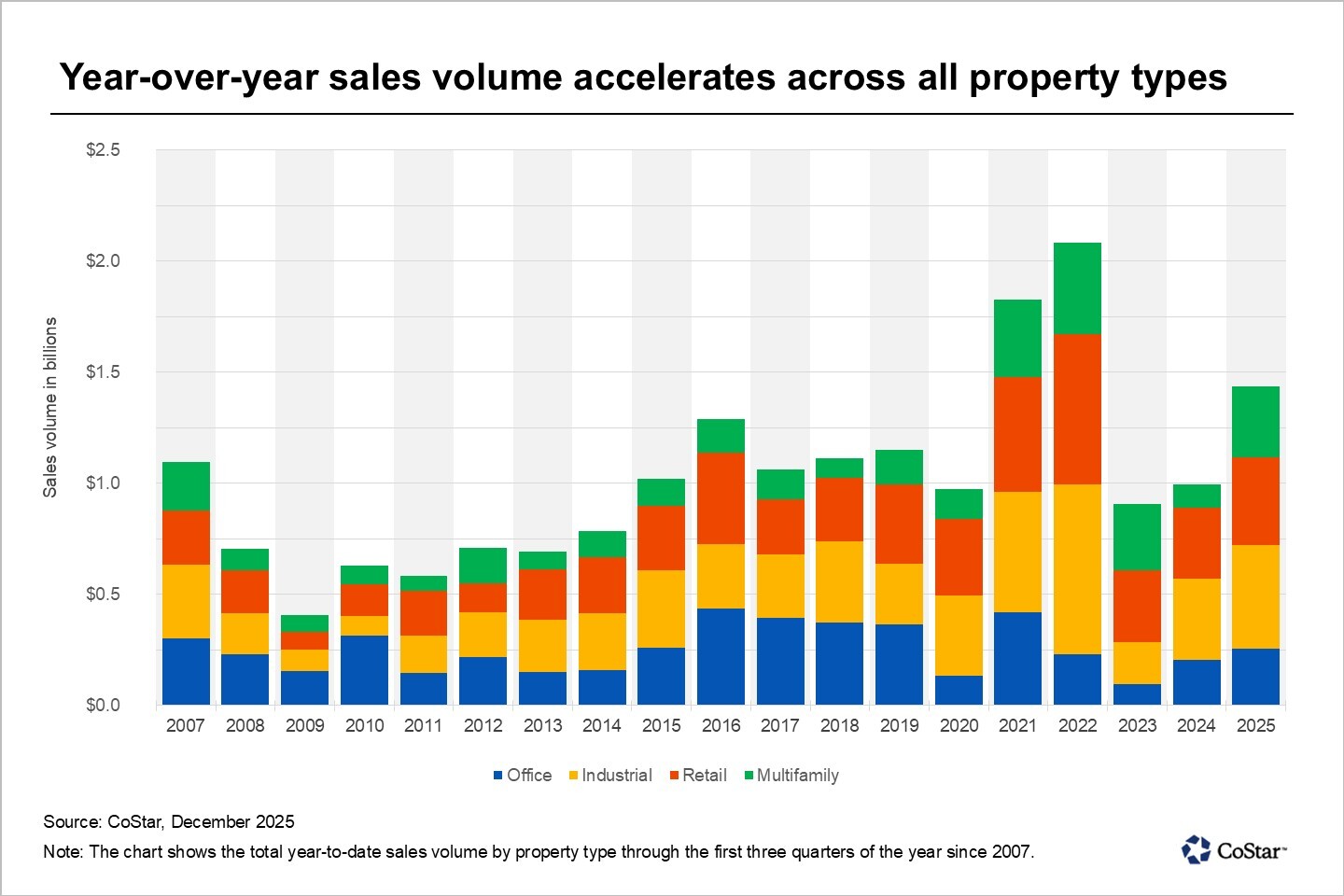
According to CoStar, total sales volume during the first nine months of 2025 hit a three-year high. While the rebound remains selective and price‑driven, this positive trajectory reflects a meaningful improvement in investor confidence—an important milestone for a market that has spent years recalibrating under broader economic and lending pressures.
A Selective but Stronger Investment Environment
The current activity in Milwaukee’s CRE landscape goes beyond rising deal volume. Investors are dialing in on fundamentals that matter most in today’s cautious lending environment: purchase basis, asset quality, and cash‑flow reliability. This disciplined approach is influencing transaction behavior nationwide, and Milwaukee is aligning with a more sustainable investment strategy.
For real estate professionals, these indicators reveal a market shifting from reactive pricing corrections to proactive value targeting. As liquidity improves, well‑positioned industrial properties, stabilized retail assets, and multifamily buildings with strong occupancy are attracting growing buyer interest.
Insight Boost: CoStar’s full analytics remain subscriber-exclusive, but the overarching trend is unmistakable—Milwaukee’s CRE market is entering a healthier, opportunity‑rich phase. Investors who underwrite conservatively and act decisively may find themselves ahead of the next market cycle.
Why This Matters for Real Estate Professionals
Whether you are a seasoned investor, a broker adapting to evolving client priorities, or a new professional exploring specialization, this market shift is meaningful. Selective recoveries often reward those with strong analysis skills and updated market education.
If you’re expanding your career in real estate, mortgage, insurance, or related licensed fields, staying informed is essential. Trusted education providers like Cameron Academy offer flexible licensing programs, continuing education, and professional training that help learners stay competitive across all 50 states.
Looking Ahead
Milwaukee’s upward momentum suggests promising potential heading into 2026—especially if interest rates stabilize and capital flows increase across asset types. Investors will continue watching performance data, tenant behavior, and macroeconomic indicators closely. But for now, it’s clear: Milwaukee has turned a corner.
To explore the complete original report and access industry‑leading CRE insights, visit CoStar.
More Articles
Getting licensed or staying ahead in your career can be a journey—but it doesn’t have to be overwhelming. Grab your favorite coffee or tea, take a moment to relax, and browse through our articles. Whether you’re just starting out or renewing your expertise, we’ve got tips, insights, and advice to keep you moving forward. Here’s to your success—one sip and one step at a time!
Commercial real estate deal activity dipped in October for the first time since early 2024, signaling a widening disconnect between buyer and seller pricing expectations in a high‑rate environment. While overall sales remain strong—and even above 2024 levels—the sharp slowdown in momentum highlights rising caution across sectors. Multifamily saw a steep 27% drop in volume, hospitality was the lone sector to grow, and institutional buyers are increasingly targeting discounted office assets. With mortgage originations rebounding but lenders staying selective, 2026 will hinge on how quickly the market aligns on pricing and capital costs.
New Vanguard research reveals that the real impact of financial advisors goes far beyond market performance. Investors say the greatest value comes from peace of mind, personalized planning, emotional reassurance, and the time saved by having a trusted expert manage their financial life. The study highlights a major shift in what clients truly want: confidence, clarity, and guidance that aligns with their personal definition of financial success.
U.S. self‑storage deals surged nearly $1.6 billion in Q3 2025, marking a 62% year‑over‑year jump and the sector’s strongest resurgence in years. REITs paid steep premiums to lock down top‑tier, land‑restricted markets, while states like Florida, California, and Georgia led all sales. New York City dominated with record‑high pricing of $526 per square foot, underscoring the asset class’s resilience and the renewed appetite for specialty commercial investments heading into 2026.
Nearly half a million Florida homeowners are finally seeing relief as Citizens Insurance plans to reduce premiums by up to 11%. After years of rising costs and limited coverage options, the insurer’s shrinking policy load and reduced risk are allowing meaningful savings—averaging about $400 per year for most customers. With several private carriers also lowering rates, experts say this could mark the beginning of a long‑needed stabilization in Florida’s insurance and real estate markets.
Colorado heads into 2026 with steady economic strength despite slowing population growth. The latest forecast from the Leeds School of Business projects 17,500 new jobs, rising incomes, and GDP growth outpacing the national average. Most major industries will expand, even as migration slows and labor shortages persist.
Layoffs across tech, energy, retail, aviation, and education are redefining the 2025 workforce as companies cut costs and accelerate their adoption of AI. Major employers like Amazon, Meta, UPS, and Chevron are restructuring thousands of roles, signaling one of the most significant employment shifts in years. But while traditional positions shrink, demand is rising in fields tied to AI, data, cybersecurity, compliance, and licensed professions. For workers willing to reskill or pivot—especially into areas like real estate, insurance, finance, or other certification‑based careers—new opportunities continue to grow despite the turbulence.