Modernizing Medical Education: Embracing Public Health at the University of Dundee
In a world where healthcare and its education are undergoing seismic shifts, the University of Dundee is pioneering a transformative approach. The institution is integrating public health into its medical curriculum, responding to the rapid technological, political, and social changes reshaping the medical landscape. This initiative is detailed in a recent article published by Frontiers.
The article underscores the urgent need for medical education to evolve, highlighting the challenges posed by technological advancements, curriculum overload, and evolving medical practices. As non-communicable diseases rise, there’s a compelling economic argument for preventive medicine, which even corporations recognize. The University of Dundee’s curriculum overhaul aims to produce graduates ready for the demands of modern healthcare, emphasizing public health’s critical role.
The Role of Technology
Technological advancements, particularly in artificial intelligence and machine learning, are reshaping healthcare delivery. However, these innovations have yet to make a significant impact on medical education. The Topol review highlighted potential future changes, but current curricula lack comprehensive teaching on these topics. Dundee’s program addresses this gap, preparing students to navigate a tech-driven healthcare environment.
Curriculum Overload
Medical students face daunting amounts of information, with knowledge potentially doubling every few months. Standardized assessments and shared curricula are becoming more prevalent, emphasizing core scientific knowledge. Yet, there’s a growing recognition of the need for doctors to understand interpersonal communication, leadership, and teamwork. Dundee’s curriculum seeks to balance these elements, moving from a micro to a macro perspective.
Adapting to New Medical Practices
The role of doctors is changing, influenced by global health priorities and societal expectations. The COVID-19 pandemic highlighted the need for robust healthcare systems and the challenges of misinformation. Dundee’s curriculum aims to equip students with the skills to navigate these shifts, fostering adaptability and resilience.
Curriculum Review and Implementation
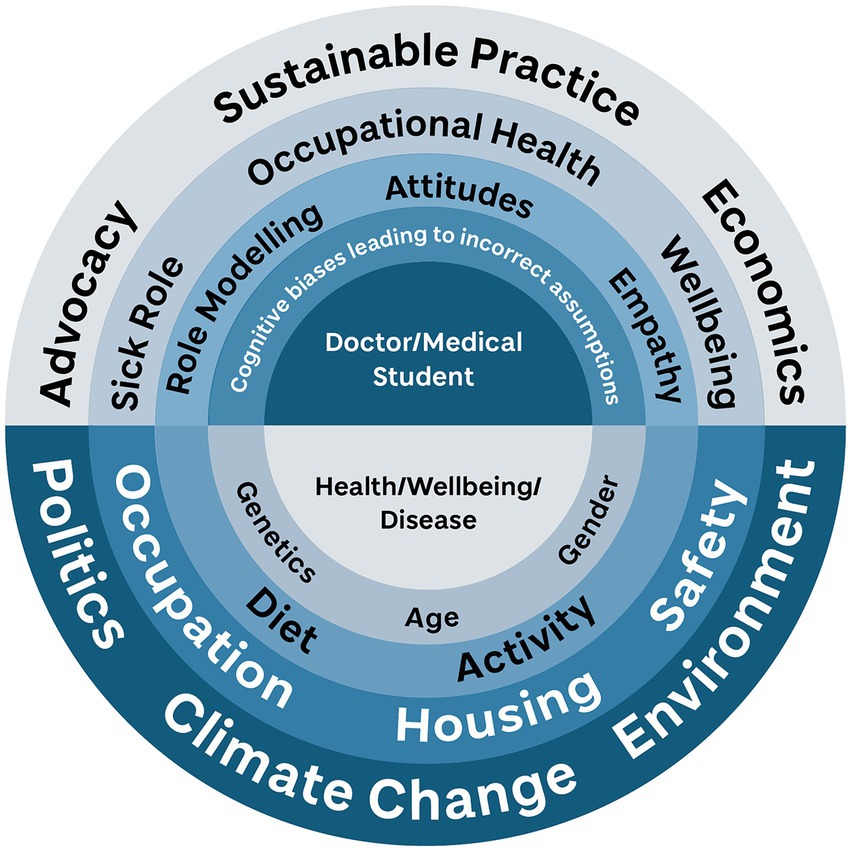
Dundee’s curriculum review, initiated before the pandemic, aims to facilitate transitions for learners, especially those from non-traditional backgrounds. Using the double diamond design methodology, the review involved stakeholders from various disciplines. The curriculum introduces two key strands: “The Bigger Picture” and “The Dundee Doctor.” The Bigger Picture emphasizes public health, encouraging students to understand social determinants of health and their role as healthcare providers. It integrates public health and behavioral sciences, fostering a deeper understanding of healthcare’s broader context. The Dundee Doctor represents the unique qualities of Dundee graduates, focusing on professional development and adaptability. It serves as a guiding framework for curriculum implementation, ensuring alignment with the institution’s values.
Challenges and Future Directions
Implementing changes in a constrained curriculum like medicine is challenging. Dundee’s approach aims for a “quiet revolution,” balancing core and elective elements to provide diverse learning opportunities. Formal evaluation of the new curriculum is underway, with anecdotal feedback indicating positive reception.
As healthcare continues to evolve, Dundee’s curriculum is designed to adapt, preparing students for future challenges. The article posits that medical education must continuously renew itself, fostering adaptable, socially conscious doctors.
More Articles
Getting licensed or staying ahead in your career can be a journey—but it doesn’t have to be overwhelming. Grab your favorite coffee or tea, take a moment to relax, and browse through our articles. Whether you’re just starting out or renewing your expertise, we’ve got tips, insights, and advice to keep you moving forward. Here’s to your success—one sip and one step at a time!
Florida homeowners — especially in hard‑hit South Florida — are set to see rare and substantial reductions in their property insurance premiums. Gov. Ron DeSantis announced an average statewide Citizens Insurance decrease of 8.7%, with even larger savings of up to 14% in counties like Miami-Dade, Broward, and Palm Beach. State officials credit recent legal and regulatory reforms for stabilizing the market, attracting new insurers, and delivering the first meaningful rate relief Floridians have seen in years.
Tampa’s commercial real estate market isn’t slowing—it’s maturing. With strong population growth, rising office demand, a normalized industrial sector, resurgent retail, and an emerging health‑care real estate boom, investors are shifting from speed to strategy. Tighter underwriting, cautious capital and increased due‑diligence are shaping a more disciplined market, creating new opportunities for informed professionals.
Florida homeowners are finally seeing relief as Citizens Property Insurance announces a major 8.7% average rate decrease—far larger than originally proposed. Driven by legislative reforms, fewer lawsuits, and a calm hurricane season, the state’s once‑unstable insurance market is showing real signs of recovery. But with reduced coverage limits and shifting legal protections, experts warn that lower premiums may come with hidden trade‑offs.
After a decade of rising premiums and retreating carriers, Florida homeowners are finally seeing long‑awaited relief. Dozens of insurers have filed for rate decreases—some as high as 11%—thanks to legislative reforms and a stabilizing market. Early approvals are already hitting counties across the state, and experts say the momentum could boost buyer confidence, affordability, and competition throughout Florida’s real estate and insurance sectors.
After years of slowed activity caused by rising interest rates, the self‑storage industry is heating up again. New data from Marcus & Millichap shows a fresh market cycle emerging, driven by renewed buyer confidence, recalibrated pricing, and stronger lender participation. Acquisitions are rebounding, development is resetting in a healthier direction, and financing conditions are improving—creating one of the most promising investment landscapes the sector has seen in years.
Brookline’s newly updated FEMA flood maps identify 97 high‑risk parcels, but local experts warn the true threat is far greater. While FEMA highlights river‑based flooding around Leverett Pond and the Muddy River, alternative models show more than 1,300 Brookline properties at risk within 30 years. Hidden vulnerabilities along major corridors like Beacon Street, rising rainfall intensity, aging infrastructure, and climate‑driven storm patterns suggest that many “low‑risk” areas may be anything but safe.