Mortgage CEO Barred in 21 States After Education Fraud Settlement Shakes the Industry
A multistate enforcement action has shaken the mortgage industry as Patrick Terrance Donlon, CEO of Trusted American Mortgage, agreed to a sweeping settlement that bans him from operating as a mortgage loan originator in 21 states—19 of them permanently. The Conference of State Bank Supervisors (CSBS) announced the agreement, which also includes a $31,000 penalty and strict conditions limiting Donlon’s involvement in financial services leadership roles for two years.
A Deep Dive Into the Allegations
According to settlement documents filed with the California Department of Financial Protection & Innovation, Donlon disputed the accusations but chose to resolve the matter to avoid the “time, expense, and uncertainty” of individual investigations across multiple states.
The allegations centered on a serious breach of the SAFE Act: Donlon was accused of having another person complete 22 pre‑licensing courses and three continuing education courses on his behalf—an unmistakable violation of federal and state licensing standards.
The CSBS and the American Association of Residential Mortgage Regulators coordinated the investigation after receiving a tip in early 2025, prompting a multistate response through the Nationwide Multistate Licensing System (NMLS).
Where the Ban Applies
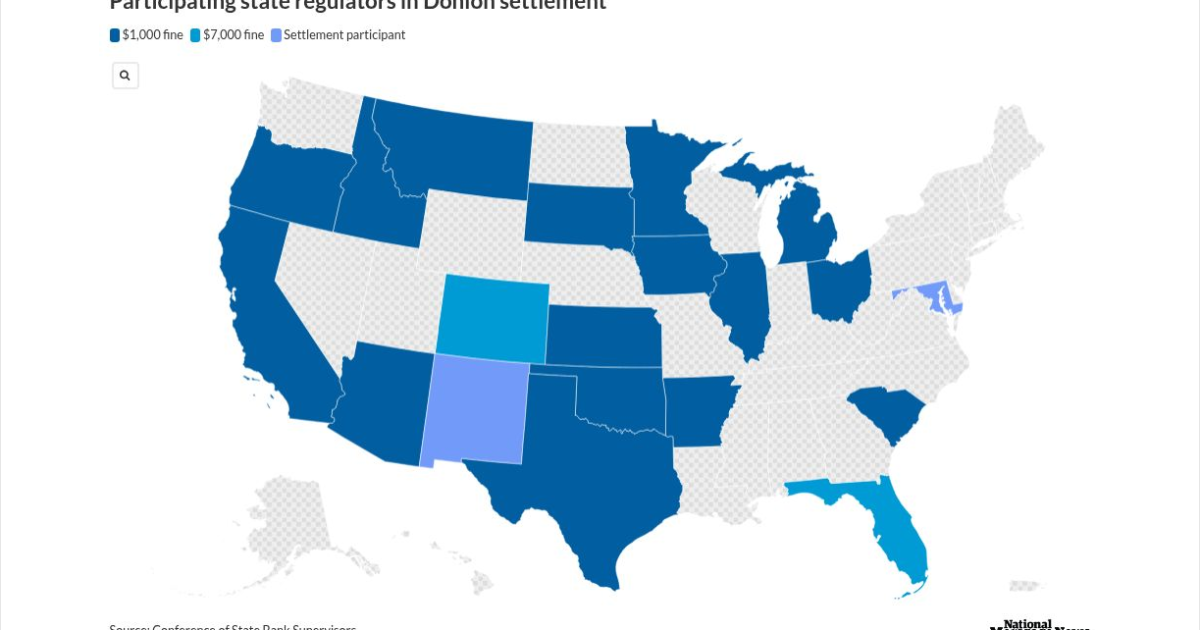
The action involved 21 states, led by regulators in Arkansas, Colorado, Florida, Iowa, Kansas, and Texas. Other participating states include Arizona, California, Idaho, Illinois, Maryland, Michigan, Minnesota, Montana, New Mexico, Ohio, Oklahoma, Oregon, South Carolina, and South Dakota.
Donlon is permanently barred from the mortgage industry in 19 of those states. Only Colorado and Florida—where he may reapply in two years—left a pathway for reinstatement, contingent upon penalty payments and completing additional verified education.
Financial Penalties and Professional Fallout
Colorado and Florida will each receive $7,000 from the settlement, while the remaining participating states receive $1,000 each. Maryland and New Mexico—where applications were pending—are excluded from the financial distribution.
Beyond the bans, Donlon is prohibited from serving as a control person or qualified individual for any NMLS‑registered entity for two years. Trusted American Mortgage has already removed him from those internal roles.
“We require that licensed professionals complete their continuing education to ensure our licensees have the highest levels of competence and ethics,” said Susana Soriano, Acting Director of the Illinois Division of Banking. “With this action, the residential real estate market in Illinois has been protected.”
A Growing Trend of Education Fraud Crackdowns
This is not the first time CSBS has coordinated widespread actions targeting education fraud. In 2022, more than 440 loan officers settled claims with 44 state agencies for falsifying continuing education. Regulators have made it abundantly clear: education shortcuts will not be tolerated.
A Critical Reminder for Industry Professionals
For mortgage loan originators, this case reinforces the importance of legitimate education—both legally and ethically. Verified pre‑licensing and continuing education aren’t mere checkboxes; they are the cornerstone of safe, compliant lending practices.
At Cameron Academy, we understand how crucial it is for professionals to meet their education requirements truthfully and confidently. Our approved mortgage education programs are built to keep you compliant, protected, and prepared—without shortcuts or question marks.
For more details, view the original report at National Mortgage News:
Read the full article
More Articles
Getting licensed or staying ahead in your career can be a journey—but it doesn’t have to be overwhelming. Grab your favorite coffee or tea, take a moment to relax, and browse through our articles. Whether you’re just starting out or renewing your expertise, we’ve got tips, insights, and advice to keep you moving forward. Here’s to your success—one sip and one step at a time!
Florida now leads the nation in property insurance costs, with many homeowners paying more than $10,000 a year for shrinking coverage and higher deductibles. Despite nearly half of hurricane‑related claims ending with no payout and appeals failing over 90% of the time, state leaders say reforms “need more time to work.” With key relief bills stalled and real estate professionals feeling the shockwaves, experts warn that legislative inaction is deepening a crisis that threatens homeownership and the state’s economic stability.
Banks are finally calling in billions tied to troubled commercial real estate loans, pushing delinquency rates to historic highs and ending years of “extend and pretend.” With more than 12% of office loans now delinquent and $875 billion in commercial debt maturing in 2026, regional banks and property owners are facing mounting pressure. As valuations drop and refinancing becomes harder, experts warn that tighter lending standards and broader economic ripple effects are on the horizon—making strategic preparation essential for today’s real estate and finance professionals.
Florida policyholders are getting rare good news: the Florida Insurance Guaranty Association is ending its 1% emergency insurance assessment on October 1—two years ahead of schedule. The decision follows a calmer hurricane season, fewer insurer insolvencies, and growing market stability. The early termination is expected to save Floridians up to $650 million, with the average homeowner seeing about $31 in annual savings. This marks another milestone in the state’s insurance market recovery after major legislative reforms in 2022 and 2023.
The real estate industry has officially moved past its AI honeymoon phase. What began as a fun, optional tool has quietly become the backbone of how agents create content, communicate with clients, and market properties. But with that shift comes rising concern about authenticity, legal risks, and whether consumers will start questioning what they’re really paying agents for. As AI blends into everything from listing descriptions to client advice, professionals now face a new challenge: proving the human value behind the technology.
After years of volatility, industry analysts say commercial real estate may finally be on the verge of a major comeback. Investment activity is rising, leasing demand is strengthening, and key cities like Manhattan are leading a broader national recovery. With vacancy rates expected to drop and high‑quality buildings outperforming the rest, 2026 is shaping up to be the turning point investors and professionals have been waiting for.
AM Best warns that the property and casualty insurance market is heading into a more challenging 2026 as premium growth slows, inflation drives up claims costs, and combined ratios rise. Despite a strong 2025, moderating rates, higher repair and construction expenses, and ongoing reserve deficiencies are pressuring profitability. While commercial lines and personal lines both feel the strain, the E&S market continues to expand as traditional carriers pull back. This shifting landscape highlights the need for insurance professionals to stay sharp, informed, and adaptable.