Mortgage CEO Barred in 21 States After Education Fraud Settlement Shakes the Industry
A multistate enforcement action has shaken the mortgage industry as Patrick Terrance Donlon, CEO of Trusted American Mortgage, agreed to a sweeping settlement that bans him from operating as a mortgage loan originator in 21 states—19 of them permanently. The Conference of State Bank Supervisors (CSBS) announced the agreement, which also includes a $31,000 penalty and strict conditions limiting Donlon’s involvement in financial services leadership roles for two years.
A Deep Dive Into the Allegations
According to settlement documents filed with the California Department of Financial Protection & Innovation, Donlon disputed the accusations but chose to resolve the matter to avoid the “time, expense, and uncertainty” of individual investigations across multiple states.
The allegations centered on a serious breach of the SAFE Act: Donlon was accused of having another person complete 22 pre‑licensing courses and three continuing education courses on his behalf—an unmistakable violation of federal and state licensing standards.
The CSBS and the American Association of Residential Mortgage Regulators coordinated the investigation after receiving a tip in early 2025, prompting a multistate response through the Nationwide Multistate Licensing System (NMLS).
Where the Ban Applies
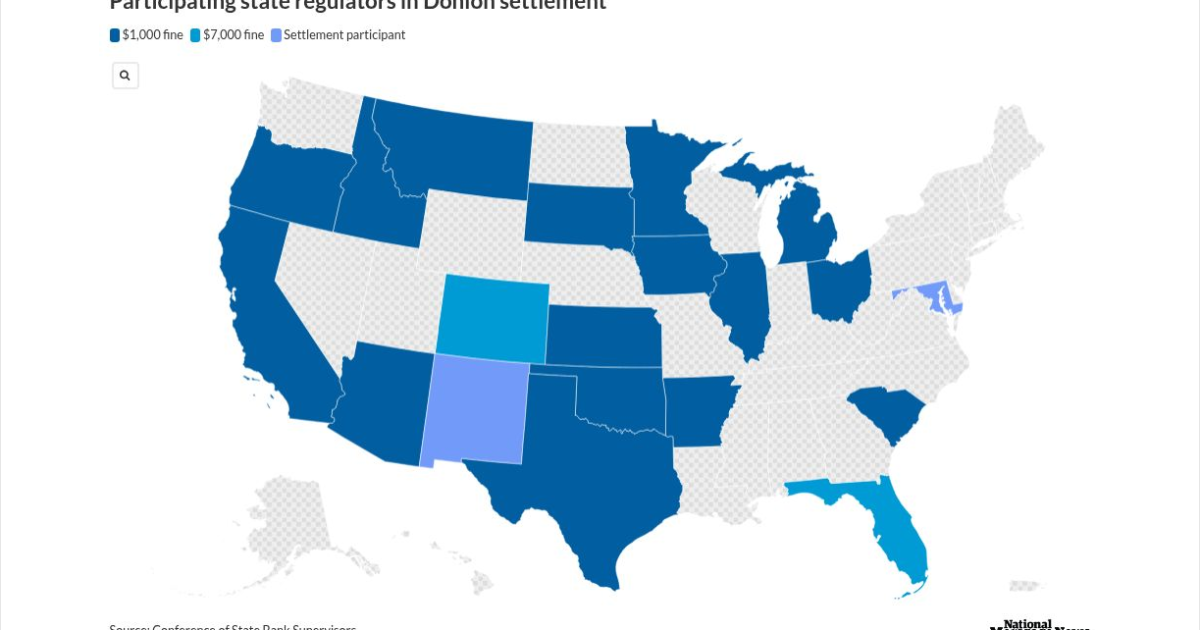
The action involved 21 states, led by regulators in Arkansas, Colorado, Florida, Iowa, Kansas, and Texas. Other participating states include Arizona, California, Idaho, Illinois, Maryland, Michigan, Minnesota, Montana, New Mexico, Ohio, Oklahoma, Oregon, South Carolina, and South Dakota.
Donlon is permanently barred from the mortgage industry in 19 of those states. Only Colorado and Florida—where he may reapply in two years—left a pathway for reinstatement, contingent upon penalty payments and completing additional verified education.
Financial Penalties and Professional Fallout
Colorado and Florida will each receive $7,000 from the settlement, while the remaining participating states receive $1,000 each. Maryland and New Mexico—where applications were pending—are excluded from the financial distribution.
Beyond the bans, Donlon is prohibited from serving as a control person or qualified individual for any NMLS‑registered entity for two years. Trusted American Mortgage has already removed him from those internal roles.
“We require that licensed professionals complete their continuing education to ensure our licensees have the highest levels of competence and ethics,” said Susana Soriano, Acting Director of the Illinois Division of Banking. “With this action, the residential real estate market in Illinois has been protected.”
A Growing Trend of Education Fraud Crackdowns
This is not the first time CSBS has coordinated widespread actions targeting education fraud. In 2022, more than 440 loan officers settled claims with 44 state agencies for falsifying continuing education. Regulators have made it abundantly clear: education shortcuts will not be tolerated.
A Critical Reminder for Industry Professionals
For mortgage loan originators, this case reinforces the importance of legitimate education—both legally and ethically. Verified pre‑licensing and continuing education aren’t mere checkboxes; they are the cornerstone of safe, compliant lending practices.
At Cameron Academy, we understand how crucial it is for professionals to meet their education requirements truthfully and confidently. Our approved mortgage education programs are built to keep you compliant, protected, and prepared—without shortcuts or question marks.
For more details, view the original report at National Mortgage News:
Read the full article
More Articles
Getting licensed or staying ahead in your career can be a journey—but it doesn’t have to be overwhelming. Grab your favorite coffee or tea, take a moment to relax, and browse through our articles. Whether you’re just starting out or renewing your expertise, we’ve got tips, insights, and advice to keep you moving forward. Here’s to your success—one sip and one step at a time!
Commercial real estate is entering a decade of major transformation driven by interest rate pressures, evolving work culture, rapid proptech innovation, and growing demand for AI-focused infrastructure. While the global CRE market is projected to reach $133.5 trillion by 2028, rising rates, shifting office demand, and increasing sustainability requirements are reshaping how professionals invest, manage, and develop properties. By 2030, the biggest opportunities will center on mixed‑use conversions, data center growth, premium office spaces, and ESG‑driven upgrades.
The National Association of Realtors’ landmark antitrust settlement is transforming how real estate agents negotiate compensation, work with buyers, and handle transparency in transactions. With MLS‑posted buyer‑broker commissions eliminated and written buyer agreements now required, both consumers and professionals are navigating a new, more transparent landscape. While commission levels have only dipped slightly, the real shift is in how openly compensation is discussed and negotiated—creating new challenges and opportunities for agents who adapt quickly.
Artificial intelligence is no longer a novelty in real estate — 2025 marks its breakthrough year as a dependable pillar of the proptech industry. With investors pouring capital into AI‑powered forecasting, security, automation, and property management tools, the sector is shifting from experimentation to full‑scale adoption. Brokerages, developers, and institutional players now rely on AI to streamline due diligence, enhance market modeling, reduce risk, and optimize building operations. As adoption accelerates, professionals who understand and leverage these technologies are gaining a decisive competitive edge in fast‑moving markets like Florida.
A new episode of Current Account breaks down why the insurance industry is heading into 2026 with more uncertainty — and more opportunity — than ever. From shifting global regulations and rising catastrophe risks to FSOC’s evolving role in the U.S., industry leaders Jérôme Haegeli and Philippe Brahin explain how insurers are being pushed to rethink strategy in real time. With global premium growth expected to slow and regulatory pressures rising, professionals in insurance and financial services are turning to education and new skills to stay ahead in a rapidly changing market.
New Jersey is quietly becoming one of the hottest commercial real estate markets in the nation, with Jersey City and North Jersey breaking into the top 10 in PwC’s 2026 Emerging Trends report. Fueled by redevelopment momentum, data‑center demand, mixed‑use transformations and a surge in health‑care projects, the state is drawing major investors while still battling rising construction costs and municipal fatigue. For real estate professionals, the Garden State’s evolution signals fresh opportunity—and a market worth watching closely heading into 2026.
The National Council of Insurance Legislators is pushing back against President Trump’s new executive order on artificial intelligence, arguing that it threatens decades of state‑based insurance oversight. NCOIL leaders say federal attempts to centralize AI authority could disrupt markets, weaken consumer protections, and limit states’ ability to innovate—setting the stage for a significant legal and political battle with major implications for insurance professionals who rely on AI‑driven tools and regulatory clarity.