NAMB President Pushes Bold New Action Plan to Fix America’s Housing Affordability Crisis

As housing prices soar and wages lag behind, the dream of homeownership has become a moving target for millions of Americans. In a recent discussion with Mortgage Professional America, Kimber White, president of the National Association of Mortgage Brokers (NAMB), outlined real, tangible steps that could make homebuying attainable again.

Kimber white portrait

White has spent decades watching the housing market evolve, but today’s gap between income and housing costs is unlike anything the industry has seen. His message is clear: affordability can be fixed—but only with bold, structural changes.

Source: Dive deeper into the full interview via Mortgage Professional America
Click here to read the original article

A Growing Crisis Decades in the Making

According to White, affordability has become a central national conversation for one major reason: the largest wealth inequality gap in modern American history. While interest rates in the 1980s were higher, the real cost of living remained proportional to home values—unlike today.

“Income has not kept up,” White explained. “That’s why this affordability issue has been talked about, but nothing has been done.”

The COVID-Era Spike That Changed the Landscape

The pandemic brought aggressive surges in home values, but wages didn’t keep pace. Insurance premiums and property taxes leapt upward as well, pricing out large groups of aspiring first-time buyers.

With first-time buyers now older than ever, White argues that stronger, more accessible down payment assistance programs are no longer optional—they’re essential.

Listen to the entire MPA Talk episode featuring Kimber White
Access the podcast here

The Push for Real Down Payment Assistance

White calls for federal and state agencies to create sustainable programs that reach buyers across all income brackets. He emphasizes that affordability is not just an issue for low-income families—it affects everyone.

“We’ve got to find sustainable ways to get down payment assistance programs,” he stressed. “Programs that work.”

Reforming Loan-Level Price Adjustments

One of White’s most urgent recommendations: rethinking loan-level price adjustments (LLPAs). While he acknowledges these fees won’t disappear entirely, he believes adjustments targeted at first-time buyers could make a measurable difference.

“We have to give incentives—even if it’s just getting rid of LLPAs for first-time homebuyers.”

A 50-Year Mortgage? Not So Fast.

The industry chatter surrounding a potential 50-year mortgage has sparked debate, but White believes a more balanced solution may be an interest-only period built into a traditional 30-year loan—giving buyers more flexibility during their first five years.

The Real Bottleneck: Housing Inventory

Even with improved lending options and assistance programs, an unavoidable obstacle remains: there simply aren’t enough homes.

“We need incentives for builders to build,” White said. “We can give all these programs, but where are people going to live?”

Until inventory grows, even well-designed affordability strategies may only offer temporary relief in a much larger housing shortage.

Professional Insight
For professionals entering or advancing in real estate, mortgage, insurance, or related fields, expertise on topics like affordability and market mechanics is essential. Cameron Academy empowers individuals with licensing education, continuing education, and advanced career training across Florida and all 50 states—helping today’s professionals stay ahead in a rapidly changing market.

Housing affordability is a complex national challenge—but with leaders like Kimber White advocating for meaningful reform, and with educated professionals stepping into the industry, the path toward real, sustainable change looks more possible than ever.

More Articles

Getting licensed or staying ahead in your career can be a journey—but it doesn’t have to be overwhelming. Grab your favorite coffee or tea, take a moment to relax, and browse through our articles. Whether you’re just starting out or renewing your expertise, we’ve got tips, insights, and advice to keep you moving forward. Here’s to your success—one sip and one step at a time!

Artificial Intelligence in Diagnostics: A Revolution in Healthcare

The global market for artificial intelligence in diagnostics is poised for remarkable growth, with projections estimating it to reach USD 7.3 billion by 2032.

By |December 10, 2024|Categories: Article, Artificial Intelligence, Healthcare|Tags: , |0 Comments

Revolutionizing Medical Education with Extended Reality

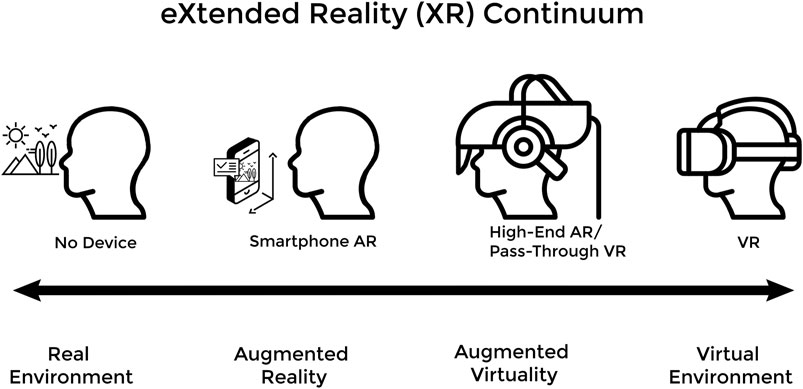
In the ever-evolving landscape of medical education, a new player has emerged, promising to revolutionize the way future doctors are trained. The integration of eXtended Reality (XR) technologies is reshaping the educational landscape by addressing the limitations of traditional methods.

Genetic Testing: A New Dawn in Healthcare

Genetic testing represents more than just a scientific advancement; it signifies a fundamental shift in how we approach health and wellness.

Sustainable Architecture: Blending Innovation with Ecological Responsibility

The journey toward sustainable architecture is ongoing, with each project serving as a beacon of what's achievable when creativity meets ecological awareness.

By |December 9, 2024|Categories: Architecture, Article, Sustainability|Tags: |0 Comments

AI in Clinical and Molecular Diagnostics: A Market on the Rise

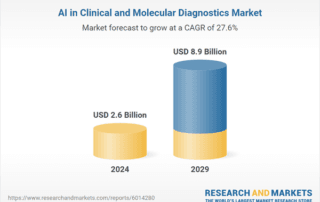
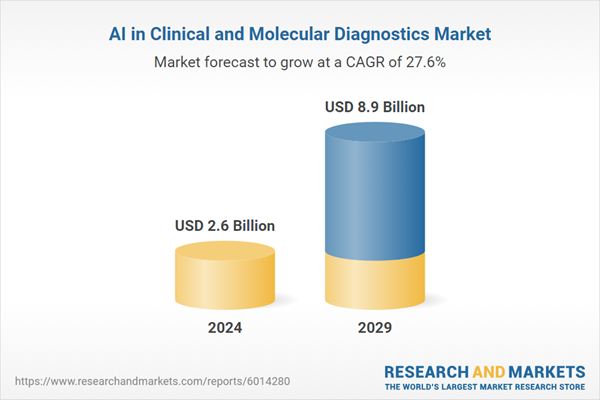
AI in Clinical and Molecular Diagnostics Market is set to experience remarkable growth, projected to surge from USD 2.6 billion in 2024 to USD 8.9 billion by 2029. This growth is driven by the integration of advanced AI technologies such as machine learning and deep learning into traditional diagnostic methodologies like imaging, genomics, and laboratory testing.

AI: A Revolution in Healthcare’s Future

AI is not a distant dream but a present reality, already integrated into everyday life through virtual assistants like Alexa and Siri. AI shows promise in enhancing medical accuracy, such as in predicting mesothelioma survival and improving colonoscopy accuracy, it is not intended to replace healthcare professionals.