Are NAR’s New MLS Policies About to Backfire? Michigan Case Tests the Waters

Lady justice over detroit skyline

Just days after the National Association of Realtors announced sweeping changes to its MLS Handbook at NAR NXT 2025, the organization is already facing legal blowback — and the first test is unfolding in Michigan.

In the Hardy case, which challenges mandatory Realtor association membership as a condition of MLS access, plaintiffs wasted no time arguing that NAR’s new policies effectively validate their claims. According to attorney Michael Clawson, the timing and nature of these revisions represent what he calls:

“essentially admitting that its previous policy was a violation of antitrust law.”

A Motion Filed Within 48 Hours of NAR’s Announcement

On Nov. 19, Clawson submitted a motion requesting the court’s permission to include NAR’s fresh policy revisions as evidence. The updates, revealed on Nov. 17, shift control over non‑member MLS access from the national level to local associations.

Clawson argues that if NAR removed membership as a prerequisite for MLS access, then the policy must have been problematic to begin with. He wrote that the decision “clearly removes the requirement of NAR membership as a precursor to MLS access.”

Read the original Real Estate News report

NAR Responds: “No Admission of Wrongdoing Here.”

NAR quickly pushed back in a Nov. 21 statement, saying the revisions don’t undermine its long‑standing position. MLSs, they stressed, have always had local discretion when determining access requirements — including whether membership is mandatory.

“NAR stands by the pro‑competitive, pro‑consumer local broker marketplaces… Each local MLS sets their own requirements for determining access to the platform.”

Their statement made one thing clear: the legal fight is far from over.

Where This All Began

The Hardy lawsuit, filed in August 2024 by Michigan real estate professionals Douglas Hardy, Glenn Champion and Dylan Trent, argues that requiring agents to join NAR, Michigan Realtors and a local board simply to access the MLS is unfair and anticompetitive.

The case gained momentum amid NAR’s massive settlement over buyer‑agent commission structures. With many MLSs removing offers of compensation, plaintiffs argue that the value of association membership has decreased — while fees remain high.

Background: NAR’s landmark commission settlement

A National Trend: Similar Cases in Multiple States

Michigan isn’t alone. Lawsuits challenging mandatory Realtor membership have surfaced in Pennsylvania, Georgia, Texas and Louisiana. NAR has won cases in Texas and Pennsylvania — but both are now under appeal.

Explore the nationwide membership challenges

With the spotlight now on Michigan, the big question is whether NAR’s new policy changes will sway the court’s opinion — or if the organization can convince judges that nothing meaningful has truly changed.

Why This Matters for Real Estate Professionals

MLS access remains the backbone of today’s real estate industry. Any changes to who can access it — and under what conditions — could reshape professional standards nationwide.

For those pursuing or renewing real estate licenses, especially in Florida and across the U.S., understanding evolving MLS rules is essential. Institutions such as Cameron Academy actively monitor these developments to ensure students and professionals receive relevant, practical training that keeps them industry‑ready.

As the Michigan case develops, expect continued debate, new legal filings and potentially a redefinition of how MLS systems and Realtor associations operate across the country.

More Articles

Getting licensed or staying ahead in your career can be a journey—but it doesn’t have to be overwhelming. Grab your favorite coffee or tea, take a moment to relax, and browse through our articles. Whether you’re just starting out or renewing your expertise, we’ve got tips, insights, and advice to keep you moving forward. Here’s to your success—one sip and one step at a time!

The Mortgage Industry’s AI Transformation: Automation Reshapes Lending From Application to Approval

Artificial intelligence is rapidly reshaping the mortgage industry, boosting productivity, reducing manual work, and accelerating loan closings. From automated document data extraction to AI‑generated underwriting narratives and predictive analytics, lenders are using new tools that improve accuracy and drastically speed up processing times. With chatbots, next‑gen point‑of‑sale systems, and end‑to‑end automation, preapprovals that once took days now take minutes. For mortgage and real estate professionals, mastering AI is becoming a major competitive advantage—one that defines who will thrive in the future of lending.

Why Your Insurance Bill Is Rising Even as Florida Rates Go Down

Florida’s property insurance rates are finally starting to drop, but many homeowners are still seeing higher monthly bills. The reason isn’t insurer price hikes—it’s soaring replacement costs driven by construction inflation, labor shortages, and rising home values. Nearly 75 percent of recent premium increases came from higher property values alone. Understanding this gap between “rates” and “premiums” helps homeowners—and real estate and insurance professionals—navigate the shifting Florida market and make smarter coverage decisions.

Milwaukee’s Commercial Real Estate Market Turns a Corner

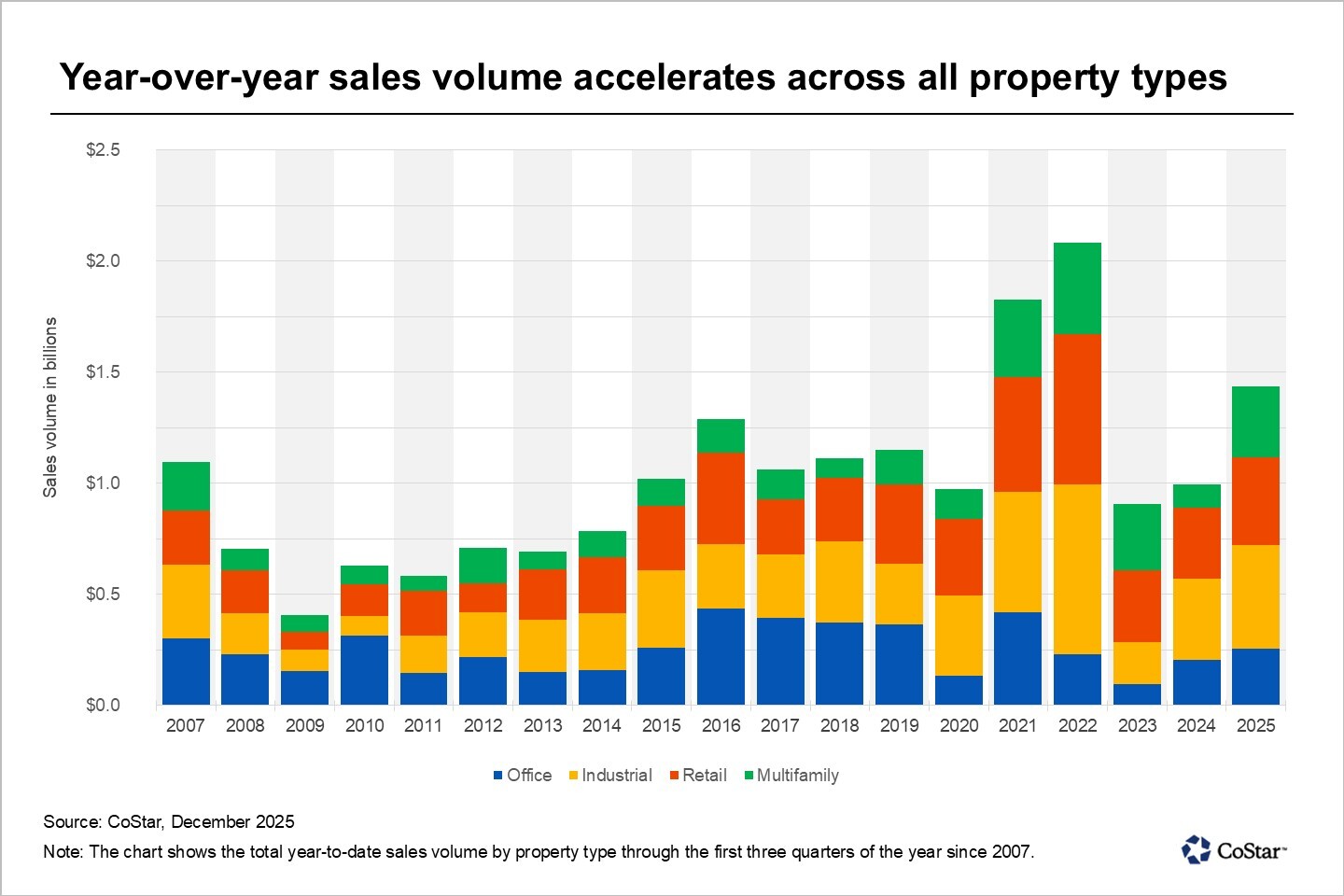
Milwaukee’s commercial real estate market is finally showing real signs of recovery, with 2025 sales volume hitting a three‑year high and investor confidence steadily returning. Driven by selective, fundamentals‑focused buying—favoring strong cash flow, quality assets, and strategic pricing—the city is moving from a period of correction into a healthier, opportunity‑rich phase. For real estate professionals nationwide, Milwaukee’s momentum reflects broader CRE market stabilization and the growing importance of disciplined underwriting and market expertise.

Reverse Mortgage Market Poised for Breakout Growth in 2026

Industry leaders project a major surge in reverse mortgage activity heading into 2026, fueled by rising proprietary products, lender innovation, and strong investor interest. As high interest rates push originators to adopt new strategies, flexible private‑label options, senior‑focused HELOCs, and a wave of big‑capital investment are reshaping the market. With education and policy shifts poised to unlock even more demand, reverse mortgages are entering their most transformative era yet.

The 2026 Housing Market Outlook: Is Better Inventory Finally on the Horizon?

Experts forecast that 2026 may bring long‑awaited relief to homebuyers, with both existing and new home inventory expected to rise. NAR predicts a boost in home sales, a slight drop in mortgage rates, and a modest 4% increase in prices—conditions that could motivate more homeowners to list while builders add over a million new homes to the market. For first‑time buyers, higher loan limits and easing qualification standards may make entering the market more achievable than in recent years.

Lower Interest Rates Signal a Brighter 2026 for South Florida Real Estate

South Florida enters 2026 with renewed optimism as falling mortgage rates, improving buyer confidence, and a strong job market help stabilize a housing landscape that struggled in 2025—especially in the condo sector. While single-family homes remained resilient last year, condos faced price drops, rising fees, and hesitation tied to new safety regulations. With rates projected to fall to around 5.8% by year’s end, buying power is increasing, inventory may loosen, and activity is expected to pick up. Still, affordability challenges persist, Miami’s rental market remains intensely competitive, and the condo sector’s recovery will take time.