As the global property market cautiously steps into 2025, the commercial real estate sector is beginning to show signs of recovery. This follows a significant downturn that began in 2022, primarily driven by rising interest rates. The original article from MSCI highlights several key trends and challenges that investors should keep an eye on as the market evolves.
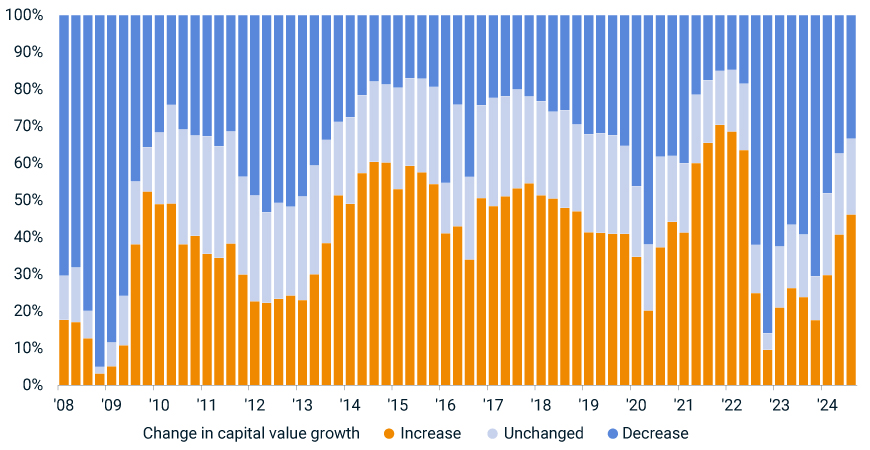
In 2024, interest rates began to decline, leading to a stabilization in transactional activity and the reemergence of asset-value growth in certain segments. However, the recovery is uneven, with different areas of the market moving at varied paces. This presents both opportunities and risks for investors, who must navigate a landscape marked by both cyclical and structural changes.
Recovery – Not Everywhere All at Once
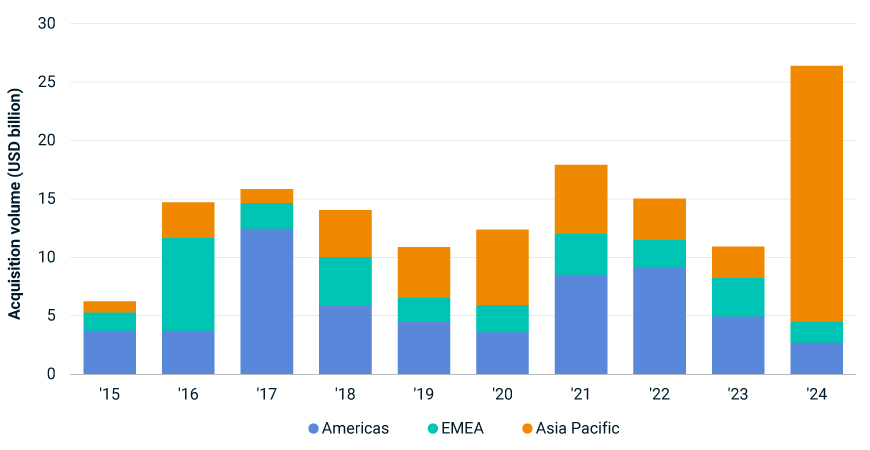
The recovery phase, which began in 2024, is still in its infancy. Lower interest rates are expected to help buyers and sellers align more closely on pricing, improving liquidity. Yet, investor preferences are shifting, with a focus on living sectors, industrial assets, and properties aligned with broader socioeconomic and technological trends. A notable transaction in 2024 was Blackstone Inc.’s $16 billion acquisition of data-center operator AirTrunk, underscoring the growing demand for assets that straddle the line between traditional property and infrastructure.
Investment Pendulum Swings Back to Asset Selection
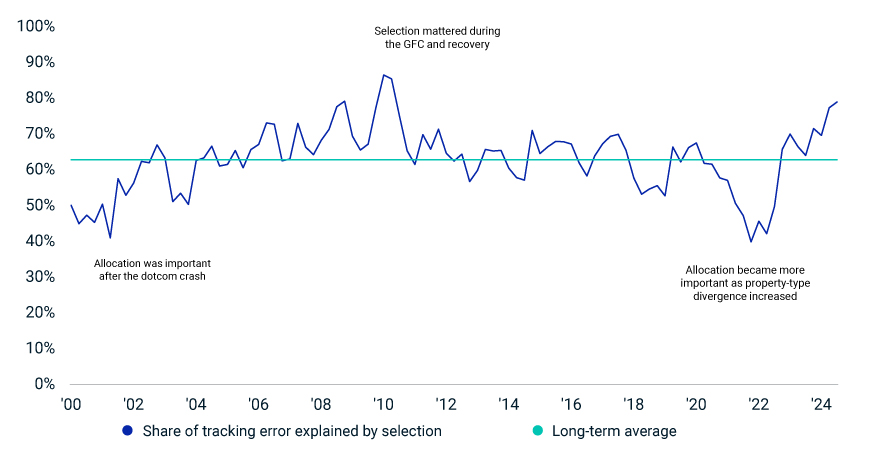
The real estate market is entering a new investment cycle where active asset selection and management are crucial. With market conditions evolving, the traditional playbook for delivering returns is changing. Investors must balance top-down allocation strategies with granular, bottom-up asset-selection decisions. The interplay between these approaches has become more complex, demanding a keen understanding of the drivers of performance.
Underwater Assets Come to Light
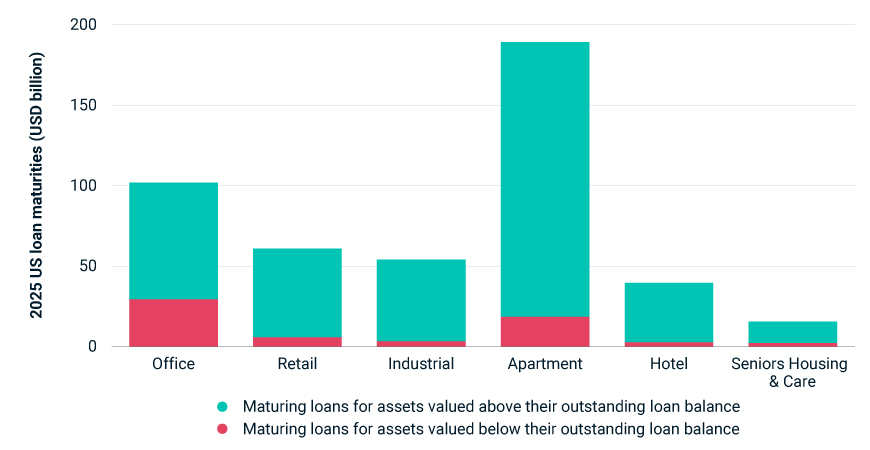
Higher interest rates and ongoing price declines have put pressure on borrowers’ ability to refinance commercial-property loans. In the U.S., nearly $500 billion of loans are set to mature in 2025, with about 14% potentially underwater. U.S. offices face particularly bleak refinancing prospects, with nearly 30% of maturing office loans tied to properties worth less than the debt secured against them.
Investors Get to Grips with Physical Climate Risk
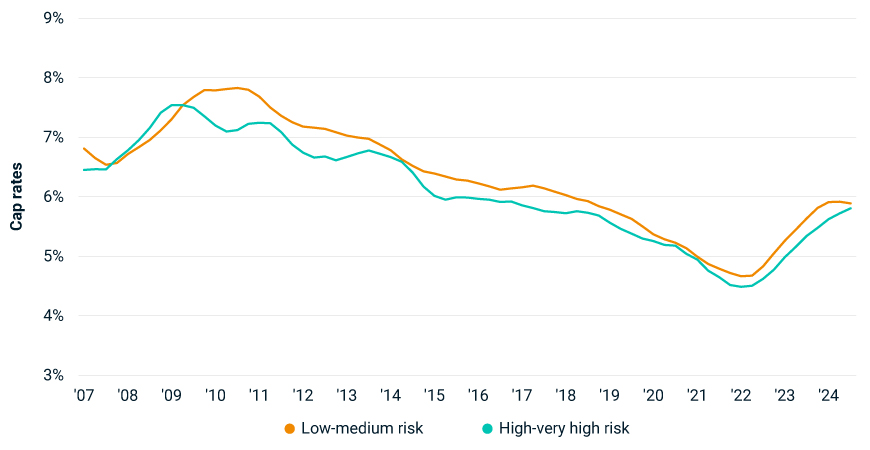
Extreme weather events are expected to become more common, affecting real-estate asset values through higher insurance premiums and disruption costs. Despite this, the risk is not yet adequately priced into transaction yields. As climate risks intensify, pricing should adjust to reflect the increased risk to property values.
Property Investors Seek a Ride on the AI Train
The rapid development of AI is driving demand for data centers, transforming the investment landscape. Significant capital is being committed to developing new data centers, with notable deals like Blackstone’s acquisition of AirTrunk. This surge in interest is reshaping market dynamics, with traditional property investors now competing in a space once dominated by infrastructure investors.
As we move further into 2025, the commercial real estate market remains a complex and evolving landscape. Investors must remain vigilant and adaptable, leveraging insights and strategies to navigate the challenges and opportunities that lie ahead.
More Articles
Getting licensed or staying ahead in your career can be a journey—but it doesn’t have to be overwhelming. Grab your favorite coffee or tea, take a moment to relax, and browse through our articles. Whether you’re just starting out or renewing your expertise, we’ve got tips, insights, and advice to keep you moving forward. Here’s to your success—one sip and one step at a time!
The iad Group, a renowned name in the real estate industry, is making its grand entry into the U.S. market. Originating from Paris, the iad Group has established its presence in numerous countries, and now, it's Florida's turn to experience the iad Group's unique approach to real estate. The iad Group's business model is a blend of human connections and a cloud-based structure. This innovative approach has been the driving force behind the company's success in various countries, and it aims to replicate this success in the U.S. The iad Group's Florida operation, iad Florida, is launching with 18 agents based in the vibrant city of Kissimmee. These agents are ready to spearhead the iad Group's expansion into the U.S., bringing their expertise and passion for real estate to the American market.
In the ever-evolving world of real estate, staying ahead of the competition requires innovative solutions that streamline processes and maximize opportunities. MoxiWorks, a leading real estate technology platform, has recently integrated two powerful tools, MoxiPresent and MoxiConnect, to revolutionize the way agents create presentations, conduct buyer tours, and provide annual property reviews. This integration not only enhances efficiency but also empowers agents to deliver a higher level of service to their clients. Ready to take your real estate career to the next level? Explore the online career education courses offered by Cameron Academy and gain the skills and knowledge you need to thrive in the industry.
The U.S. Department of Housing and Urban Development (HUD), along with seven other federal agencies, has recently taken significant steps towards promoting fair housing. The agencies have clarified and enforced Title VI of the Civil Rights Act of 1964, which prohibits discrimination based on race, color, or national origin. Now, the protection extends to include discrimination based on shared ancestry and ethnicity. A housing-specific fact sheet has been published by HUD in collaboration with other federal agencies. This fact sheet provides guidance on reporting housing discrimination and seeking assistance, serving as a valuable resource for individuals who have experienced discrimination and are seeking justice.
As mortgage rates rise, home sellers are navigating a challenging market landscape, adjusting their prices to attract potential buyers. Increasing mortgage rates present significant challenges for buyers, impacting affordability and decreasing demand for homes. In response, many sellers are reducing their prices. Despite these challenges, the median U.S. home sale price has shown resilience, rising by 3% year over year. As the housing market continues to evolve, it's crucial for both buyers and sellers to stay informed about the latest trends and dynamics.
Non-white homebuyers, particularly Hispanics and Blacks, continue to encounter discrimination during their search for a new home, despite existing legislation aimed at preventing such practices. According to a recent survey conducted by Redfin, 36% of Hispanics and 32% of Blacks reported feeling discriminated against throughout their homebuying journey. The study also highlights that discrimination extends beyond race, with 22% of LGBTQ+ respondents experiencing bias based on their sexual orientation. These findings shed light on the persistence of discrimination in the housing market, challenging the effectiveness of current laws and regulations.
In a startling turn of events, mortgage rates have skyrocketed to their highest level since 2000, causing ripples throughout the housing market. This surge is driven by inflation concerns and the Federal Reserve's plan to taper its bond-buying program. As the economy continues to recover from the pandemic, inflationary pressures are mounting, leading to higher borrowing costs. This article delves into the details of this alarming trend and its potential implications for the housing market.