As the global property market cautiously steps into 2025, the commercial real estate sector is beginning to show signs of recovery. This follows a significant downturn that began in 2022, primarily driven by rising interest rates. The original article from MSCI highlights several key trends and challenges that investors should keep an eye on as the market evolves.
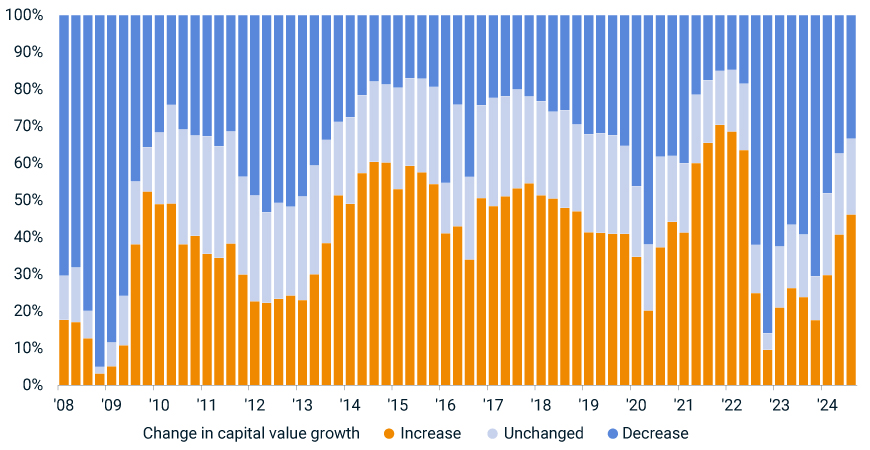
In 2024, interest rates began to decline, leading to a stabilization in transactional activity and the reemergence of asset-value growth in certain segments. However, the recovery is uneven, with different areas of the market moving at varied paces. This presents both opportunities and risks for investors, who must navigate a landscape marked by both cyclical and structural changes.
Recovery – Not Everywhere All at Once
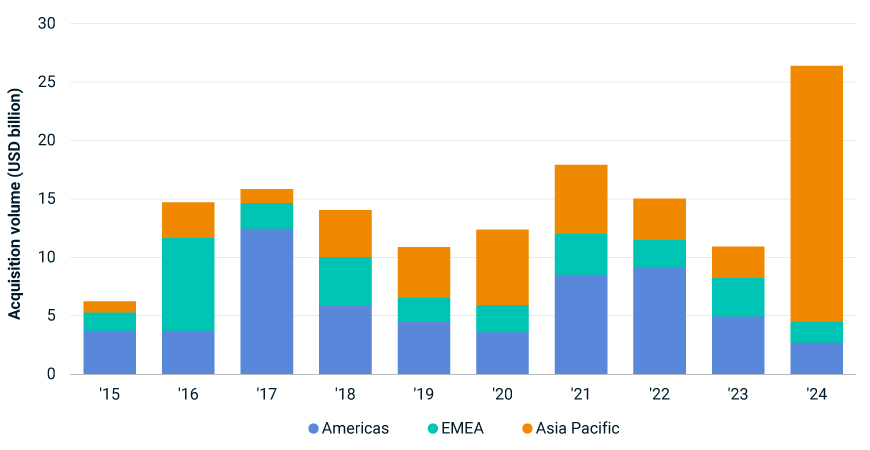
The recovery phase, which began in 2024, is still in its infancy. Lower interest rates are expected to help buyers and sellers align more closely on pricing, improving liquidity. Yet, investor preferences are shifting, with a focus on living sectors, industrial assets, and properties aligned with broader socioeconomic and technological trends. A notable transaction in 2024 was Blackstone Inc.’s $16 billion acquisition of data-center operator AirTrunk, underscoring the growing demand for assets that straddle the line between traditional property and infrastructure.
Investment Pendulum Swings Back to Asset Selection
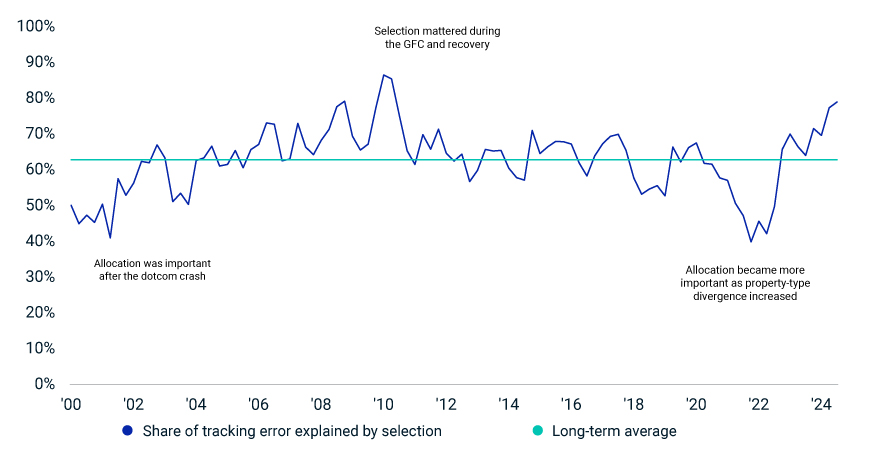
The real estate market is entering a new investment cycle where active asset selection and management are crucial. With market conditions evolving, the traditional playbook for delivering returns is changing. Investors must balance top-down allocation strategies with granular, bottom-up asset-selection decisions. The interplay between these approaches has become more complex, demanding a keen understanding of the drivers of performance.
Underwater Assets Come to Light
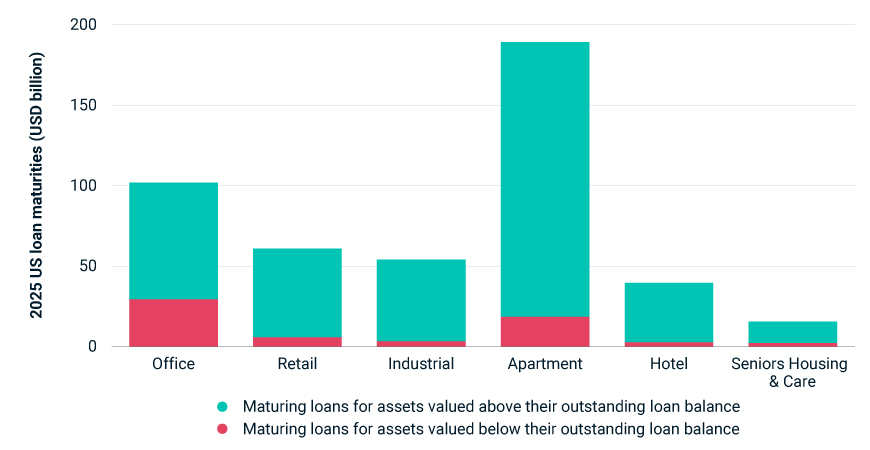
Higher interest rates and ongoing price declines have put pressure on borrowers’ ability to refinance commercial-property loans. In the U.S., nearly $500 billion of loans are set to mature in 2025, with about 14% potentially underwater. U.S. offices face particularly bleak refinancing prospects, with nearly 30% of maturing office loans tied to properties worth less than the debt secured against them.
Investors Get to Grips with Physical Climate Risk
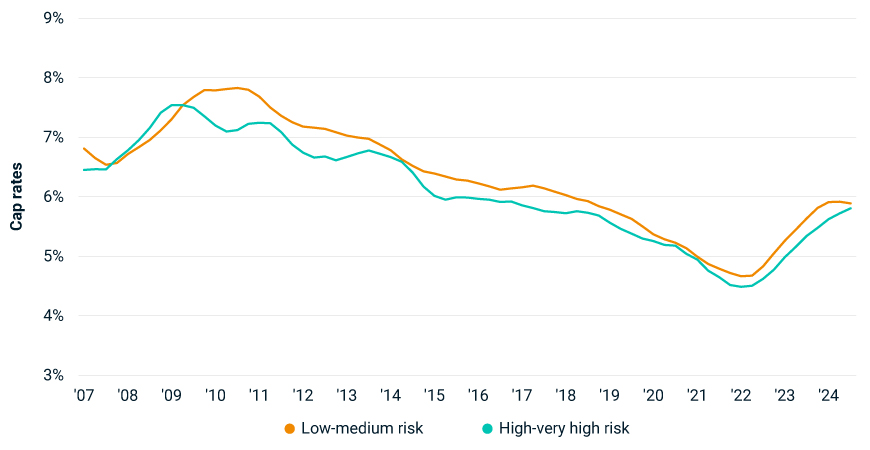
Extreme weather events are expected to become more common, affecting real-estate asset values through higher insurance premiums and disruption costs. Despite this, the risk is not yet adequately priced into transaction yields. As climate risks intensify, pricing should adjust to reflect the increased risk to property values.
Property Investors Seek a Ride on the AI Train
The rapid development of AI is driving demand for data centers, transforming the investment landscape. Significant capital is being committed to developing new data centers, with notable deals like Blackstone’s acquisition of AirTrunk. This surge in interest is reshaping market dynamics, with traditional property investors now competing in a space once dominated by infrastructure investors.
As we move further into 2025, the commercial real estate market remains a complex and evolving landscape. Investors must remain vigilant and adaptable, leveraging insights and strategies to navigate the challenges and opportunities that lie ahead.
More Articles
Getting licensed or staying ahead in your career can be a journey—but it doesn’t have to be overwhelming. Grab your favorite coffee or tea, take a moment to relax, and browse through our articles. Whether you’re just starting out or renewing your expertise, we’ve got tips, insights, and advice to keep you moving forward. Here’s to your success—one sip and one step at a time!
Artificial intelligence is accelerating across the real estate industry, bringing new productivity platforms, smarter MLS systems, cleaner data tools, and AI‑powered consumer guidance. From United Real Estate’s BullseyeAI assistant to Zillow’s integration with Google NotebookLM and major MLS restructures, technology is rapidly reshaping how agents research properties, communicate with clients, and manage daily workflows. For future and current professionals, understanding these tools isn’t optional—it's becoming the new foundation for a competitive real estate career.
A sweeping Treasury Department rule has activated the first nationwide anti–money laundering requirements for residential real estate, forcing professionals involved in closings and settlements to report certain non‑financed property transfers. The move closes long‑standing loopholes that allowed criminals, corrupt officials, and foreign adversaries to hide illicit funds in U.S. housing. Backed by recent federal court decisions, the rule positions the U.S. as a global leader in financial transparency—and signals that commercial real estate may be next. For today’s real estate professionals, staying compliant is becoming just as essential as understanding the market itself.
United Real Estate has introduced BullseyeAI, a fully integrated AI platform designed to help agents cut overhead, automate daily tasks, and reclaim valuable time. Powered by a proprietary large‑language‑model system, BullseyeAI blends dashboards, navigation, voice commands, and automated assistants into one intelligent workspace. With AI agents like Sofie and Rosie managing client nurturing, recruiting workflows, marketing, data handling, and more, the platform marks a major leap toward faster, smarter productivity for real estate professionals.
Boynton Beach residents are reeling after a new city ordinance began issuing fines to homeowners for parking on their own property—unless the vehicle sits on an official driveway. The rule bans parking on grass or unpaved areas, shocking families who’ve parked the same way for years. With fines starting at 25 dollars per car and rising if unpaid, many residents say the sudden crackdown is unfair and financially burdensome, sparking a heated debate over property rights and local government authority.
From AI assistants like United’s BullseyeAI to MLS upgrades rolling out across the country, real estate professionals are entering a new tech‑driven era. This week’s highlights include smarter productivity tools, unified MLS systems, enhanced data access, and even AI‑powered buyer education through Zillow’s new NotebookLM partnership. Whether you’re a seasoned broker or preparing for your license exam, these innovations show how rapidly the industry is evolving—and why staying informed is becoming essential for success.
Artificial intelligence is rapidly moving from a helpful tool to a central force inside real estate transactions, MLS systems, and agent workflows. As AI reshapes everything from listing photos to data distribution, MLSs, regulators, and brokerages are racing to set clear rules that protect consumers and reduce legal risks. With new laws, updated agreements, and rising debates over who should regulate AI, the industry is confronting a defining moment—one that every current and future real estate professional must understand.