In the ever-evolving landscape of American housing, the prevalence of homeowners associations (HOAs) is on a steep incline, impacting over 30% of the U.S. housing stock. With this rise, real estate professionals find themselves at the forefront, guiding clients through the complexities of HOA-governed communities.

HOAs, which are self-governing entities, create and enforce rules for residents, often enhancing property values through stringent maintenance standards and community engagement activities. It’s noteworthy that homes in HOA communities can command a 5% to 6% higher sale price than those without an HOA, as reported by the Cato Institute.

However, the allure of well-manicured lawns and pristine common areas comes with a set of challenges. HOAs wield significant power, sometimes leading to homeowner dissatisfaction due to restrictive rules. Real estate agents must ensure that prospective buyers are fully informed about these regulations, as noncompliance can result in fines or even foreclosure.

For real estate agents, understanding the nuances of HOA governance is crucial. Agents are advised to disclose the existence of an HOA as a “material fact” under the REALTOR® Code of Ethics. However, they must refrain from interpreting legal documents, directing clients to legal professionals for clarity.

The original article by Melissa Dittmann Tracey at the National Association of REALTORS® delves deeper into these dynamics, offering a comprehensive guide for agents, buyers, and sellers navigating the HOA landscape.

As we look to the future, with predictions of over 3,000 new HOAs forming in 2024 alone, the role of real estate agents in this domain will only grow more significant. They are not just facilitators of transactions, but also educators, ensuring that clients step into their new homes with eyes wide open.

More Articles

Getting licensed or staying ahead in your career can be a journey—but it doesn’t have to be overwhelming. Grab your favorite coffee or tea, take a moment to relax, and browse through our articles. Whether you’re just starting out or renewing your expertise, we’ve got tips, insights, and advice to keep you moving forward. Here’s to your success—one sip and one step at a time!

Artificial Intelligence in Diagnostics: A Revolution in Healthcare

The global market for artificial intelligence in diagnostics is poised for remarkable growth, with projections estimating it to reach USD 7.3 billion by 2032.

By |December 10, 2024|Categories: Article, Artificial Intelligence, Healthcare|Tags: , |0 Comments

Revolutionizing Medical Education with Extended Reality

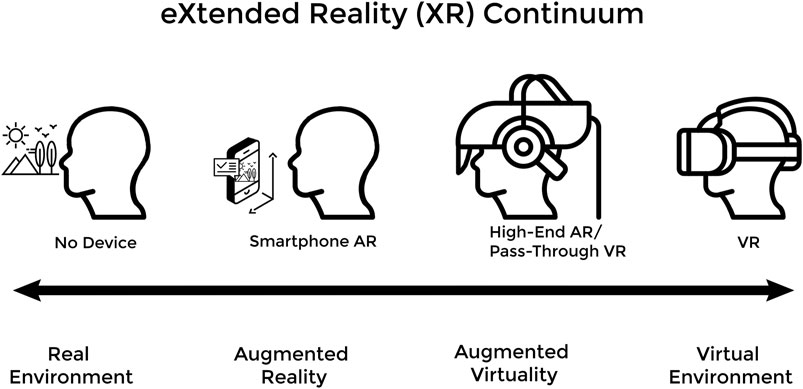
In the ever-evolving landscape of medical education, a new player has emerged, promising to revolutionize the way future doctors are trained. The integration of eXtended Reality (XR) technologies is reshaping the educational landscape by addressing the limitations of traditional methods.

Genetic Testing: A New Dawn in Healthcare

Genetic testing represents more than just a scientific advancement; it signifies a fundamental shift in how we approach health and wellness.

Sustainable Architecture: Blending Innovation with Ecological Responsibility

The journey toward sustainable architecture is ongoing, with each project serving as a beacon of what's achievable when creativity meets ecological awareness.

By |December 9, 2024|Categories: Architecture, Article, Sustainability|Tags: |0 Comments

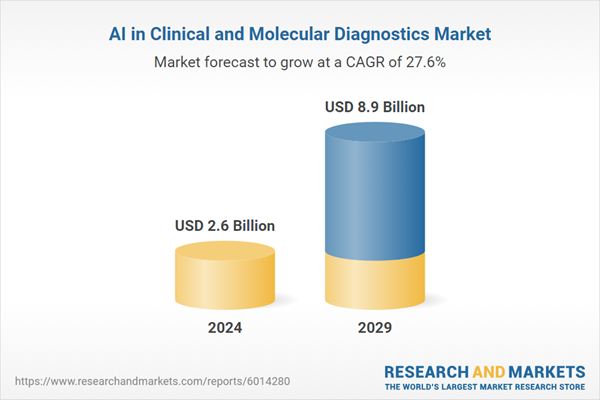
AI in Clinical and Molecular Diagnostics: A Market on the Rise

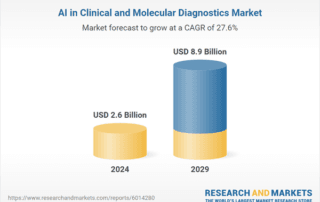
AI in Clinical and Molecular Diagnostics Market is set to experience remarkable growth, projected to surge from USD 2.6 billion in 2024 to USD 8.9 billion by 2029. This growth is driven by the integration of advanced AI technologies such as machine learning and deep learning into traditional diagnostic methodologies like imaging, genomics, and laboratory testing.

AI: A Revolution in Healthcare’s Future

AI is not a distant dream but a present reality, already integrated into everyday life through virtual assistants like Alexa and Siri. AI shows promise in enhancing medical accuracy, such as in predicting mesothelioma survival and improving colonoscopy accuracy, it is not intended to replace healthcare professionals.