As the dust settles on the recent Republican victory in the U.S. presidential election, the tax landscape is poised for significant changes. With President-elect Donald Trump set to return to the White House, both individuals and businesses are bracing for a potential overhaul in tax policies. The original article from Thomson Reuters provides a comprehensive look into these anticipated changes.
On the campaign trail, Trump proposed a broad range of tax policy ideas that could reshape the financial strategies of many. As we look ahead, some of the key adjustments for 2025 have already been outlined by the IRS, offering a glimpse into what taxpayers can expect.
IRS Adjustments for 2025
Each year, the IRS adjusts numerous tax provisions for inflation to prevent “bracket creep,” where inflation pushes taxpayers into higher income tax brackets without an actual increase in real income. For 2025, notable changes include:
Standard Deductions: For married couples filing jointly, the deduction increases to $30,000. Heads of households will see a rise to $22,500, while single taxpayers and married individuals filing separately will have a $15,000 deduction.
Alternative Minimum Tax (AMT) Exemption: The exemption for unmarried individuals increases to $88,100, with married couples filing jointly enjoying an exemption of $137,000.
Earned Income Tax Credit: For those with three or more qualifying children, the maximum amount rises to $8,046.
Estate Tax Credits: The federal estate-tax exclusion amount will increase to $13.99 million.
401(k) and Roth Changes
Significant updates to retirement-related items have been announced. The 401(k) contribution limit will increase to $23,500, and the catch-up contribution limit for those aged 60 to 63 will be $11,250. Additionally, higher income thresholds for Roth IRA contributions have been set, with singles and heads of household seeing a phase-out range between $150,000 and $165,000.
Future of the TCJA Under Trump
With a portion of the Tax Cuts and Jobs Act (TCJA) set to expire at the end of 2025, Trump’s administration is likely to push for extensions and modifications. Key proposals include extending the Qualified Business Income deduction, reinstating 100% bonus depreciation, and potentially eliminating the $10,000 cap on state and local tax deductions.
As the political landscape shifts, tax professionals are urged to stay informed and proactive. The original article emphasizes the importance of strategic tax planning and offers guidance on navigating these changes.
With so much uncertainty, the role of financial advisors and tax professionals becomes crucial in helping clients understand and adapt to the evolving tax environment. As noted by Shaun Hunley, Executive Editor at Thomson Reuters, “Modeling different scenarios and proactively advising clients will be key to preparing for whatever outcome unfolds.“
Stay Informed
For those looking to remain updated, subscribing to the Checkpoint newsstand can provide timely insights directly to your inbox.
More Articles
Getting licensed or staying ahead in your career can be a journey—but it doesn’t have to be overwhelming. Grab your favorite coffee or tea, take a moment to relax, and browse through our articles. Whether you’re just starting out or renewing your expertise, we’ve got tips, insights, and advice to keep you moving forward. Here’s to your success—one sip and one step at a time!
A growing share of American homeowners now carry mortgage rates above 5%—a dramatic shift that’s reshaping refinancing, inventory, and buyer behavior nationwide. With more than 30% of borrowers locked into rates over 5% and 20% above 6%, the market is split between owners holding on to low pandemic‑era loans and new buyers taking on higher‑rate mortgages. Federal efforts to push rates down could unlock millions of refinancing opportunities, while buyers see only modest monthly savings. For real estate professionals, understanding these rate dynamics is crucial as they increasingly drive inventory levels, affordability, and market activity.
New Moody’s data shows commercial real estate deal volume slipped 20% in December, marking a second monthly decline. Yet the full year tells a different story: 2025 ended with a 17% gain, signaling a quiet but resilient recovery. The biggest surprise came from the office sector, which posted a 21% jump in activity as return‑to‑office trends and AI‑driven job growth boosted demand. Multifamily, retail, and alternative assets like data centers also saw strong momentum, giving real estate professionals a market full of fresh opportunities heading into 2026.
Florida drivers and industry professionals are heading into 2026 with good news: auto insurance rates are dropping across the state as the market shows strong signs of stabilization. USAA leads the latest wave with a 7% average rate decrease expected in May 2026, saving members more than $125 million annually. They join several major insurers — including State Farm, Progressive, AAA, Allstate, and Florida Farm Bureau — all approving significant reductions. Officials credit recent legislative reforms, especially tort reform, for the improved loss ratios and renewed insurer confidence. With both auto and home insurance markets strengthening, Florida’s real estate, mortgage, and insurance professionals can expect more consumer confidence, smoother transactions, and expanding career opportunities.
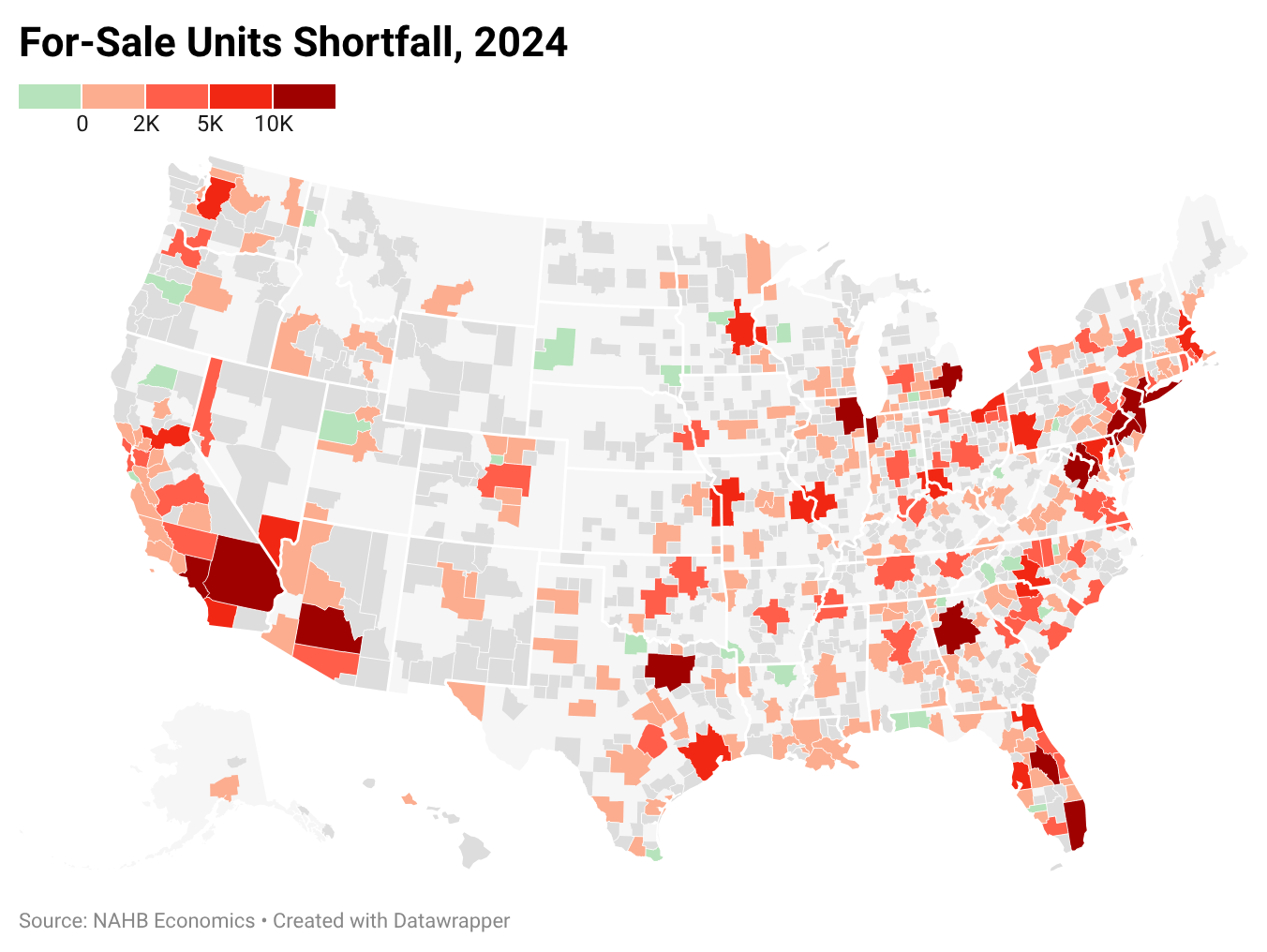
New data from Eye On Housing and the NAHB shows the U.S. remains short more than 1.2 million housing units, keeping pressure on both rents and home prices. Record‑low vacancy rates, slow single‑family construction, and restrictive zoning continue to fuel intense competition in 2024. Major metros like Chicago, New York, and Atlanta face some of the deepest deficits, and the true nationwide shortfall may be even higher when accounting for overcrowding and aging homes. For real estate professionals, the ongoing shortage means sustained demand, tighter inventory, and major opportunities for those who understand the evolving market.
Top real estate coach Jason Pantana says the divide between agents today isn’t about who has “tried” AI — it’s about who is immersed in it. In a new HousingWire interview, he explains why AI isn’t a gimmick but a full business system that amplifies output, improves authenticity, and reshapes how clients search for agents. From prompt mastery to AI‑driven visibility on Google, Pantana reveals how agents who commit even 15 minutes a day to learning AI are already outperforming those who hesitate.
Dallas–Fort Worth’s commercial real estate market closed 2025 with a split personality. Industrial dominated with massive new deliveries and soaring leasing demand, retail held steady with some of the market’s strongest fundamentals in years, and office continued to falter under remote‑work pressures. High vacancies, weak absorption, and rising demand for top‑tier space show the sector’s ongoing reset. Meanwhile, industrial and retail strength position the Metroplex for another powerhouse year heading into 2026.