Nevada Becomes the First State to Allow Homeowners Insurance Without Wildfire Coverage
Nevada has stepped into the national spotlight — and stirred no small amount of controversy — by becoming the first state to let insurers sell homeowners’ policies that exclude wildfire coverage entirely. The bipartisan law, unanimously approved by the state legislature and signed by Governor Joe Lombardo, aims to reduce premiums in a market where climate pressures are rewriting the insurance rulebook across the West.
A Radical Shift in Coverage Options
The new rule, active as of January 1, allows insurers to offer two new products: standard homeowners insurance with wildfire excluded and dedicated wildfire-only policies. Advocates argue the added flexibility could help residents finally secure coverage in areas where insurers have grown increasingly cautious.
But consumer advocates warn that some policyholders may unknowingly decline wildfire protection — a potentially catastrophic oversight for forest-edge communities. As Michele Steinberg of the National Fire Protection Association warns, “You’re not dealing with losing a kitchen for a month. You’re homeless.”
Why Nevada? A Curious Case Study
Despite the dramatic tone of the move, Nevada isn’t dealing with the same insurance crisis faced by states like California or Florida. In fact, the state boasts some of the lowest homeowners’ premiums in the nation — an average of $1,555 in 2024.
The wildfire risk is also relatively modest. Nevada has received just $25 million in FEMA wildfire aid since 1998, a tiny fraction of California’s $6.8 billion. Pressure for this legislation largely came from high-value areas near Lake Tahoe, where insurers hesitate to back multimillion-dollar woodland estates.
The Mortgage Roadblock
Even with the new options, most Nevadans won’t be able to ditch wildfire coverage. Roughly 60 percent of U.S. homes have mortgages, and lenders like Fannie Mae and Freddie Mac require fire protection as part of underwriting standards.
So wildfire waivers may benefit mainly those who own property outright — generally wealthier homeowners. However, experts caution that introducing multiple optional coverages could overwhelm consumers. Insurance researcher Carolyn Kousky described the approach as “really harmful,” noting that expecting homeowners to stack complex policy layers is unrealistic.
Nevada’s New “Regulatory Sandbox”
The bill also launches a statewide regulatory sandbox, allowing insurers to test innovative products without traditional regulatory constraints. Supporters say this could lead to breakthroughs such as usage-based auto insurance or on-demand specialty policies.
With fifteen states now using sandbox systems in industries like insurance, fintech, and AI, Nevada aims to become a forward‑thinking hub for consumer‑focused innovation and cost‑cutting strategies.
What This Means for Real Estate and Insurance Professionals
Nevada’s wildfire waiver may set a precedent for Western states tackling rising climate risks and insurance instability. If it succeeds, more states could adopt similar flexibility — reshaping underwriting standards nationwide. If it fails, the fallout could be dramatic.
For real estate agents, insurance professionals, and mortgage specialists, staying informed about these shifts is no longer optional — it’s essential. Changes in coverage requirements can impact closings, valuations, disclosures, and buyer behavior.
Educational institutions like Cameron Academy play a crucial role in helping professionals stay ahead. With licensing and continuing‑education programs across real estate, insurance, and finance, Cameron Academy ensures today’s professionals keep pace with tomorrow’s evolving standards.
Getting licensed or staying ahead in your career can be a journey—but it doesn’t have to be overwhelming. Grab your favorite coffee or tea, take a moment to relax, and browse through our articles. Whether you’re just starting out or renewing your expertise, we’ve got tips, insights, and advice to keep you moving forward. Here’s to your success—one sip and one step at a time!
Artificial intelligence is rapidly reshaping the mortgage industry, boosting productivity, reducing manual work, and accelerating loan closings. From automated document data extraction to AI‑generated underwriting narratives and predictive analytics, lenders are using new tools that improve accuracy and drastically speed up processing times. With chatbots, next‑gen point‑of‑sale systems, and end‑to‑end automation, preapprovals that once took days now take minutes. For mortgage and real estate professionals, mastering AI is becoming a major competitive advantage—one that defines who will thrive in the future of lending.
Florida’s property insurance rates are finally starting to drop, but many homeowners are still seeing higher monthly bills. The reason isn’t insurer price hikes—it’s soaring replacement costs driven by construction inflation, labor shortages, and rising home values. Nearly 75 percent of recent premium increases came from higher property values alone. Understanding this gap between “rates” and “premiums” helps homeowners—and real estate and insurance professionals—navigate the shifting Florida market and make smarter coverage decisions.
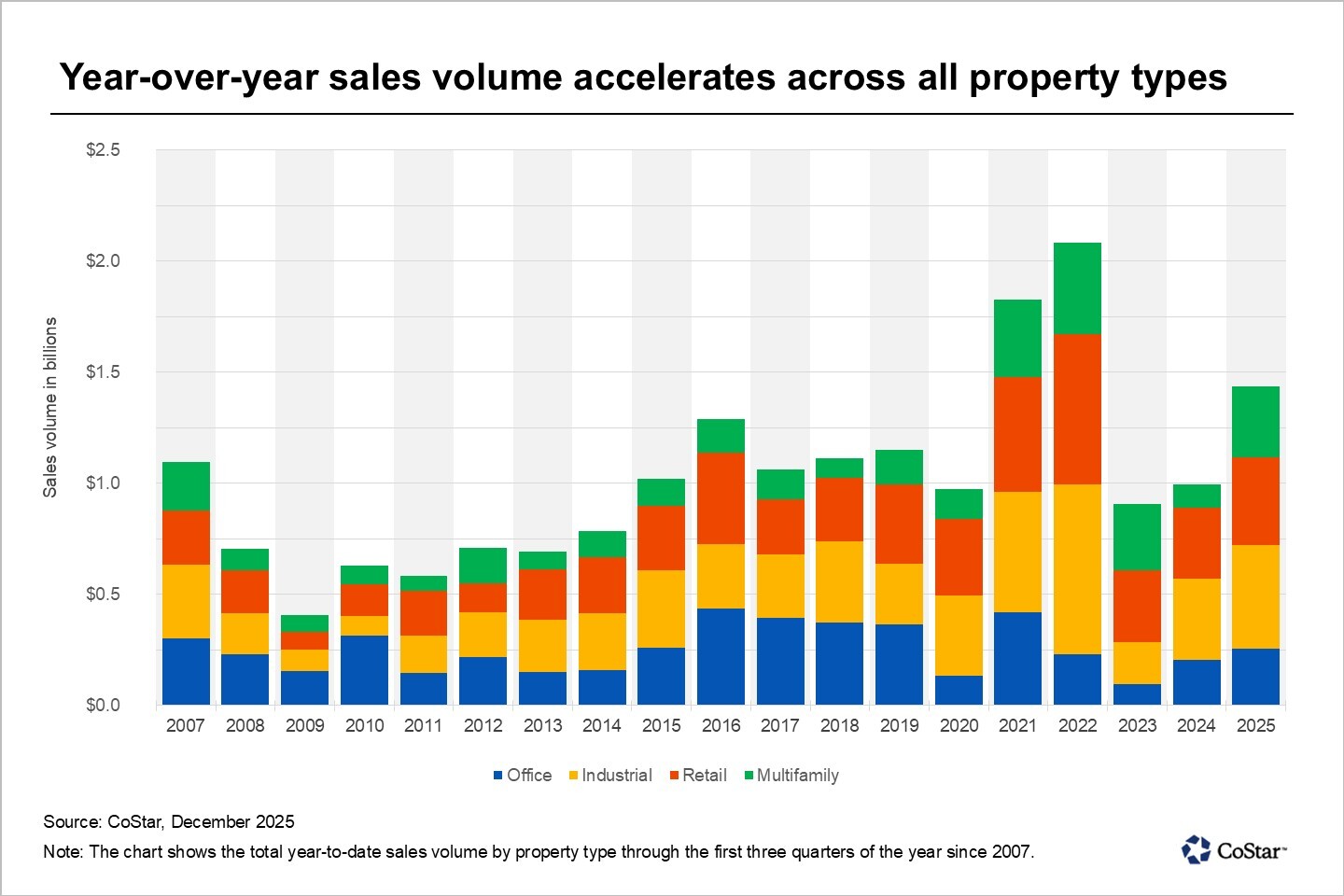
Milwaukee’s commercial real estate market is finally showing real signs of recovery, with 2025 sales volume hitting a three‑year high and investor confidence steadily returning. Driven by selective, fundamentals‑focused buying—favoring strong cash flow, quality assets, and strategic pricing—the city is moving from a period of correction into a healthier, opportunity‑rich phase. For real estate professionals nationwide, Milwaukee’s momentum reflects broader CRE market stabilization and the growing importance of disciplined underwriting and market expertise.
Industry leaders project a major surge in reverse mortgage activity heading into 2026, fueled by rising proprietary products, lender innovation, and strong investor interest. As high interest rates push originators to adopt new strategies, flexible private‑label options, senior‑focused HELOCs, and a wave of big‑capital investment are reshaping the market. With education and policy shifts poised to unlock even more demand, reverse mortgages are entering their most transformative era yet.
Experts forecast that 2026 may bring long‑awaited relief to homebuyers, with both existing and new home inventory expected to rise. NAR predicts a boost in home sales, a slight drop in mortgage rates, and a modest 4% increase in prices—conditions that could motivate more homeowners to list while builders add over a million new homes to the market. For first‑time buyers, higher loan limits and easing qualification standards may make entering the market more achievable than in recent years.
South Florida enters 2026 with renewed optimism as falling mortgage rates, improving buyer confidence, and a strong job market help stabilize a housing landscape that struggled in 2025—especially in the condo sector. While single-family homes remained resilient last year, condos faced price drops, rising fees, and hesitation tied to new safety regulations. With rates projected to fall to around 5.8% by year’s end, buying power is increasing, inventory may loosen, and activity is expected to pick up. Still, affordability challenges persist, Miami’s rental market remains intensely competitive, and the condo sector’s recovery will take time.


 The Mortgage Industry’s AI Transformation: Automation Reshapes Lending From Application to Approval Gallery