New Affordable Housing Project Proposed in Eastmont, Oakland
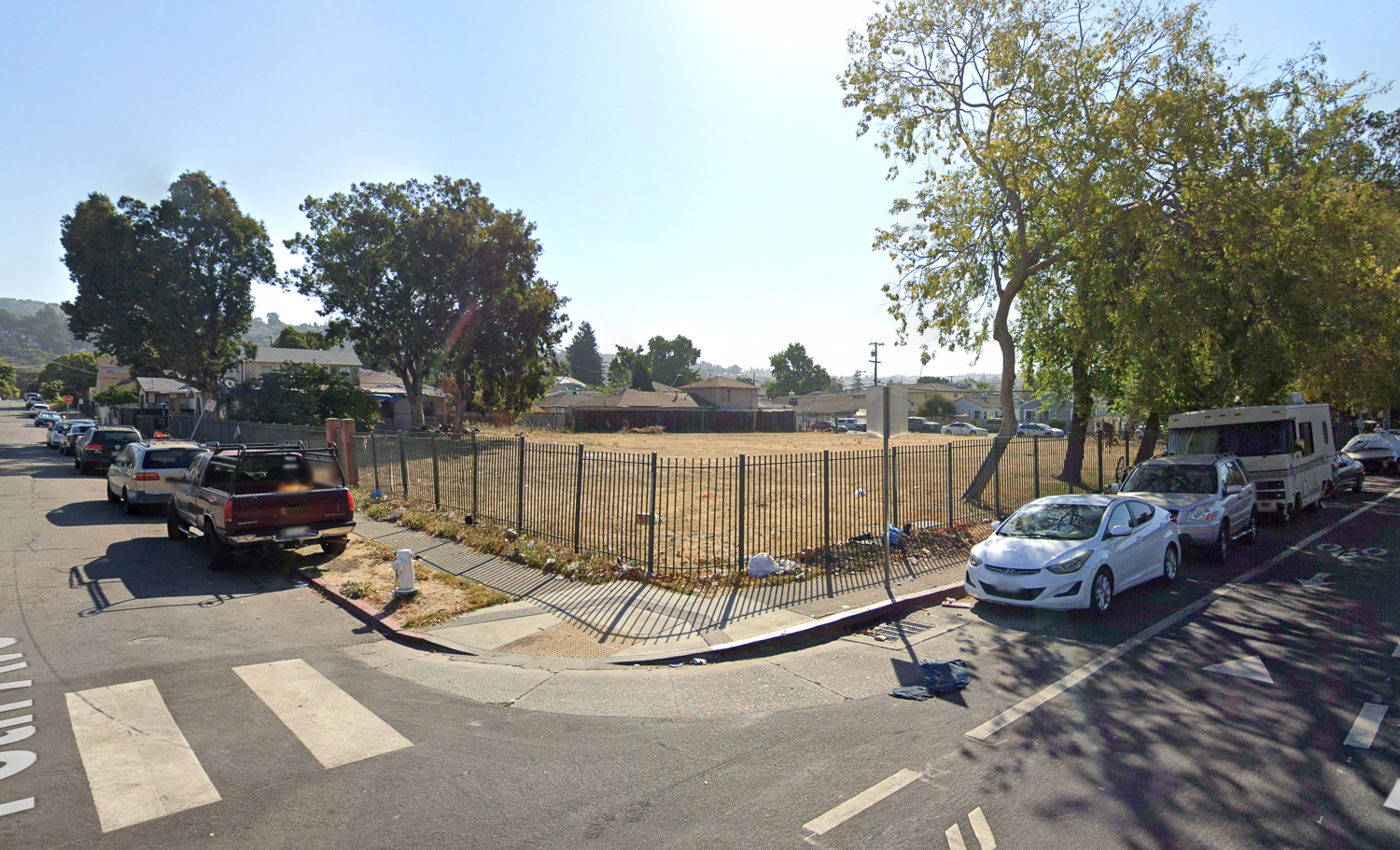
In a significant push towards addressing the housing needs in East Oakland, preliminary permits have been filed for a new affordable housing development at 2500 76th Avenue in the Eastmont neighborhood. This project, backed by Eden Housing, aims to transform a vacant parcel into a vibrant community for senior residents.
Eden Housing’s proposal is part of a broader initiative to redevelop the underutilized land surrounding the Eastmont Town Center, a hub for shopping and social services in East Oakland. The project will introduce at least 90 affordable housing units, focusing on creating an inclusive and engaging environment for its senior occupants. The development will feature interconnected yards and outdoor spaces designed to foster community interaction and host social events.
Community-Centric Design
The design of the new complex emphasizes a walkable community, with outdoor spaces playing a central role. A community front yard will serve as a venue for events, while an entry courtyard will connect residents to various social spaces. A second-level backyard will be equipped with seasonal gardens, enhancing the community’s appeal and functionality.
The property, spanning approximately 0.75 acres, is strategically located along Bancroft Avenue between 76th and 77th Streets. Its proximity to the Arroyo Viejo Recreation Center and the Eastmont Town Center ensures easy access to essential amenities and recreational facilities.
Collaborative Efforts
The project is a collaborative effort involving the California Affordable Housing Initiatives (CAHI), a branch of the Oakland Housing Authority that manages project-based Section 8 contracts from the US Department of Housing and Urban Development. CAHI’s involvement underscores the commitment to providing affordable housing solutions in the region.
This development follows recent plans by V23 Investment LLC for similar affordable housing projects in the area, as reported by YIMBY.
For further details on this initiative, visit the original article on San Francisco YIMBY.
More Articles
Getting licensed or staying ahead in your career can be a journey—but it doesn’t have to be overwhelming. Grab your favorite coffee or tea, take a moment to relax, and browse through our articles. Whether you’re just starting out or renewing your expertise, we’ve got tips, insights, and advice to keep you moving forward. Here’s to your success—one sip and one step at a time!
The title and real estate industries are entering their most dramatic compliance overhaul in decades. FinCEN’s new anti‑money‑laundering rule now applies to every state, enforces a first‑dollar reporting requirement, and places full responsibility on settlement agents. With the rule already in effect and mandatory reporting beginning March 1, 2026, professionals face urgent operational changes involving software, training, and entity‑buyer disclosures. Combined with state‑level rate shifts and heightened scrutiny of attorney opinion letters, 2025 marks a turning point that demands stronger compliance literacy across the entire real estate and finance ecosystem.
Retirement planning went through major changes in 2025, from new SECURE Act updates to shifting investment behaviors. As we move into 2026, seven key trends are reshaping how Americans save and build long‑term wealth. These shifts matter not only for everyday investors but also for professionals across real estate, finance, mortgage, insurance, and other licensed fields. Understanding these developments can help you strengthen your own financial strategy while staying competitive in your career.
Florida’s housing market is cooling faster than any other state, and soaring insurance premiums are the primary force driving buyers away. With cancellation rates in major metros topping 20%, steep price drops across Southwest Florida, rising HOA and condo fees, and thousands of homes added to new flood zones, many buyers are discovering that insurance—not the mortgage—is what kills the deal. As Citizens shrinks and new legislation raises coverage requirements, professionals in real estate, mortgage, and insurance must adapt quickly to a market where affordability hinges on risk, regulation, and rising premiums.
Commercial real estate is entering 2026 with renewed optimism as pricing floors, revitalized capital markets, and improved market visibility signal a shift away from the volatility of 2025. Analysts from Deloitte, Colliers, Cushman & Wakefield, and CoStar highlight firmer fundamentals, rising deal flow, and increased lender participation. Key sectors such as office, industrial, retail, multifamily, and data centers are showing distinct recovery patterns, positioning industry professionals and students for new opportunities in the year ahead.
Florida’s property insurance market is finally stabilizing after years of storms, lawsuits, and rising rates — yet many homeowners are still seeing higher bills. The reason isn’t the rates themselves but soaring replacement values driven by inflation in labor and building materials. Even as insurers lower rates, the cost to rebuild a home continues to rise, making up roughly 75% of recent premium increases. With new insurers entering the market and reforms taking effect, homeowners now have more options to shop, recalculate coverage, and control their costs.
The 2026 job market is shifting fast, and the biggest winners will be professionals who can prove they’re continuously learning. With more than 90% of employers now preferring candidates with microcredentials, short targeted certificates are becoming the new career currency. From AI and data skills to modern communication and adaptability, microcredentials are helping workers stand out in a competitive landscape — especially as industries like real estate, mortgage, insurance, and finance demand ongoing upskilling.