New Federal Safeguards Aim to Curb Dirty Money in U.S. Housing Market
The U.S. residential real estate market just entered a major new chapter. On March 1, the Treasury Department activated the first nationwide anti-money laundering protections for the industry. For the first time ever, professionals involved in closings and settlements must report certain non-financed transfers of residential property to entities or trusts. The new Residential Real Estate Rule, or RRE Rule, gives law enforcement powerful tools they have not had before.
The update follows years of warnings from investigators and national security experts. One of the strongest advocates, the FACT Coalition, has repeatedly emphasized the need for clearer oversight in an industry often clouded by secrecy.
A Growing Crackdown on Illicit Real Estate Cash
Ian Gary, executive director of the FACT Coalition, noted that U.S. real estate has long been an ideal hiding place for illicit money. With limited reporting requirements and plenty of loopholes, criminals and corrupt officials have used high-value property purchases to disguise dirty funds.
In his statement, Gary noted:
“The U.S. residential real estate sector has, for decades, been a magnet for the worlds dirty cash. Criminals, corrupt officials, and U.S. adversaries have been able to move their illicit funds into and through residential properties with ease. The system has been opaque for too long.”
The new FinCEN reporting requirements aim to close these gaps, deter abuse, and strengthen national security protections.
Gary also emphasized that restricting illicit funds could help stabilize housing prices and protect renters from absentee or negligent landlords operating behind anonymous ownership structures.
A Critical Moment for the U.S. on the Global Stage
The timing of this rule is no accident. The U.S. is currently undergoing evaluation by the Financial Action Task Force, the international authority that monitors anti-money laundering compliance. With the U.S. dollar functioning as the primary global currency, the stakes are significant.
The RRE Rule signals that the U.S. is committed to remaining a leader in the fight against illicit finance.
Courts Support the New Rule
The legal foundation behind the regulation was reinforced after two recent federal rulings upheld its constitutionality.
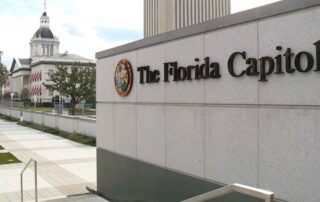
The U.S. District Court in Jacksonville, Florida concluded that Treasury has full authority to establish these reporting obligations under the Bank Secrecy Act. Soon after, a court in Lubbock, Texas issued similar support.
Those interested in reading more can explore the FACT Coalition press center at this link.
Why This Matters for Real Estate Professionals
Real estate remains one of the most attractive industries for illicit financial activity. FinCEN has repeatedly shown how bad actors distort housing prices, manipulate markets, and create unseen national security risks.
While this rule focuses on residential transactions, commercial real estate is likely the next frontier for regulatory oversight. Professionals across the field should monitor these changes closely.
Compliance knowledge is fast becoming a must-have skill for modern real estate agents.
For new or experienced professionals pursuing their license, these developments underline the importance of education that goes beyond exam prep. At Cameron Academy, students learn not only how to pass the Florida real estate exam but how to navigate an industry that is becoming more transparent, more regulated, and more globally connected.
Learn More
Readers can explore key documents at the official FinCEN links below:
As the regulatory landscape evolves, staying informed is no longer optional for real estate professionals. And at Cameron Academy, we help students stay ahead of the curve in a market that moves faster every year.
More Articles
Getting licensed or staying ahead in your career can be a journey—but it doesn’t have to be overwhelming. Grab your favorite coffee or tea, take a moment to relax, and browse through our articles. Whether you’re just starting out or renewing your expertise, we’ve got tips, insights, and advice to keep you moving forward. Here’s to your success—one sip and one step at a time!
The Florida Treasure Coast started the new year with a surge of 1,905 new home listings—up 22 percent from last January—signaling one of the strongest inventory jumps in years. While Martin County saw its median home price drop by nearly $100,000, nearby St. Lucie and Indian River counties continued to rise, creating a uniquely mixed market. With sales climbing and inventory levels shifting toward a more buyer-friendly landscape, 2026 is shaping up to be an active and opportunity-rich year for both seasoned agents and those entering the real estate field.
A unanimously passed House bill, HB 767, aims to require insurers to publicly disclose rate and premium data—giving Floridians long‑awaited clarity on rising costs. If approved by the Senate, the measure could significantly impact homeowners, real estate agents, mortgage professionals, and insurance specialists by increasing consumer trust and revealing how insurers calculate premiums.
U.S. mortgage rates have dipped to 5.98 percent, breaking below the 6 percent mark for the first time since 2022 and giving the spring home-buying season a fresh boost. With rates falling for the third straight week and buyer interest rising, experts say this shift could encourage more market activity—though many homeowners with ultra‑low pandemic-era rates may still hesitate to sell.
Artificial intelligence is rapidly transforming real estate, from listing creation to MLS infrastructure, forcing the industry to rethink how data is used, altered and protected. With AI tools making it easier than ever to modify photos, automate marketing and process sensitive documents, MLSs and state regulators are racing to establish new guardrails that ensure accuracy, privacy and consumer protection without slowing innovation.
Today’s real estate pros juggle nonstop client demands, constant marketing, and mountains of paperwork—but AI is stepping in as the ultimate assistant. From instant lead responses and personalized follow-up messages to predictive pricing tools and automated transaction support, agents are using AI to save hours, boost production, and stay competitive. The future of real estate belongs to professionals who combine their human touch with smart technology, and the shift is already happening.
A landmark US Supreme Court decision striking down the use of emergency powers to impose broad tariffs has upended global trade expectations, lifted equity markets, and sent businesses scrambling to understand what comes next. While GDP slowed and inflation rose, markets reacted positively as the ruling removed a major source of uncertainty for importers, exporters, and investors. With the old tariff framework dismantled and new targeted measures on the horizon, industries from real estate to finance are bracing for shifting economic conditions that could influence everything from consumer spending to investment strategy.