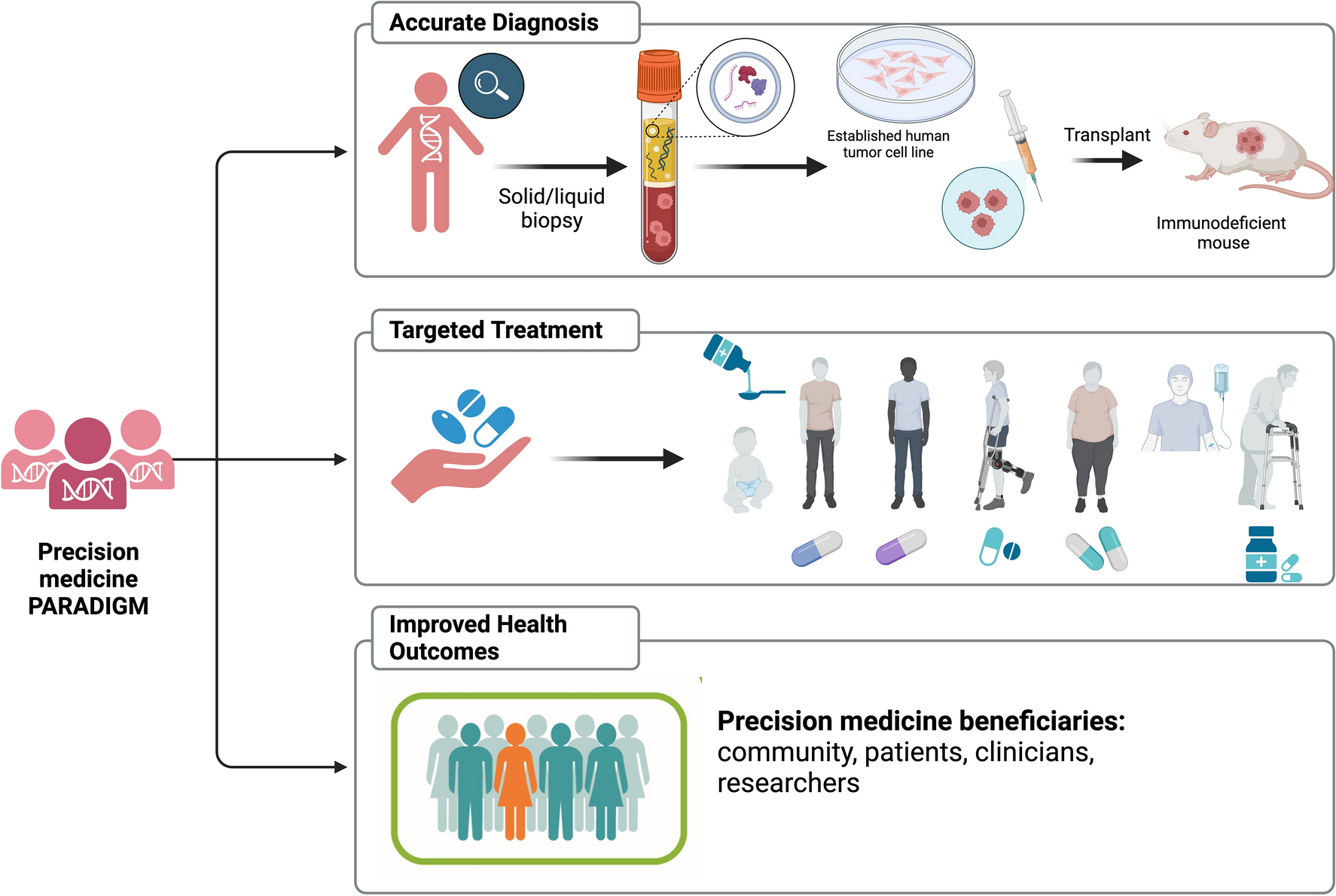
In a groundbreaking initiative, the National Institutes of Health (NIH) is spearheading a workshop titled “Artificial Intelligence in Precision Medicine for Diabetes and Other Chronic Diseases.” This event is set to explore the transformative potential of artificial intelligence (AI) and machine learning (ML) in advancing precision medicine, particularly for diabetes and chronic diseases.

The workshop seeks to unite biomedical researchers and AI/ML experts to tackle pressing challenges, identify crosscutting gaps, and seize opportunities in leveraging AI/ML technologies. The focus is on enhancing biomarker development, drug discovery, and diagnostics, ultimately paving the way for personalized healthcare solutions. Recent strides in AI/ML, including generative AI and Large Language Models, are poised to revolutionize biomedicine.

Organizing Committee
The event is organized by a distinguished committee, featuring external co-chairs such as Marcela Brissova from Vanderbilt University, Jeffrey Grethe from the University of California, San Diego, and Wei Wang from the University of California, Los Angeles. They are joined by notable members from the NIH, including Eric Brunskill, Ph.D., and Debbie Gipson, M.D., M.S.

Pre-workshop Speaker Series
A pre-workshop speaker series has been designed to stimulate discussions on AI’s intersection with biomedicine. The series is divided into two parts:

  1. The Bio-Behavioral Dimensions of Diabetes Heterogeneity: Featuring Dr. Yao Qin from the University of California, Santa Barbara, discussing “Data-driven Machine Learning and Closed-loop Diabetes Care,” and Dr. Ashu Sabharwal from Rice University on “Bio-behavioral Pathways in Diabetes.”
  2. Advances in AI and Applications in Biomedicine: Featuring Dr. James Zou from Stanford University, focusing on “AI Agents in Biomedicine,” and Dr. Eran Halperin from the University of California, Los Angeles, discussing “AI Challenges and Opportunities across Data Modalities in Medicine.”
Event Details
The workshop is a hybrid event, allowing both in-person and virtual participation. It will be held at the Neuroscience Center Building in Rockville, MD. Although registration closed on October 25, 2024, the event promises to be a pivotal moment in the integration of AI/ML in precision medicine.

For more information, interested parties can access the original article and additional resources such as the Pre-Workshop Webinar 1 Flyer and Pre-Workshop Webinar 2 Flyer.

Contact Information

More Articles

Getting licensed or staying ahead in your career can be a journey—but it doesn’t have to be overwhelming. Grab your favorite coffee or tea, take a moment to relax, and browse through our articles. Whether you’re just starting out or renewing your expertise, we’ve got tips, insights, and advice to keep you moving forward. Here’s to your success—one sip and one step at a time!

AI Transforming Health Care: Bridging Academic and Clinical Practices

Artificial intelligence (AI) is revolutionizing diagnostics, treatment, and patient care, with significant advancements particularly noted in fields like radiology and oncology.

AI Revolutionizes Cancer Diagnostics

AI tools are now being leveraged to analyze images and tissue samples, offering insights that surpass traditional methods. AI's integration into healthcare, particularly in oncology, marks a significant shift towards precision medicine.

By |November 19, 2024|Categories: Article, Healthcare, Technology|Tags: , |0 Comments

AI in Precision Medicine: Navigating Challenges and Embracing Opportunities

AI's potential to revolutionize healthcare lies in its ability to process vast amounts of data, uncover hidden patterns, and support clinical decision-making. It is particularly promising in the realms of drug development and clinical practice, where it can streamline processes, reduce costs, and improve patient experiences.

The Expanding Role of Telehealth in Nursing

Nurses, the unsung heroes on the front lines of patient care, are increasingly embracing telehealth technology as a core component of their roles. Telehealth offers a transformative opportunity to enhance patient outcomes and broaden access to healthcare. This shift is particularly pertinent in the face of an aging population and ongoing nursing shortages.

By |November 19, 2024|Categories: Article, Nursing, Telehealth|Tags: , |0 Comments

AI Revolutionizing Healthcare: From Diagnostics to Pandemics

AI enhances the ability to interpret medical images such as X-rays and MRIs, often surpassing human accuracy. By identifying patterns that even seasoned professionals might miss, AI complements human expertise, improving diagnostic precision.

By |November 18, 2024|Categories: Article, Healthcare, Technology|Tags: , |0 Comments