Personalized Medicine Biomarker Market: A Billion-Dollar Revolution
In a groundbreaking analysis released on July 1, 2024,
GlobeNewswire sheds light on the transformative growth within the global
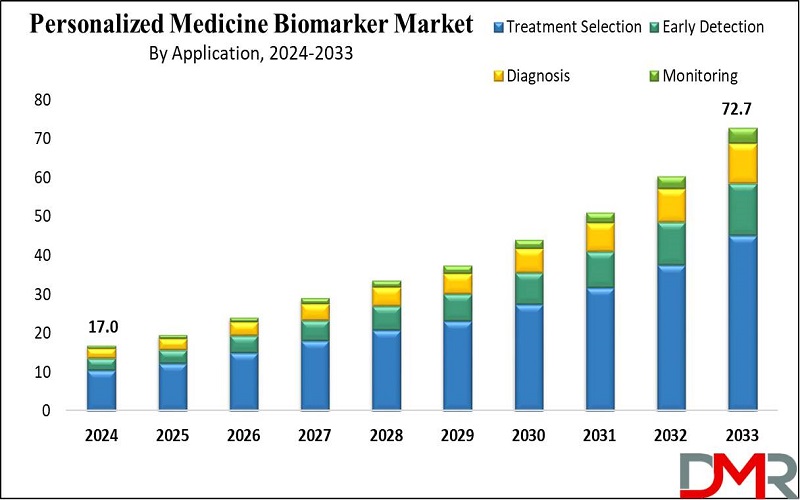
personalized medicine biomarker sector. The report, curated by Dimension Market Research, forecasts the market to catapult from
USD 17 billion in 2024 to a staggering
USD 72.7 billion by 2033, marking a compound annual growth rate (
CAGR) of 17.5%.
Market Dynamics and Projections
The
personalized medicine biomarker market is a dynamic ecosystem, pivotal in tailoring treatments to individual patient characteristics. This approach optimizes therapeutic outcomes by leveraging genetic or molecular signatures to inform diagnosis and guide treatment decisions. The
oncology sector is projected to dominate, commanding a significant 33.1% of the market share in 2024, driven by global cancer prevalence and advancements in genomic technologies.
Regional Insights
North America stands at the forefront, expected to hold 37.2% of the global market share in 2024. This dominance is attributed to the region’s robust biotech investments, advanced healthcare infrastructure, and a network of renowned research institutions. As North America leads, Europe and Asia-Pacific are not far behind, showing significant growth potential.
Technological Advancements
The report highlights several technological trends reshaping the market. Notably, advancements in genomic technologies like
next-generation sequencing are driving biomarker identification, transforming personalized medicine globally. The rise of
liquid biopsy technologies, particularly in oncology, offers non-invasive diagnostic methods, revolutionizing patient care.
Competitive Landscape
Key players such as
Illumina,
Roche Diagnostics, and
Thermo Fisher Scientific are at the helm of this burgeoning market, leading in genomics, diagnostics, and biomarker discovery. Companies like
Qiagen and
Foundation Medicine enhance their market presence through strategic partnerships and collaborations, expanding their reach and forming alliances with healthcare providers and research institutions.
Challenges and Opportunities
Despite promising growth, the market faces challenges, including regulatory and ethical considerations that impact biomarker adoption. However, opportunities abound with the development of individualized therapeutic techniques and the integration of biomarkers into diagnostic algorithms, driving market expansion.
Recent Developments
Recent collaborations and innovations underscore the sector’s dynamic nature. For instance, in November 2023,
Massive Bio partnered with
Health in Code to advance personalized oncology treatments in Spain, emphasizing
AI and genomic testing. Similarly,
Ibex’s introduction of Galen™ Breast HER2 in September 2023, developed with
AstraZeneca and
Daiichi Sankyo, highlights the push towards precision in cancer pathology.
Conclusion
The
personalized medicine biomarker market is poised for unprecedented growth, driven by technological advancements, strategic collaborations, and a global shift towards precision medicine. As the market evolves, it promises to redefine healthcare, offering tailored solutions that enhance patient outcomes across the globe.