Personalized Medicine Biomarker Market: A Billion-Dollar Revolution


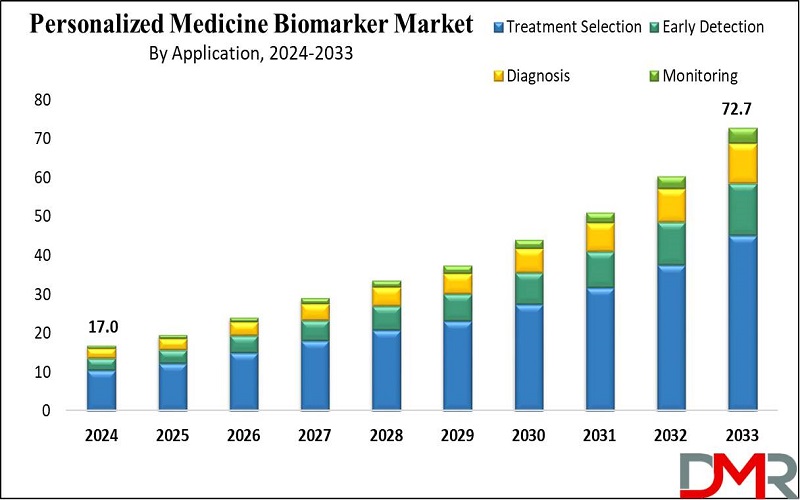
In a groundbreaking analysis released on July 1, 2024, GlobeNewswire sheds light on the transformative growth within the global personalized medicine biomarker sector. The report, curated by Dimension Market Research, forecasts the market to catapult from USD 17 billion in 2024 to a staggering USD 72.7 billion by 2033, marking a compound annual growth rate (CAGR) of 17.5%.
Global personalized medicine biomarker market growth

Market Dynamics and Projections


The personalized medicine biomarker market is a dynamic ecosystem, pivotal in tailoring treatments to individual patient characteristics. This approach optimizes therapeutic outcomes by leveraging genetic or molecular signatures to inform diagnosis and guide treatment decisions. The oncology sector is projected to dominate, commanding a significant 33.1% of the market share in 2024, driven by global cancer prevalence and advancements in genomic technologies.

Regional Insights


North America stands at the forefront, expected to hold 37.2% of the global market share in 2024. This dominance is attributed to the region’s robust biotech investments, advanced healthcare infrastructure, and a network of renowned research institutions. As North America leads, Europe and Asia-Pacific are not far behind, showing significant growth potential.

Technological Advancements


The report highlights several technological trends reshaping the market. Notably, advancements in genomic technologies like next-generation sequencing are driving biomarker identification, transforming personalized medicine globally. The rise of liquid biopsy technologies, particularly in oncology, offers non-invasive diagnostic methods, revolutionizing patient care.

Competitive Landscape


Key players such as Illumina, Roche Diagnostics, and Thermo Fisher Scientific are at the helm of this burgeoning market, leading in genomics, diagnostics, and biomarker discovery. Companies like Qiagen and Foundation Medicine enhance their market presence through strategic partnerships and collaborations, expanding their reach and forming alliances with healthcare providers and research institutions.

Challenges and Opportunities


Despite promising growth, the market faces challenges, including regulatory and ethical considerations that impact biomarker adoption. However, opportunities abound with the development of individualized therapeutic techniques and the integration of biomarkers into diagnostic algorithms, driving market expansion.

Recent Developments


Recent collaborations and innovations underscore the sector’s dynamic nature. For instance, in November 2023, Massive Bio partnered with Health in Code to advance personalized oncology treatments in Spain, emphasizing AI and genomic testing. Similarly, Ibex’s introduction of Galen™ Breast HER2 in September 2023, developed with AstraZeneca and Daiichi Sankyo, highlights the push towards precision in cancer pathology.

Conclusion


The personalized medicine biomarker market is poised for unprecedented growth, driven by technological advancements, strategic collaborations, and a global shift towards precision medicine. As the market evolves, it promises to redefine healthcare, offering tailored solutions that enhance patient outcomes across the globe.


More Articles

Getting licensed or staying ahead in your career can be a journey—but it doesn’t have to be overwhelming. Grab your favorite coffee or tea, take a moment to relax, and browse through our articles. Whether you’re just starting out or renewing your expertise, we’ve got tips, insights, and advice to keep you moving forward. Here’s to your success—one sip and one step at a time!

South Florida Housing Market Gains Momentum for 2026 as Mortgage Rates Decline

Lower interest rates, improving buyer confidence, and a resilient job market are setting the stage for a stronger South Florida real estate landscape in 2026. After a steadier‑than‑expected 2025, single‑family homes remain competitive, condos are stabilizing despite regulatory pressures, and commercial real estate continues to outperform national trends — giving industry professionals plenty to watch in the year ahead.

2026 Housing Market Outlook: Are We Finally Heading Toward Stability?

Economists across the housing industry are signaling that 2026 may finally bring a true market rebalance. With mortgage rates expected to ease, inventory slowly expanding and affordability showing its first real improvement in years, home sales could climb by 14% nationwide. Prices are projected to rise only modestly, builders are ramping up cautiously and shifting demographics are reshaping who’s buying—and what they’re looking for. For real estate and finance professionals, this more active and balanced landscape sets the stage for a strong year of opportunity.

Lower Interest Rates Spark New Optimism in South Florida’s 2026 Real Estate Market

South Florida enters 2026 with renewed confidence as easing mortgage rates, a solid job market, and stabilizing housing trends breathe life back into both single‑family and condo sectors. After an uneven 2025 marked by high costs and condo‑related challenges, lower borrowing rates are drawing buyers back, encouraging more homeowners to list, and positioning the region for a more balanced — though still competitive — year ahead.

Six Real Estate Trends Reshaping the U.S. Market in 2026

The U.S. real estate landscape is entering a defining year, driven by AI innovation, reimagined office spaces, immersive retail, and resilient industrial growth. Investors are becoming more selective, while ESG expectations are solidifying into essential standards for value and tenant demand. For professionals looking to stay competitive in 2026, understanding these shifts—and upskilling accordingly—will be key to navigating an industry rapidly transforming in real time.

Conforming Mortgage Credit Availability Plunges to Record Low as Lenders Tighten Standards

Conforming mortgage credit has dropped to its lowest level since the MBA began tracking it in 2011, signaling a major tightening in loan options as 2026 begins. December’s Mortgage Credit Availability Index fell 2.6%, driven by shrinking ARM offerings, fewer cash‑out refi programs, and stricter documentation requirements. With conforming loans seeing the sharpest decline—down 3.8%—both buyers and mortgage professionals face a more challenging lending landscape that demands stronger financial profiles and up‑to‑date industry knowledge.

Creative Strategies Are Finally Helping First-Time Buyers Break Into the 2026 Housing Market

A new NAR outlook shows that first-time buyers may finally be gaining traction in 2026 as rising inventory, easing rates, and creative financing strategies open long-awaited pathways into homeownership. From ARMs and government-backed loans to family support, grants, and co-buying, younger buyers are finding new ways to “make the math work.” Builders are also stepping in with incentives and expanded townhome construction, signaling a slow but meaningful shift toward improved affordability.